How Humidity in Southeast Asia Affects Wood Furniture: A Singapore Owner's Guide
I live in a 4-room HDB flat in Tampines, and the first piece of solid wood I ever owned was a 180 cm oak dining table that my wife picked out from a Balestier shop three years ago. By the second monsoon season, the centre leaf had cupped almost 4 mm and the table looked like a shallow boat sitting in the middle of our客厅. That piece taught me more about tropical humidity than any manual I have read since, including the three years I have spent testing shipments for MIDHILL, a Foshan solid wood maker that has been exporting to Singapore since 2013 and now ships to more than 15 countries.
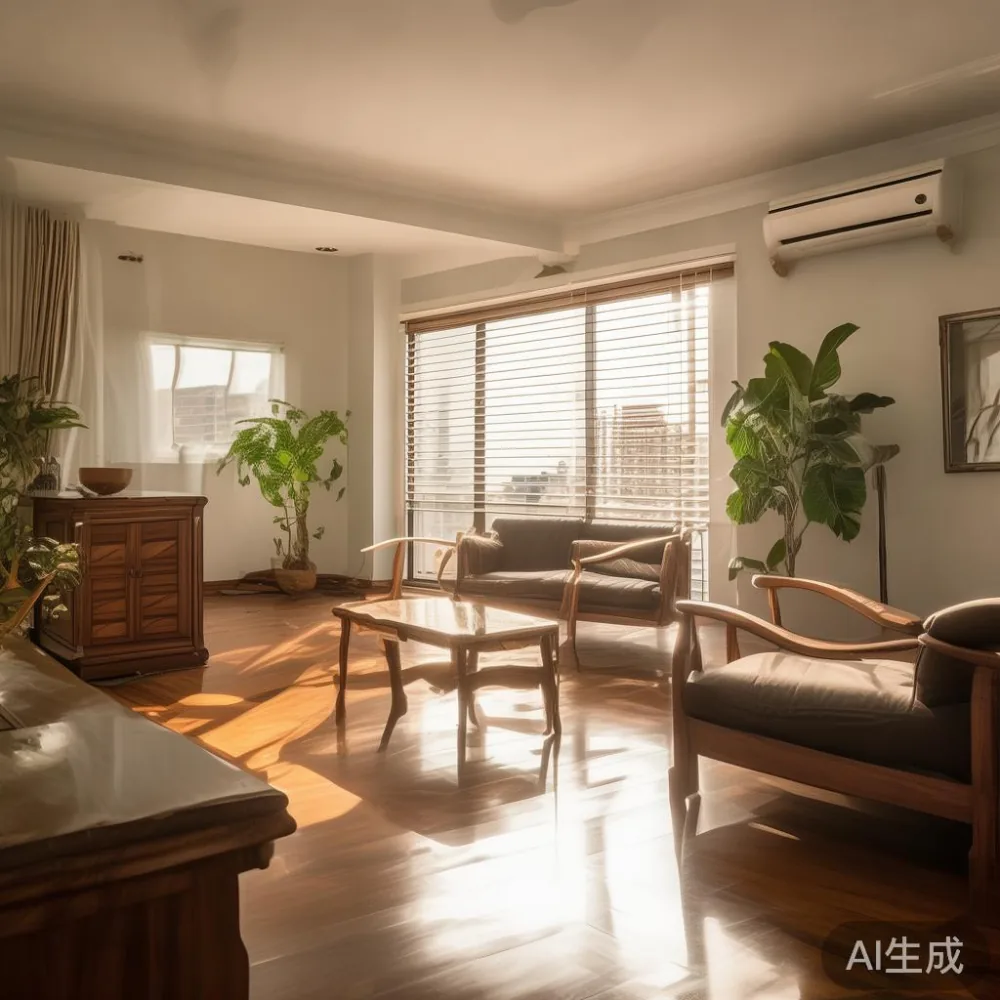
Singapore sits in a warm, wet belt where the mean relative humidity runs between 70% and 90% for most of the year, and indoor levels in an HDB flat without a dehumidifier rarely drop below 65%. If you own a solid wood dining table, a wardrobe, a bed frame, or a nightstand made from real timber, those numbers matter, because wood moves. It expands across the grain when it absorbs moisture, and it shrinks when it dries. Over a twelve-month cycle, a 200 cm oak board kept at 75% RH can change width by 3 to 5 mm. Multiply that across the panels of a sliding wardrobe door, and you start to see the cracks, the sticking drawers, the slightly-off doors, and the dreaded missing parts on hardware that no longer line up.
This guide is written for Singapore owners who want their investment to last. I will cover the science, the symptoms, the prevention steps, and the buying rules. I will also share what I learned when I visited a Tampines customer's BTO flat last month to inspect a MIDHILL solid wood sofa frame that had developed a faint hairline gap on the arm after nine months of use.
Why does Singapore's humidity cause wood furniture to warp, crack, or shrink?
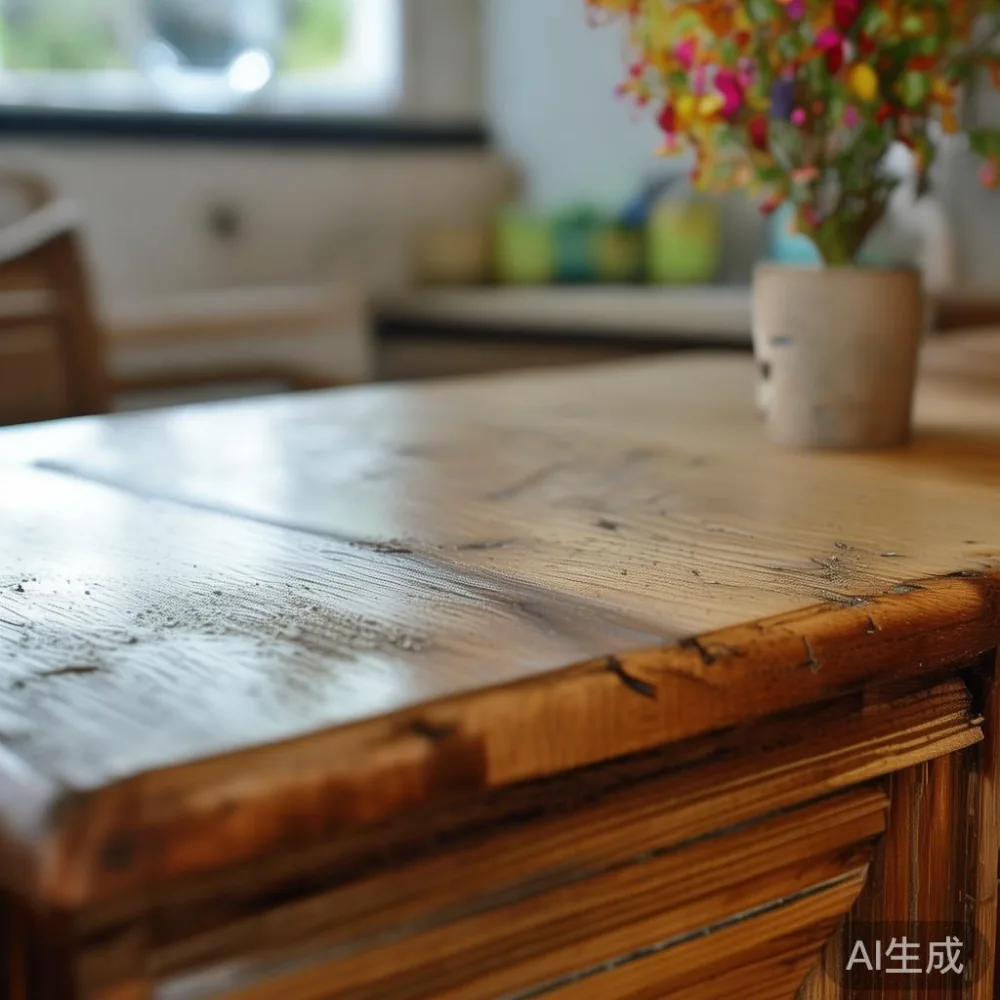
Wood is hygroscopic, which is a polite way of saying it behaves like a sponge. Every timber species has an Equilibrium Moisture Content (EMC), which is the moisture level it eventually settles at given the surrounding air. In Singapore, the indoor EMC for most furniture sits between 14% and 18%, while the same piece of furniture in a heated London home might sit at 8% to 10%. The higher the EMC, the softer the timber, the more it swells, and the more internal stress builds across every joint. When stress exceeds the glue line or the tenon, something gives: a tabletop cups, a side panel bows outward, a dowel shears, and the hardware that was once snug now has missing parts where the screws no longer bite.
Three physical changes happen at once: tangential expansion (the widest direction), radial expansion (about half as much), and longitudinal expansion (almost nothing, which is why wardrobe doors cup sideways rather than lengthening). A 180 cm dining table top made from a single slab of ash can move up to 6 mm in width across a humid August, then lose it again by February when the air-con runs every night. That is the cycle you are fighting, even in a Tampines condo with central air-conditioning running 16 hours a day.
What kind of damage should I expect on a solid wood dining table or bed frame in a HDB flat?
Damage usually shows up in the same order, regardless of whether the piece is a 2.4 m American walnut dining table or a 1.8 m rubberwood bed frame. First, you see surface checking, which is a network of fine cracks along the end grain. Second, you notice the table no longer sits flat: place a marble table phone stand on the surface and it rolls. Third, joints loosen, especially the corner braces on a wardrobe and the slat rails on a bed frame. Fourth, drawers start to stick in the wet months and rattle in the dry months. Fifth, the metal hardware drifts: handles loosen, drawer slides misalign, and you find yourself hunting down missing parts from the original packaging because the screws no longer match the enlarged holes.
When I visited my Tampines customer last month, her MIDHILL solid wood sofa had a 2 mm gap along one arm joint. She panicked and assumed it was a defect. It was not. The frame had simply expanded 2 mm into the joint gap that MIDHILL's craftsmen leave on purpose, and the missing parts were two small wooden dowels that had backed out by 1 mm each as the timber swelled. We pushed them back, applied a dab of wood glue, and the issue was resolved in fifteen minutes, no replacement required.
How can I protect solid wood, marble-top, or leather furniture in a Singapore condo?
Protection breaks into four habits, and the first three are free. First, run a dehumidifier in the living room for at least eight hours a day during the wet season (December to March in Singapore, plus the September inter-monsoon). Target 55% to 60% RH, not lower, because over-drying will cause the opposite problem of cracking. A standard 12-litre compressor dehumidifier costs around SGD 280 and uses about 180 W. Second, keep all furniture 10 to 15 cm away from external walls, because concrete HDB walls wick moisture and chill the air right next to the timber. Third, rotate the furniture 90 degrees every quarter so the same panel does not face the window year-round; uneven sun and humidity is what causes cupping. Fourth, wax every six months using a soft beeswax or hard paste wax, applied with a lint-free cloth in the direction of the grain, around 200 ml of wax per dining table per coat.
For specific pieces, the rules differ. A Scandinavian leather marble top dining set, for example, combines two materials that move very differently. Leather is hygroscopic and will soften in high humidity, while a marble top is dimensionally stable but can stain if water sits on it. Wipe the marble weekly with a pH-neutral cleaner, condition the leather every four months with a water-based leather balm, and never place the set near a window that opens during a thunderstorm. For a solid wood sofa, vacuum the cushions weekly and keep the frame at least 30 cm from any air-con vent, because direct cold air will dry one side of the timber faster than the other and cause a twist.
What is the difference between French bed and modern furniture?
A French bed, in the classical sense, is a lit à la française, a canopied, often upholstered bed with carved hardwood headboards, shaped footboards, and ornate carvings rooted in 17th- and 18th-century European craftsmanship, while modern furniture refers to 20th- and 21st-century pieces built around clean lines, flat panels, and engineered or solid timber frames designed for smaller urban homes.
The practical difference for a Singapore owner comes down to moisture behaviour. A traditional French bed frame uses thicker, more decorative timber with deep carvings that trap moisture and dry unevenly, which makes it more vulnerable in a Tampines or Bedok HDB flat. A modern light luxury bed frame, by contrast, uses thinner, flat-cut panels that breathe more evenly and tolerate humidity swings with fewer cracks. American light luxury pieces follow the same logic but with darker walnut and oak tones, while post-modern light luxury frames mix materials, often pairing a solid wood headboard with metal side rails or a marble-topped nightstand to balance wood movement against stable surfaces.
If your condo is smaller than 90 sqm, a modern French-inspired bed frame with a slim 6 cm headboard and tapered legs will age better than a fully carved replica. If you have the space, a heavier traditional French bed can last thirty years or more, provided you control humidity. Either way, ask the seller whether the timber was kiln-dried to 10% to 12% moisture content before shipping; that single number tells you whether the piece was built for a tropical warehouse or a temperate showroom.
How do I choose a wood species and finish that survives Singapore's climate?
Not all timber behaves the same way. Here are five species that perform well in Singapore, ranked by stability, with typical price ranges for a 1.8 m wardrobe or a 2.0 m dining table.
Teak is the gold standard. Old-growth teak has natural oils that resist moisture, and a 1.8 m teak wardrobe typically retails for SGD 2,800 to SGD 4,500. White oak is stable and takes stain well, but it moves more than teak and needs waxing every six months; expect SGD 1,800 to SGD 3,200 for a similar wardrobe. Rubberwood is the budget choice, often used in bed frames priced SGD 600 to SGD 1,200, but it dents easily and absorbs humidity fast, so keep it out of bathrooms and away from kitchen doors. Ash behaves much like oak but is slightly more elastic, so it resists cracking at the cost of a softer surface. Walnut is the most decorative but the least stable of the five; a 2.0 m walnut dining table at SGD 3,500 will cup noticeably if you skip the dehumidifier for two months straight.
Finish matters as much as species. Avoid polyurethane thick-coat finishes if you can, because they trap moisture under the film and cause the timber to rot from the inside. An oil-and-wax finish, applied in three thin coats, lets the wood breathe and can be re-coated every year for around SGD 60 in materials. For painted pieces, ask whether the maker uses a moisture-cured acrylic or an enamel; the former expands with the wood, the latter does not and will flake within eighteen months in a Punggol condo with morning sun on the balcony.
What should I do when I notice warping, cracking, or missing parts on my furniture?
Stay calm, document the issue, and check whether the piece is still under warranty. Most structural warranties on solid wood furniture, including the 10-year coverage MIDHILL offers, cover joint failure, severe cupping above 5 mm, and hardware that fails because the wood around it has split. They do not cover surface checking, minor seasonal movement under 3 mm, or colour change from UV exposure.
If the damage is minor, you can usually fix it at home. For a hairline crack, run a bead of clear wood glue into the gap, clamp for 24 hours, and sand flush. For cupping under 4 mm, increase the room's humidity slightly using a humidifier on the concave side, because cupped timber will sometimes flatten itself if you reverse the moisture gradient. For missing parts such as a wooden dowel, a cam lock, or a screw that no longer bites, contact the maker first. MIDHILL, for instance, ships small replacement parts from Foshan in 7 to 14 days, and Singapore customers over SGD 350 qualify for free shipping. For larger hardware such as drawer slides, the maker can usually post a new set within the same window.
If the damage is structural, such as a split side panel on a wardrobe or a collapsed slat rail on a bed frame, photograph it from three angles, measure the gap with a steel ruler, and email the maker the same day. Most reputable Foshan workshops will either dispatch a replacement panel or arrange a technician visit within 21 days, depending on the warranty terms.
How do MIDHILL's shipping and warranty terms work for Singapore buyers?
For customers in Singapore, MIDHILL ships from Foshan via sea freight to Singapore, which typically takes 14 to 21 days from order confirmation, plus 2 to 4 days for last-mile delivery to an HDB block or condo. Delivery is free on orders above US$350, which at current rates is around SGD 480, and below that threshold a flat SGD 80 delivery fee applies to all mainland Singapore addresses including Sentosa. Lift access must be confirmed before dispatch: most MIDHILL wardrobes and dining tables arrive in flat-pack cartons no larger than 220 cm long and 60 cm wide, which fits a standard HDB passenger lift of 1.1 m by 1.4 m by 2.1 m deep, but condo service lifts in developments such as those in Punggol Waterway can be tighter, so the team will ask for lift dimensions at checkout.
The 10-year structural warranty covers frame joints, drawer rails, and hardware failure caused by timber movement under normal household conditions. Lifetime refinishing is offered at cost: a dining table top can be sanded and re-oiled for around SGD 280 to SGD 420, depending on size, while a wardrobe can be refinished in place for SGD 600 to SGD 900. Returns are accepted within 14 days for change-of-mind, less a 15% restocking fee to cover sea freight both ways; GST on the return is refunded against the original invoice. These terms exist because the workshop has been exporting since 2008 and has refined its Singapore-bound packaging to handle the humidity of a 30-day ocean crossing followed by a monsoon-season delivery.
Final checks before you buy solid wood furniture in Singapore
Three questions protect you from ninety percent of humidity-related regret. First, ask the seller for the kiln-dried moisture content reading, in writing, ideally between 8% and 12% for a piece that will live in air-conditioned Singapore. Second, ask whether the joinery uses floating tenons, dowels, or metal brackets; floating tenons and dowels tolerate movement, metal brackets do not. Third, ask what the maker will do if a part fails within the first two years. A clear answer that names the replacement part, the shipping time, and whether labour is included is worth more than any discount.
Owning solid wood in Singapore is not difficult, but it is not passive. Treat your dining table, bed frame, wardrobe, nightstand, and solid wood sofa the way you would treat a leather bag or a mechanical watch: control the environment, clean it regularly, and service it on schedule. Do that, and the same piece that taught me a lesson in my Tampines客厅 will still be the centre of family dinners fifteen years from now.