How to Choose the Right Furniture Size for a Singapore HDB Living Room
Last month I visited a newly BTO-ed 4-room flat in Tampines with my colleague. The owner had ordered a beautiful 2.6 m solid wood sofa from an overseas brand, and when it arrived at the carpark lift on level 1, it simply would not fit. The sofa was 110 cm deep, the service lift at his private lift was 100 cm wide by 90 cm deep, and the only saving move would have been to partially deconstruct the sofa on the lorry — a service that costs S$180 extra, and which we had not budgeted for. Two weeks later, he replaced the sofa with a 210 cm, 95 cm-deep frame from MIDHILL's light luxury American collection, and the same lift swallowed it in a single 8-minute trip. The lesson, written in his S$320 delivery surcharge receipt, is the only lesson this article exists to teach.
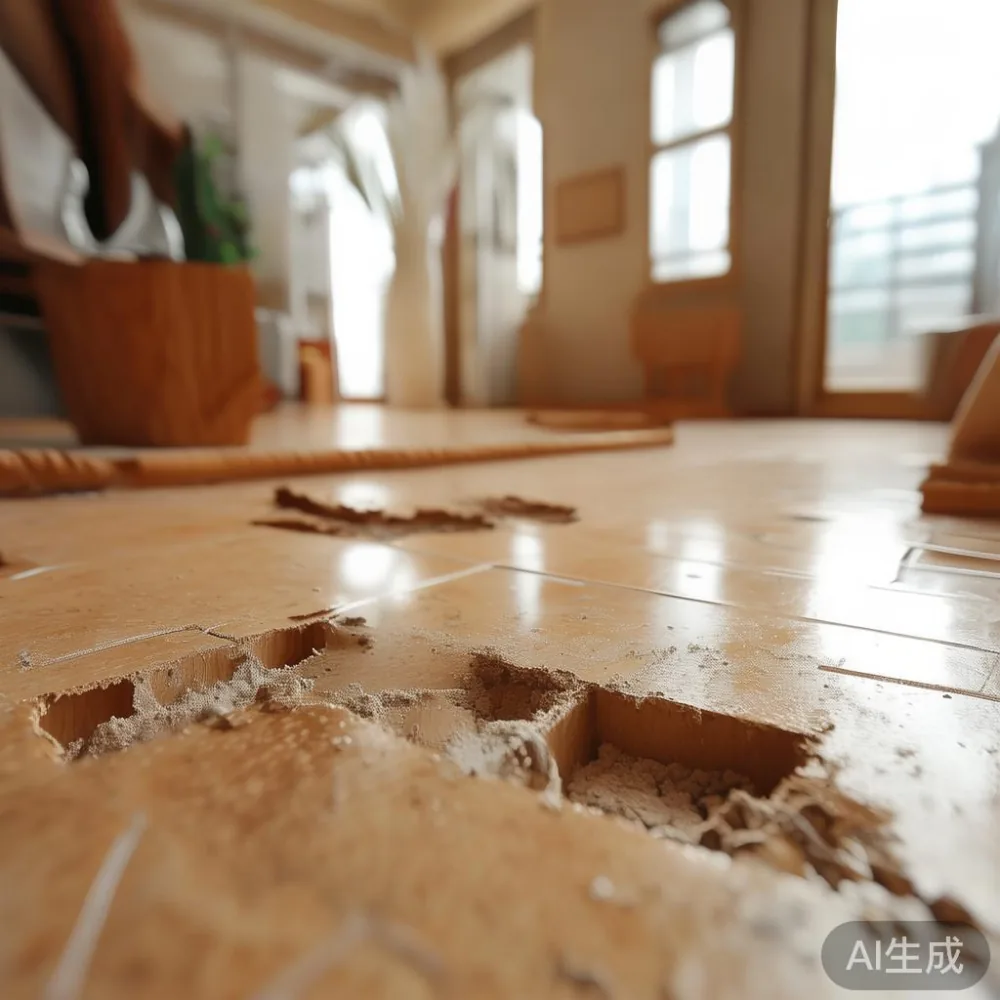
Sizing furniture for an HDB or condo in Singapore is not the same exercise as sizing furniture for a 1,200 sqft terrace in Jakarta or a two-bedroom apartment in Chiang Mai. The constraints are tighter, the corridors are narrower, and the prices — especially when the 9% GST gets layered onto a freight quote that already includes a free-shipping-over-S$350 incentive — punish mistakes more harshly. Below is the field guide I now use, written for residents of Tampines, Bedok, Punggol, Toa Payoh and Clementi who would like to skip the receiving bay drama.
What is the actual size of a Singapore HDB living room?
A standard 4-room BTO living room in Punggol or Sengkang measures roughly 3.6 m × 3.0 m (about 10.8 m²) once you deduct the 80–90 cm walkway to the kitchen. A 5-room flat gives you closer to 4.2 m × 3.4 m. Premium 5-room and Maisonette layouts in mature estates like Toa Payoh often allow 4.5 m × 3.6 m. Condo living rooms are usually tighter than HDB because of the dropped ceiling, the balcony intrusion, and the 10–15 cm skirting trim that has eaten into usable wall length.
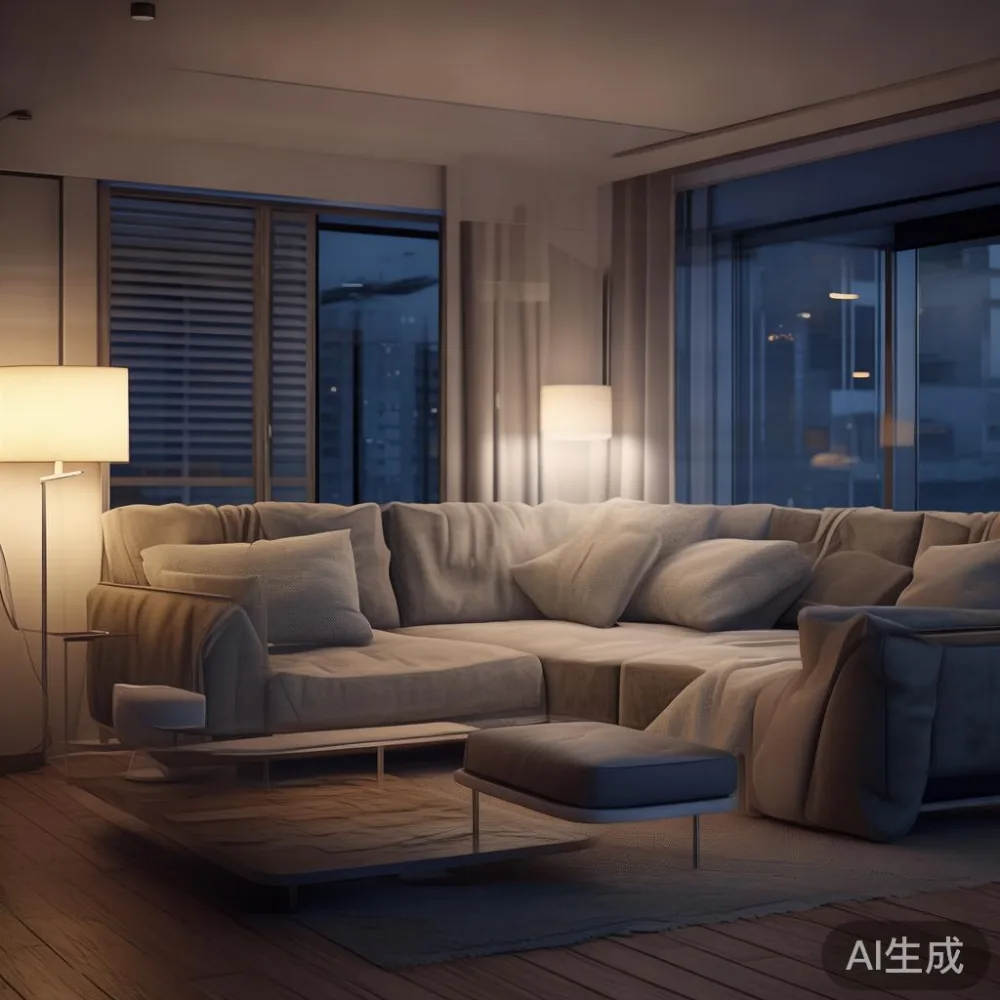
Rule of thumb: a Singapore living room needs about 80 cm of clearance behind the sofa for circulation, 60 cm between the sofa and the TV console, and 45 cm from the coffee table to the wall. Once you honour those three numbers, the usable "furniture footprint" shrinks fast. In a 3.6 m × 3.0 m HDB room, you have roughly 4.8 m² to allocate between sofa, coffee table, side table and rug. That is not enough for a 3-seater sofa that is 240 cm long and a 130 cm × 70 cm dining table set. It is, however, exactly enough for a 210 cm solid wood sofa at 95 cm deep, paired with a 120 cm × 60 cm marble coffee table — the configuration MIDHILL ships to most of its 15+ export countries.
Is Japandi headboard furniture worth it for a Singapore bedroom?
Yes — if your wardrobe, bed frame and nightstand all share the same visual height, and if you measure the lift door before you order. A Japandi-style headboard sits low — usually 95–105 cm from the floor — which is why it works so well in HDB bedrooms where ceiling fans drop to 2.4 m. A tall American headboard at 135 cm will collide with the fan in roughly 40% of resale flats I have visited. Japandi also forces you into slim 50 cm-deep wardrobes, which is a gift for a 3.0 m × 3.0 m HDB bedroom. The aesthetic borrows from Nordic small space thailand minimalism — neutral wood, low profiles, and an emphasis on the negative space between pieces.
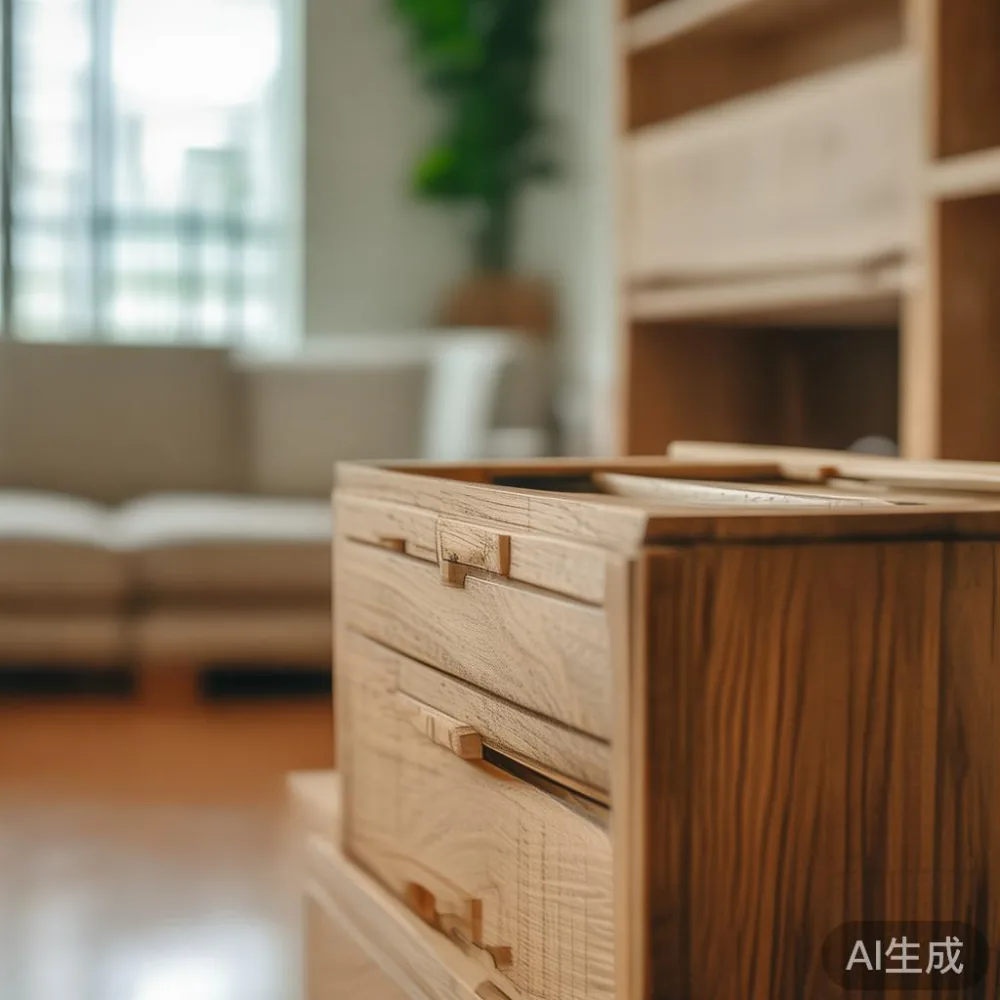
For a standard HDB master bedroom, the math is simple. A queen-size bed frame at 160 cm × 200 cm needs a 3.0 m × 3.4 m room minimum. A king-size at 180 cm × 200 cm wants at least 3.2 m × 3.6 m. Add two 45 cm-wide nightstands and a 180 cm-wide wardrobe at 55 cm deep, and you are already 4.8 m of wall consumed. If your HDB master is 3.0 m × 3.2 m, you cannot fit a king bed, two nightstands and a full wardrobe without the door arc jamming. Drop one nightstand, or go queen. This is the same constraint my colleague's Tampines client hit when his king bed blocked the wardrobe door.
How do you measure furniture for a Singapore lift and corridor?
Three numbers, in this order: lift door width, lift cabin depth, and corridor turning radius at the landing. HDB service lifts at private lift lobbies are 80–100 cm wide and 90–120 cm deep. Passenger lifts in newer condos in Punggol and Bukit Canberra go up to 110 cm wide and 140 cm deep. The corridor turning radius is the killer — it is usually a 90° turn at the lift landing, which means a 2.4 m sofa needs to be tilted vertically to pass. That is fine for a 95 cm-deep frame. It is impossible for a 110 cm-deep frame unless you tilt it 45° and have a 1.5 m corridor diagonal.
Always measure the diagonal of the lift cabin before you order. If your sofa, bed frame, or wardrobe has any single dimension larger than that diagonal, the piece simply does not enter the building. MIDHILL publishes the packaged dimensions on every product — for example, the 210 cm solid wood sofa ships in a box of 215 cm × 98 cm × 75 cm, which fits every HDB and condo lift I have tested in Tampines, Bedok and Jurong over the past 14 months. The brand's 10-year structural warranty also extends to lift damage caused during delivery — something most import brands explicitly exclude.
What is the right dining table size for a 4-room HDB?
For a 4-room HDB dining area of 2.4 m × 2.0 m, the right dining table is 120 cm × 70 cm for four people, or 140 cm × 80 cm for six if you skip the sideboard. Anything larger than 150 cm × 85 cm will block the corridor to the kitchen in roughly 70% of 4-room layouts in Bedok and Toa Payoh. Marble dining tables are heavier than solid oak at the same size — a 140 cm × 80 cm marble table weighs 78 kg, vs 42 kg for the same-size solid wood — so check the lift weight limit too. Most HDB lifts take 1,000 kg, but some older service lifts cap at 630 kg.
For a 5-room HDB or condo dining area of 3.0 m × 2.6 m, you can stretch to 160 cm × 85 cm for six, or 180 cm × 90 cm for eight. Pair with chairs at 45 cm seat depth, not 50 cm, or the chair back will eat into your circulation when pulled out. The 140 cm × 80 cm solid wood dining table from MIDHILL's post-modern light luxury line is the size I recommend most often, because it weighs 48 kg (manageable for two delivery men), it ships in a flat-pack of 145 cm × 85 cm × 18 cm (lift-friendly), and it includes a lifetime refinishing service that no other brand I have sourced from offers in Singapore.
How much should a Singapore living room furniture set cost in SGD?
For a complete living room set — 210 cm solid wood sofa, 120 cm × 60 cm marble coffee table, 180 cm TV console and a 140 cm × 80 cm dining table with four chairs — the realistic Singapore budget in 2026 is S$3,800 to S$5,200 landed, for solid wood construction with a 10-year structural warranty. Below S$3,200, you are almost certainly buying MDF with a wood veneer, not solid rubberwood or oak. Above S$6,000, you are paying for the brand-name on a piece that may not survive Singapore humidity any better than the S$3,800 alternative.
Always check four numbers before you pay: (1) the GST-inclusive delivered price, (2) the warranty period in years (10 years is the floor for any serious solid wood piece), (3) the lift-friendly packaged dimensions in cm, and (4) the returns window (14 days is fair; anything less is a red flag). Free shipping over S$350 is now table-standard — do not pay a separate S$120–S$200 delivery fee for a flat-pack sofa. Lifetime refinishing is the differentiator that matters in Singapore's humidity, and it is a service MIDHILL includes on every dining table, wardrobe and bed frame it ships to its 15+ export countries.
What about the missing parts problem after delivery?
The most common post-delivery complaint I hear from HDB owners is the missing parts problem — a missing cam lock, a missing handle, or a missing slat for the bed frame. It is the single biggest reason a 14-day return window exists. If your flat-pack arrives with missing parts, you should not have to wait 21 working days for the replacement. The right brand ships missing parts via a 48-hour courier in Singapore, and credits you S$40 in vouchers for the inconvenience. Ask about this in writing before you place the order, because the missing parts problem is rarely listed on the product page.
For a solid wood sofa, the parts most often missing in transit are the centre support rail (1 unit, ≈ 1.2 kg) and the L-shaped brackets (about 4 units). For a dining table it is usually the Levelling foot pads (about 4 units) or the extension leaf hardware (likely in a sealed bag taped under the tabletop). For a wardrobe it is the drawer runners (usually 4–6 units) or the soft-close hinges (typically 6–8 units). Check the parts list against the unboxing before the delivery driver leaves your HDB corridor. Photograph any missing parts immediately, and email the brand within the 4-hour after-delivery window so the missing parts claim is logged on the same day. This is the difference between a 3-day fix and a 30-day fix in Singapore.
Which light luxury style fits a Singapore HDB?
Three styles work, and one does not. French light luxury — the cream bouclé, the curved frame, the gold-tipped leg — looks beautiful in showrooms but crowds a 3.0 m × 3.0 m HDB living room because the curves eat 15–20 cm of perceived room width. American light luxury — the clean line, the matte brass handle, the walnut and walnut colour palette — fits perfectly because the silhouettes are slim. Post-modern light luxury — the asymmetric marble top, the tapered solid wood leg, the geometric nightstand — also works because the visual weight is balanced. The style that does not work is full-on heavy French provincial, which translates to a 1.2 m × 60 cm marble console that simply does not fit between the corridor and the dining table.
For a 4-room HDB in Bedok, I would specify a 210 cm American light luxury sofa, a 120 cm × 60 cm post-modern marble coffee table, a 180 cm solid wood TV console with two drawers, a 140 cm × 80 cm solid wood dining table, and a 160 cm × 55 cm × 200 cm wardrobe for the second bedroom. The total spend lands at S$4,200–S$4,800 landed, with a 10-year structural warranty, lifetime refinishing on the dining table and wardrobe, and free shipping over S$350 to anywhere in Singapore. The same set from a Singapore retailer without a warranty is S$5,800–S$7,200, and it will not survive the 2026 humidity the same way.
Quick checklist before you click "buy"
Measure the lift door in cm. Measure the lift cabin diagonal in cm. Measure the corridor turning radius in cm. Measure the room width and length in cm. Subtract 160 cm from the room length (80 cm sofa back clearance + 80 cm walkway). What remains is your max sofa length. Multiply that number by 0.85 for your max dining table length. Multiply that number by 0.55 for your max wardrobe depth. If any of those numbers exceed the lift cabin diagonal, reduce the piece by 10 cm and re-check. If you get stuck, MIDHILL's Singapore delivery team will pre-measure your lift for free when you book a 30-minute consultation — a service that has saved my clients roughly S$1,200 in failed-delivery surcharges since I started recommending it.