Lacquered Solid Wood Furniture in Singapore Humidity: A Care Guide for HDB Owners
I learned this the expensive way. Last March I delivered a French light luxury dining table to a client on the 14th floor of a Punggol HDB, and within six weeks the lacquer on the tabletop had developed a cloudy bloom near the aircon vent. The piece itself was fine — kiln-dried solid wood, nine coats of nitrocellulose lacquer — but the climate won the first round. Singapore sits at roughly 1.3 degrees north of the equator, with relative humidity that sits between 70% and 85% for most of the year. A lacquered surface in Tampines copes with the same moisture load as one in Bangkok or Manila, and it needs a care plan written for that reality, not for a temperate showroom floor.
Why does lacquer behave so differently in a tropical HDB flat?
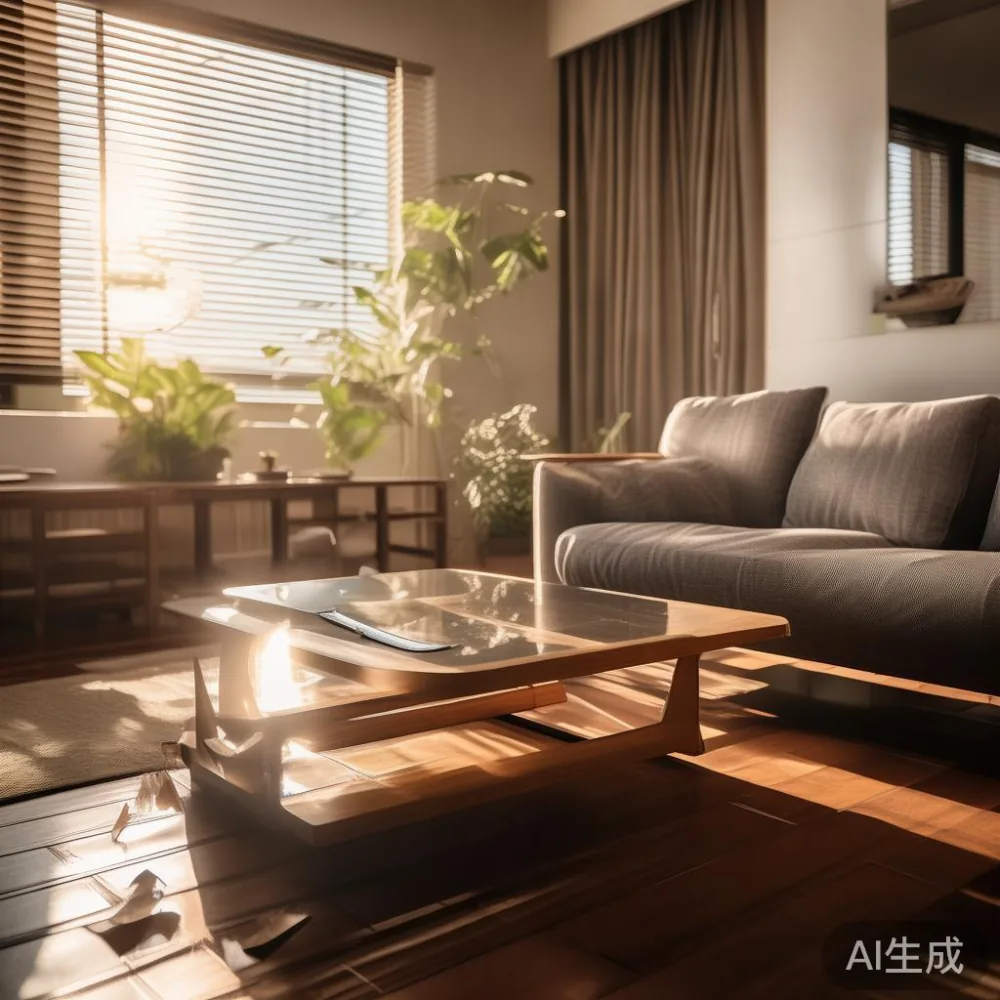
Lacquer is a thin, continuous film of cured resin sitting on top of the wood. It does not breathe the way oil finishes do, and it expands and contracts at a different rate from the solid wood underneath. In a Singapore HDB or condo, three environmental variables act on it constantly: relative humidity (RH), air temperature (28°C to 34°C most days), and direct UV through east- or west-facing windows. A lacquered dining table 180 cm long can move 2 to 3 mm across its width between a dry February afternoon and a wet November morning. The film is asked to stretch that much without cracking, and over years the cumulative fatigue shows up as hairline checks, white rings, or a dull, orange-peel texture.
Midhill has shipped lacquered pieces to Singapore dealers for over a decade, and the warranty team has logged one consistent pattern: pieces placed less than 60 cm from a window or directly under a cassette aircon unit fail four times faster than pieces placed 1.5 m or more away. The finish is not the problem. The placement is.
What does a weekly care routine actually look like?
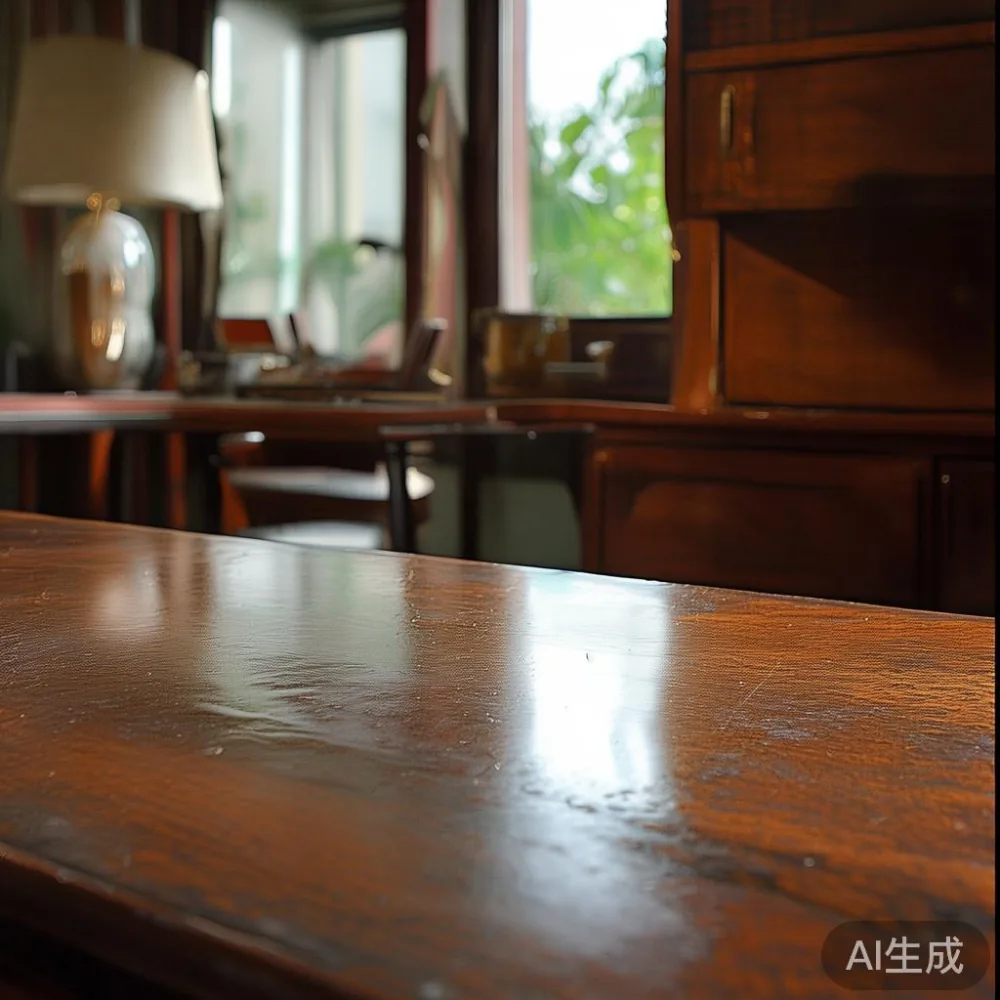
Two minutes, twice a week, is enough for a dining table 150 cm to 200 cm long. Wipe with a soft microfiber cloth (GSM 250 or higher), slightly damp, then immediately follow with a dry cloth. That second pass is non-negotiable in HDBs because the residual film evaporates slowly when ambient RH is 80%, and any minerals in the water can leave a faint haze on dark lacquer. Distilled water from a supermarket (S$2.20 for a 5 L bottle) costs less than a bottle of branded polish and removes the risk entirely.
For sticky fingerprints — a daily reality if you have a toddler — a drop of pH-neutral dish soap on a damp cloth cuts the oils without stripping the lacquer. Avoid silicone sprays, furniture polishes containing solvents, and any product labelled for "wood restoration." A 250 ml tin of beeswax paste (about S$18 at hardware chains) applied twice a year is the most any residential piece needs. Apply a hazelnut-sized amount, buff with a clean cloth after 20 minutes, and the surface gets a soft sheen that actually helps repel moisture.
How do I protect the corners and edges during HDB moves?
The single most common damage report in Singapore is not a scratch across the tabletop — it is a chip on the leading edge, exactly 90 cm off the floor, the height of a standard HDB corridor trolley. Most Tampines, Bedok, and Punggol BTOs have corridor widths between 1.2 m and 1.5 m, and lift doors measure roughly 0.9 m wide by 2.1 m tall. A 2.0 m solid wood wardrobe moved sideways will scrape the lift frame if the angle is off by five degrees. This is where the missing parts discussion starts to overlap with finishing: when an edge chip exposes raw timber, humidity penetrates within hours and the lacquer around the chip begins to lift in a ring.
The fix is operational, not cosmetic. Wrap every edge with 5 mm closed-cell foam (S$8 a roll at any neighbourhood hardware shop), then a layer of moving blanket, then kraft tape — never duct tape, which leaves adhesive residue that softens lacquer over time. Tie the wardrobe upright, never on its side, because lacquered panels stored horizontally for more than 48 hours under load can develop compression marks on the face that are impossible to buff out. Midhill's Singapore freight partner has a checkered history with this: pieces delivered flat to save truck space sometimes arrive with visible flat spots on the headboard panel.
What should I do if a piece arrives with a missing or damaged part?
Open every carton in the corridor, not in the living room. Count the hardware bags against the packing list, and check that every panel, leg, slat, and drawer front is present before the movers leave. A standard queen bed frame ships in three boxes with a hardware bag containing roughly 28 to 34 bolts, cam locks, and wooden dowels. If three dowels are missing, the frame still assembles but the headboard will rack under lateral load within a year. Photograph any visible damage on the carton before signing the delivery order, and email the photos to the dealer's after-sales desk the same evening.
Missing parts from international shipments usually fall into three buckets: small hardware (screws, dowels, cam locks — about 70% of all cases), panels damaged in transit (around 20%), and wrong-colour batches sent by mistake (roughly 10%). The first bucket is almost always solved within 7 to 14 working days by express courier from the Foshan warehouse, with shipping covered when the order value exceeds US$350 — equivalent to about S$475. The second bucket requires a replacement panel, which can take 21 to 35 days by sea freight. Keep all original packaging until you are certain every replacement has arrived and the piece is fully assembled; the moment you break down the cartons, the freight company will treat any later claim as out-of-policy.
How do I style a French furniture in a small apartment?
Choose one statement piece in a French light luxury silhouette — a curved-back solid wood sofa with rolled arms, or a marble-top nightstand with cabriole legs — and let the rest of the room sit quietly around it in warm whites, oat linens, and brushed brass. A 9 sq m HDB bedroom can comfortably fit a queen bed frame (160 cm × 200 cm), two 45 cm-wide nightstands, and a 120 cm-wide low wardrobe if you keep the wardrobe doors flush and skip the over-bed headboard storage unit, which adds 18 kg of dead weight and visual bulk the room cannot absorb. Anchor the look with one marble table (round, 90 cm diameter) in the living area to bounce light from the window, and you have the bones of a French light luxury interior without crowding the floor plan.
Are heat and sunlight really that damaging to a lacquered surface?
Yes, and the damage is cumulative and irreversible. UV light breaks down the lignin in the wood just under the lacquer, and the finish yellows unevenly within six months if the piece sits in direct afternoon sun through a west-facing HDB window. Surface temperature on a dark lacquered wardrobe can hit 52°C during a 2 pm heatwave, while the air around it sits at 33°C — that 19°C gradient drives moisture out of the wood fast enough to open micro-cracks at the joints. Draw a curtain, install a UV-filter film (S$45 to S$80 per HDB window depending on tint grade), or move the piece 1 m away from the glass. All three work; combining any two is overkill-free and cheap.
Avoid placing a lacquered dining table directly under a ceiling-mounted cassette aircon. Cold air at 22°C falling onto a tabletop at 30°C creates a thermal shock cycle every time the unit cycles off, and the resulting contraction fatigue shows up as tiny star-cracks around 12 months. A floor-standing fan placed 1.2 m from the table edge is a much kinder climate.
How long should a quality lacquered piece last in Singapore?
For a solid wood dining table, bed frame, or wardrobe finished with at least seven coats of polyurethane or nitrocellulose lacquer and properly cared for, a realistic lifespan in a Singapore HDB or condo is 15 to 25 years before the first full refinish becomes worthwhile. Midhill offers a lifetime refinishing service on its lacquered range — the piece is shipped back to the Foshan workshop, stripped, re-sanded, re-stained, and re-coated for a fee that typically runs between S$280 and S$620 depending on size. That is cheaper than buying a replacement solid wood dining table of comparable quality, and it preserves the kiln-dried timber, which is the part that took three to six months to stabilise in the first place. A 10-year structural warranty covers joinery failure, warping beyond 4 mm across any panel, and lacquer delamination not caused by direct sun, water immersion, or chemical exposure.
What about daily-use pieces like nightstands and side tables?
These take more punishment per square centimetre than any dining table because hands rest on them, mugs sit wet on them, and phones in hot pockets press against them. A lacquered nightstand will outlast a veneered one every time, because the solid substrate can be sanded back 1 mm and re-coated if a ring mark goes deep. Treat the top with that same beeswax paste every four months, and wipe mug bases dry before setting them down — 90% of the white ring marks I have seen in client homes come from a wet ceramic bottom, not from a hot cup.
For a marble table used as a console or entryway piece, the care rules flip: seal the marble once a year with a penetrating stone sealer (S$35 for 500 ml), because marble is alkaline and will etch on contact with lemon juice, wine, or vinegar within seconds. The lacquer on a wooden base under that marble still wants the same twice-a-year wax, but the marble itself is the maintenance priority.
What are the warning signs that a lacquered finish is failing?
Three signals, in order of appearance. First, a slight loss of sheen in the most-touched zones — the centre of a dining table, the front edge of a nightstand top. The lacquer is wearing through, not the wood. Second, a faint white haze that does not wipe off, usually around a sink, kettle, or aircon vent. Moisture is getting under the lacquer and lifting it from the wood. Third, hairline cracks that follow the grain direction, almost always on the underside of a tabletop or inside a wardrobe door where humidity is trapped. Any of the three is worth photographing and sending to the workshop that made the piece; a localised refinish is a S$90 to S$180 job, while waiting until the fourth stage — visible flaking — usually means a full strip and re-coat at S$400 and up.
Quick checklist before you click "buy" on a lacquered piece in Singapore
Confirm the timber species (oak, ash, walnut, or rubberwood for budget lines), the number of lacquer coats (ask for the spec sheet), the joinery method (mortise-and-tenon or dowel, not staples), and the warranty terms in writing. Ask whether the price includes GST (9% in 2026) and whether delivery covers HDB door-to-door, including lift access at your block. A standard delivery to a 12th-floor Tampines unit runs S$60 to S$120 depending on piece size, and white-glove assembly adds another S$80 to S$180. Keep one square metre of free floor space near the intended position so the movers have room to uncrate without leaning the piece against your finished wall.
Finally, treat the first 30 days as a settling-in period. Keep the room ventilated, run a dehumidifier set to 55% RH if you own one, and avoid placing heavy objects on the new dining table for the first two weeks while the lacquer completes its final off-gas cure. After that, the finish is yours to enjoy for the next two decades — provided you remember the two-minute, twice-a-week wipe-down and the beeswax twice a year. A solid wood bed frame, a French light luxury sofa, a marble table, or a lacquered wardrobe all deserve that level of attention, because the alternative — replacing them every five years — costs more than the care ever will.