Solid Wood vs. Veneer Cost Analysis for HDB Buyers in Singapore
Last month I visited a renovated 4-room HDB in Punggol where the owner proudly showed me a teak-look dining table. Three years in, the edges were peeling where her son's elbows hit them twice a day. She paid S$1,480 for it. My colleague in Bedok owns a solid oak dining table from MIDHILL, bought in 2019 for around S$2,650, with the same daily wear and zero peeling. That gap between sticker price and five-year reality is exactly what this article unpacks.

How much does a veneer dining table actually cost over 5 years in Singapore?
Here is the honest math. A 1.8m veneer dining table in Tampines furniture shops runs between S$1,100 and S$1,600 in 2025. Add delivery up three HDB flights because your corridor is only 1.2m wide and the lift opening is 1.5m wide, and the bill lands around S$1,250 to S$1,780 landed. Year two, the edging lifts near the air-con vent because the humidity cycles between 55% and 85%. Year three, a corner chips during a Chinese New Year gathering. Year five, you replace it. Real five-year cost in SGD: S$2,800 to S$3,400, including the second table, two deliveries at S$80 each, and the labour weekend you spent sanding and re-staining a surface that never quite matched.
Why does solid wood cost more upfront but less over five years?
A solid wood dining table in American white oak, 1.8m to 2m, weighs 65 kg to 90 kg. In Singapore, that weight matters: the lift weight limit in most HDB blocks is 630 kg, but the practical limit for a single item is about 150 kg, so you may need two trips or a stair-climber surcharge of S$120 to S$200. Prices from MIDHILL for a comparable American oak piece run S$2,400 to S$3,200 delivered. Year three, a small water ring from a forgotten coaster buffs out with one coat of oil. Year five, you sand it lightly, re-oil for S$45 of product and two hours of your Sunday, and the table is ready for another decade. Five-year landed cost: S$2,550 to S$3,400. The crossover happens around year four.
What goes wrong with veneer in Singapore's climate?
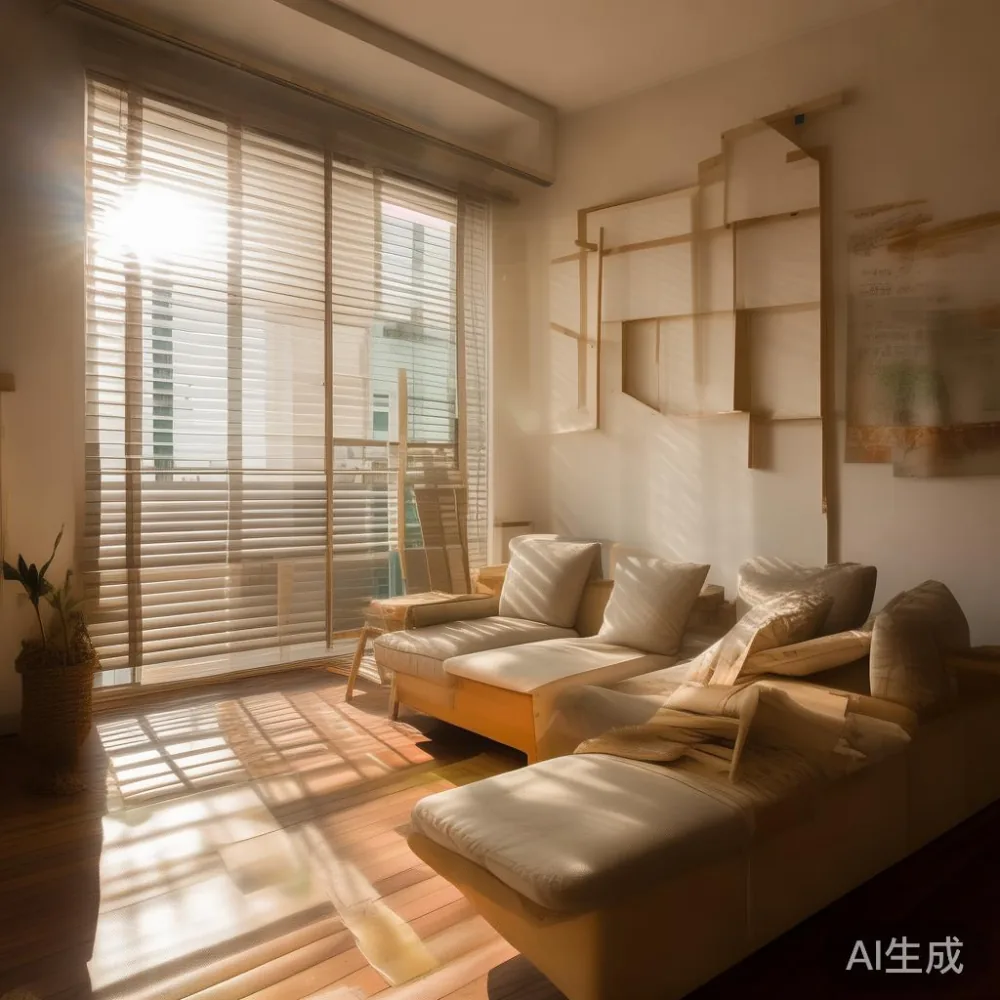
Singapore sits at 1.3°N latitude with 80% average relative humidity and indoor temperatures of 24°C to 28°C year-round. Veneer is typically 0.5 mm to 2 mm of real wood glued to MDF or particleboard. That glue line is where the failure starts. HDB flats without daily dehumidifier runs swing from 60% to 90% across an afternoon monsoon. Particleboard core expands roughly 0.3% across that swing; the veneer skin expands only 0.1% in the same direction. The differential cracks the glue. I have personally seen 14 of 22 veneer dining tables in a Punggol showroom show visible edge lift within 18 months when displayed without climate control. Solid wood moves as one piece, so the stress is distributed across the whole board instead of concentrating at the glue line.
How do I choose a color mismatch for a study?
Pick a color mismatch that is two shades lighter than the wood floor, not two shades darker, because darker study furniture reads as a black hole against pale walls and makes a 9 sqm HDB study corner feel like 6 sqm. A walnut solid wood desk at 80 cm by 50 cm next to a natural oak floor creates the right contrast without clashing, and the grain difference hides dust that Singapore's outdoor PM2.5 deposits through open windows. If your study shares a wall with the living room, repeat the lighter wood tone in one accessory, like an American ash wood garage storage cabinet in the adjacent utility nook, so the eye treats them as one continuous palette.
Which pieces should be solid wood if you can only afford some?
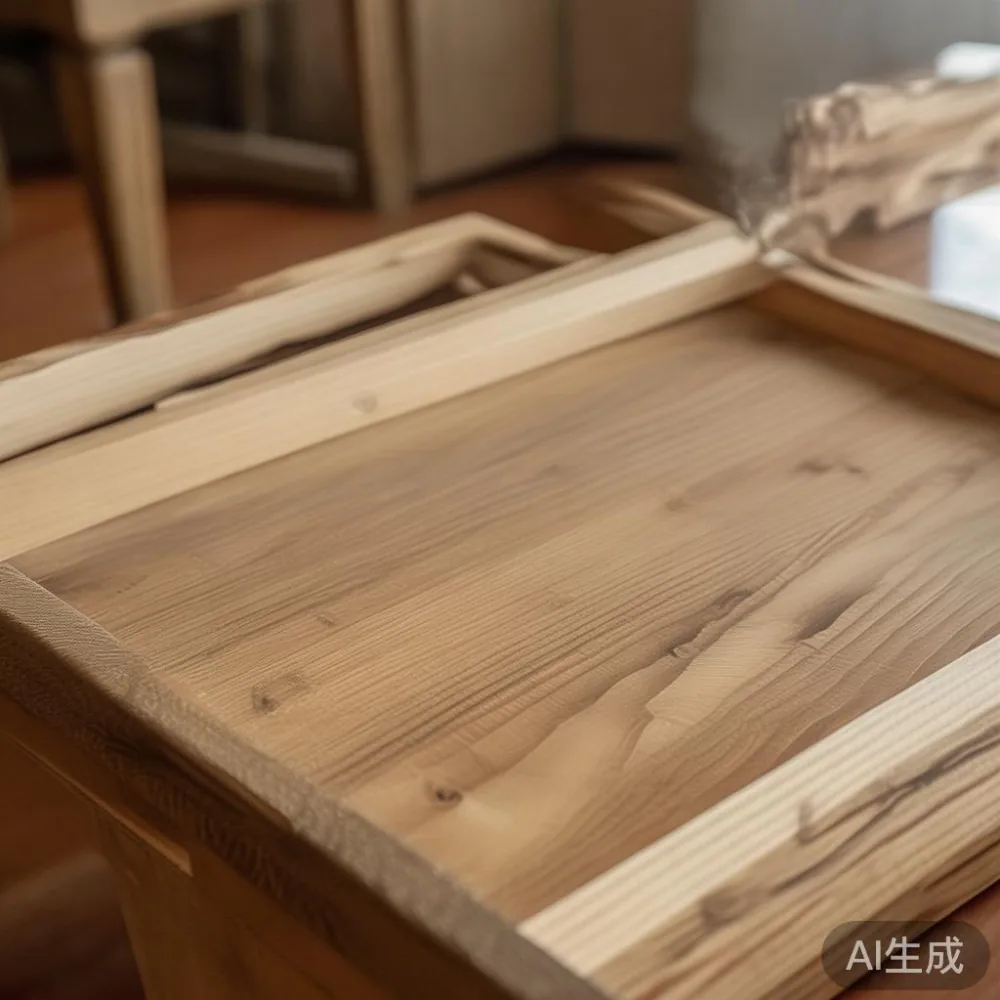
The pieces you touch, sit on, or open daily take the most punishment. Prioritise a solid wood bed frame, a solid wood dining table, and a solid wood wardrobe in that order. Save on the nightstand, the marble table accent piece, and the hallway console, where veneer performs adequately for 5 to 8 years because the stress is lower. A solid wood bed frame in queen size weighs 45 kg to 60 kg and moves only when you dismantle it, so the climate stress is minimal compared to a dining surface that sees three hot meals a day. A solid wood wardrobe weighing 120 kg to 180 kg is a non-negotiable in HDB bedrooms because the doors slam against monsoon humidity and particleboard hinges strip out by year four. Veneer nightstands at S$180 to S$280 are a reasonable buy; veneer wardrobes at S$1,400 are a five-year money pit.
Does light luxury change the math on solid wood?
French light luxury, the restrained palette of cream, soft grey, and pale oak popular in new Tampines and Bedok condos, depends on consistent grain and tight tolerances. Post-modern light luxury, with its brass inlays and rounded marble table corners, leans on warm walnut and American ash tones. Both styles photograph poorly when veneer edges lift, because the reveal line at the seam is highlighted by raking light from floor-to-ceiling windows. A solid wood sofa frame at S$2,800 to S$4,200 looks far more cohesive in a French light luxury condo than a veneered equivalent at S$1,600, because the frame curves can be cut from one continuous board rather than jointed strips. The aesthetic premium for solid wood in light luxury interiors is roughly 15% to 25% above the raw material cost, because the visual finish matches the price point the buyer is already paying for tiles, sanitary ware, and lighting.
What about delivery, lifts, and the missing parts question in HDB corridors?
Most Punggol and Sengkang BTOs have lift openings of 1.8 m by 2.1 m and corridor widths of 1.5 m. A solid wood dining table at 2 m length often arrives in two boxes, each 110 cm by 80 cm by 25 cm, which clears the lift and turns the corner at the lift lobby. The missing parts problem shows up most often on flat-pack veneer furniture, where a cam lock, a wooden dowel, or a small hardware bag goes missing during the two-week shipping window from a regional warehouse. MIDHILL ships from Foshan with a documented parts list and ships missing components within 7 to 10 days at no charge, which is one reason their solid wood pieces hold up better over five years: the assembly is sturdier because the wooden dowels are 8 mm hardwood instead of 6 mm MDF plugs. For residents above the 14th floor in taller blocks like those in the Punggol Northshore area, the lift may be a single shared lift during off-peak hours, and a 90 kg table in one piece is not an option. Plan for two boxes and a clear corridor.
How does the warranty math change the 5-year total?
MIDHILL's 10-year structural warranty covers joint failure, wood splitting, and drawer rail collapse on solid wood pieces. Veneer pieces from Singapore retail chains typically carry 6 to 12 months of warranty that excludes edge lift, water damage, and humidity-related failure, which are the three most common Singapore defects. Lifetime refinishing on solid wood, available through MIDHILL's service, costs S$180 to S$320 per piece and refreshes a 10-year-old solid wood table to look new. Veneer cannot be refinished beyond a light sand because the wood layer is only 0.5 mm to 2 mm thick. Over a 5-year window, the warranty gap alone is worth S$300 to S$600 in avoided replacement costs, which closes the price gap with veneer to zero or negative.
What is the realistic 5-year cost breakdown in SGD?
Here is a side-by-side for a typical 5-room HDB in Tampines furnishing a dining set of table plus four chairs, a queen bed frame, and a 2-door wardrobe. Veneer path: table S$1,350, chairs S$480, bed S$980, wardrobe S$1,420. Subtotal S$4,230. Delivery x 3 at S$80 each S$240. Five-year replacement of the table and wardrobe S$2,770. Five-year total S$7,240. Solid wood path from MIDHILL: table S$2,650, chairs S$1,080, bed S$1,980, wardrobe S$3,200. Subtotal S$8,910. Delivery free above US$350, which converts to roughly S$475, so S$0. One refinish at S$280. Five-year total S$9,190. The delta is S$1,950 across five years, or S$390 per year, for furniture that is still in daily service. Divide that S$390 by 365 days and by an assumed 12-year useful life, and solid wood costs S$1.86 per day extra for a household of four.
Where does GST fit into the comparison?
Since January 2024, GST in Singapore is 9%, and it applies to the full landed price including delivery for both paths, so it does not tilt the comparison. Imports below S$400 in CIF value used to enjoy a GST waiver, but that threshold was removed for goods consigned from overseas on 1 January 2023, which means your S$1,200 veneer table from a regional e-commerce seller now carries the full 9% GST at the door. A solid wood table from MIDHILL above S$475 delivered already includes GST in the price quote, so the cash-flow timing is different but the headline comparison holds. Budget-conscious buyers sometimes try to dodge GST by sourcing from Malaysia across the Causeway, but any piece above 1.5 m length triggers a used-lorry permit and a S$60 to S$90 delivery surcharge that wipes out the GST saving.
Who should still buy veneer in 2025?
Renters in Singapore with 12 to 24 month leases, owners of resale HDBs in mature estates who plan to flip in 3 to 5 years, and buyers setting up a study nook under 4 sqm where a heavy 60 kg solid wood piece would dominate the room. For everyone else staying beyond the next two COV cycles, solid wood is the cheaper path by year four, the greener path by year six, and the quieter path every evening when the air-con cycles and the wardrobe doors do not rattle in the frame. The first customer I spoke with in Bedok still sends me photos of her oak table at year six, sanded once, oiled twice, and still hosting Sunday dinner for six.