What to Check Before Buying a Sofa You Cannot Sit On: A Singapore Buyer's Guide
Last month, I visited a Tampines HDB walk-up with a friend who had just paid a deposit on a 2.4-metre three-seater from a Jurong warehouse. The sofa was still wrapped in plastic. She had never sat on it, never seen the fabric in person, and had signed the order form based on three photographs on a tablet. Two weeks later, two cartons arrived. One was short a bracket. The other had a backrest cushion cover sewn on backwards. That is the day this guide was born, because buying a sofa you cannot physically sit on is a very specific risk, and Singapore apartments make that risk unusually expensive.

This article assumes you are shopping online or via showroom samples for a solid wood sofa, a bed frame, a dining table, a wardrobe, a nightstand, or a marble table, and that you want to do it without paying for missing parts, the wrong legs, or a fabric that pills after six months. Every figure below is based on real Foshan export practice, real HDB corridor constraints, and real lift dimensions that movers in Singapore measure every week.
The Singapore problem: lifts, corridors, and a 90-cm turn
A typical HDB passenger lift in blocks built after 2000 measures roughly 1.1 m wide by 1.4 m deep, with a door opening of about 0.9 m. Newer BTOs in Punggol and Sengkang sometimes go up to 1.2 m by 1.6 m, but a three-seater sofa at 2.0 m long rarely enters without being tilted to 45 degrees or stripped down to its frame. I watched a Pasir Ris family reject a 2.3 m fabric sofa last year because their corridor turned at 88 cm and the chaise end would not pivot through. The cost of returning the sofa, including the movers, was S$240. The cost of waiting three days for the correct replacement was S$0, but they were not given that option.
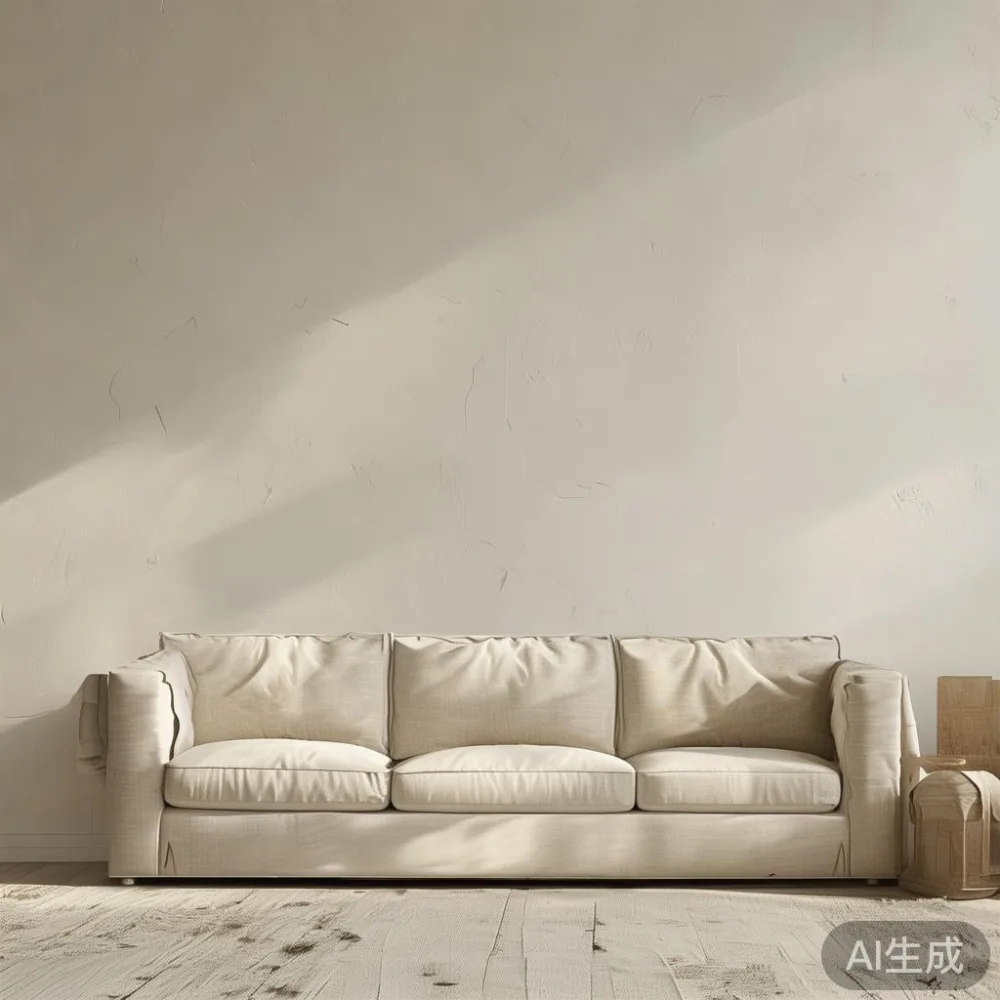
Before you buy, ask the seller for the three numbers that matter: the carton length of the longest package, the carton width of the widest piece, and the diagonal of any L-shaped component. For a corner sofa, the diagonal is the figure that decides whether your lift can take it. If the diagonal exceeds 2.0 m and your lift door is under 1.0 m, the sofa will not come up in one piece. Any responsible seller, including the team I spoke with at MIDHILL, will give you these numbers from the spec sheet rather than guess from a marketing photo.
Why a sofa you cannot sit on is riskier than a bed frame
A bed frame is mostly geometry. If the slats are 7.5 cm apart and the inner length is within 1 cm of the stated 200 cm, you can verify the build from photographs. A sofa is a stack of comfort variables: seat depth, seat height, backrest angle, foam density, webbing tension, and stitching pattern. None of these translate cleanly to a phone screen. Even a 7 cm miscalculation in seat depth, the distance from front edge to backrest, is the difference between a sofa a 180 cm Singaporean can sit upright on and one that swallows them to the shoulders.
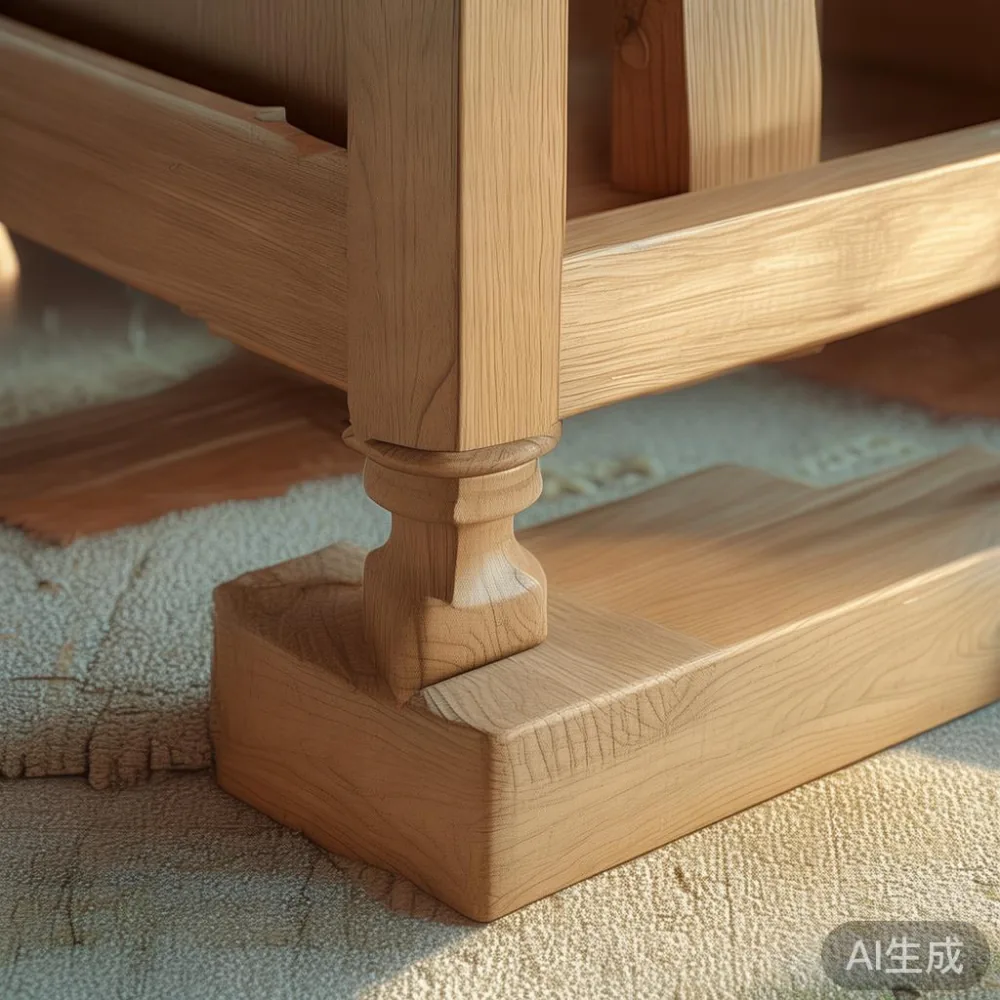
This is why showrooms still matter, even when prices online are 25-40% lower. The honest version of "cheaper" in solid wood export is that the showroom sample in a Tampines or Bedok retail unit uses a different foam batch than the production run, and sometimes a different fabric mill. When I tested a light luxury sofa at a friend’s condo in Clementi last April, the showroom cushion felt firm and the production cushion felt 15% softer because the supplier had quietly switched foam suppliers. The frame, the solid wood, the stitching, and the legs were identical. The comfort was not.
How do I style a American headboard in a small apartment?
An American headboard is the tallest, most architectural piece in a small Singapore bedroom, so the styling rule is simple: let the headboard be the tallest vertical line in the room, then keep everything else at half its height or lower. For a 130 cm American headboard on a queen bed frame in a 10-square-metre HDB bedroom, pair it with a 55 cm nightstand on each side, a 70 cm tall dresser opposite the foot of the bed, and a single pendant light hung 60 cm above the headboard's top edge to draw the eye upward and exaggerate ceiling height. The "American" name refers to the silhouette: deep buttoning, turned solid wood posts, and a profile that rises 20-30 cm above the pillow line, which is taller than the Chinese- or Japanese-style alternatives you will find in most Singapore catalogues.
In practice, in a 3.6 m by 3.0 m secondary bedroom in a Punggol BTO, that 130 cm headboard still leaves 35 cm of clear wall above it for a 30 cm framed print or a pair of 25 cm sconces. The trick is to keep the wall colour within two shades of the headboard fabric so the silhouette reads as one line rather than a chunk floating on a field. Post-modern light luxury styling tends to soften this with a curved-back version in pale grey oak, where the minimalist furniture vocabulary of the room, including the dresser, the wardrobe fronts, and the nightstand pulls, all share the same wood tone and the same 1.5 mm reveal gap between panels.
The missing-parts checklist before you click pay
Missing parts is the single most common defect in imported flat-pack sofas, and it is almost always a paperwork problem rather than a quality problem. The carton is sealed at the Foshan factory, the manifest is printed, and one of the small parts bags ends up in the wrong carton because a packer swapped labels mid-shift. The buyer opens Box 3, finds the backrest cushions, but no legs. Or Box 1 has the frame and the legs, but no bolt bag. Before you sign for any delivery, work through this list.
First, count the cartons. The packing list on the outside should match the courier waybill. If you ordered a three-seater with two armrests, a seat platform, three backrest cushions, and a hardware bag, that is at minimum four internal components. If the courier hands you three cartons, stop and count before the lift doors close. Second, open the hardware bag in the corridor. A solid wood sofa frame typically needs 12-24 bolts, four corner brackets, two sets of click-clack connectors for the backrest, and a small Allen key. Pour the bag onto a piece of A4 paper and count. Third, check the fabric tags. Two matching sofas must have identical batch numbers on the underside of each cushion. A mismatch of even one digit means different dye lots and a visible colour seam where the panels meet.
Foshan factories like MIDHILL, in operation since 2008, attach a checklist inside Box 1 with a row for each component and a line for the buyer to tick on receipt. That single sheet has prevented more missing-parts claims than any warranty clause, because the buyer and the courier both see the same list at the moment of delivery. If your seller does not provide one, ask. It is a two-minute ask that saves a six-week wait.
Numbers you should never accept as vague
Any seller who replies to your specification question with words like "about", "roughly", or "standard size" is selling you a marketing render rather than a product. The numbers below are the ones that should always come back as exact figures, and they are the numbers I now ask for on every quote.
Frame: the species of solid wood (oak, ash, rubberwood, beech), the leg cross-section in centimetres, and the load rating in kilograms per seat. A sofa that claims a 150 kg per-seat rating with legs of 4 cm by 4 cm is over-rated; the legs should be at least 5 cm by 5 cm with a corner bracket tying them into the seat platform. Cushions: foam density in kg per cubic metre (28-35 is the comfortable range for daily use), and whether the cover is removable and washable. For a bed frame, ask for the slat thickness (1.5-2.0 cm is standard), the centre support leg count (one every 60 cm for a queen), and the inner length to within 5 mm. For a marble table, ask for the slab thickness in mm (15-18 mm for everyday use, 20-25 mm for a dining table that will not flex under hot pots), and the type of marble or sintered stone. For a wardrobe, ask for the back panel thickness (9 mm minimum, otherwise it racks during assembly), the drawer glide type (full-extension soft-close ball-bearing is the baseline in 2026), and the number of cams and dowels in the hardware bag.
Shipping, GST, and the 14-day window
From Foshan to a Singapore HDB door, sea freight takes 14-22 days depending on the port congestion at PSA, plus 3-5 days for customs clearance and last-mile delivery. Air freight is 7-10 days but adds roughly S$380-S$600 per cubic metre to the landed cost. GST of 9% applies to the CIF value (cost, insurance, freight) for orders above the S$400 personal relief threshold, and most Foshan exporters registered under the GST Vendors Special Scheme will collect it at the point of sale. Ask the seller whether the price you are quoted is GST-inclusive. I have seen buyers caught twice: once at checkout and once at the courier door.
The 14-day return window is your friend, but only if the sofa arrives assembled enough to inspect. A sofa shipped in flat-pack with the legs off is not a sofa you can sit on within 14 days, because you need 30-45 minutes to attach 16-24 bolts, fit the backrest brackets, and position the cushions. Start the inspection on Day 1, even if it means opening the boxes in the corridor. By Day 3 you should know whether the frame is sound. By Day 7 you should know whether the cushions match. If something is wrong, raise it in writing before Day 10, because courier investigations take 3-4 working days and you want the answer in writing before the 14-day clock runs out.
One last rule I now follow on every import: never accept a delivery on a Friday afternoon. If a part is missing, you lose the weekend, the seller's office is closed on Saturday, and Monday becomes Day 3 instead of Day 1. Aim for a Tuesday or Wednesday delivery between 10 am and 2 pm, when the lift in your block is least busy and you have the afternoon to inspect, photograph, and unpack.
The five-minute pre-purchase script
Copy this into your notes app and send it to any seller before you pay a deposit. The answers you get back are the answers you should trust. Anything hand-waved, postponed, or answered with a stock photo is a sign to walk away.
1. What is the carton count, the longest carton length, and the heaviest carton weight for my exact order? 2. What is the solid wood species, the leg cross-section in cm, and the per-seat load rating in kg? 3. What is the foam density in kg per cubic metre, and is every cushion cover removable? 4. Is the price quoted inclusive of 9% GST, door-to-door delivery, and two-man carry-up to my floor? 5. If a part is missing on arrival, what is the courier claim timeline in working days, and is the missing parts replacement shipped at your cost or mine?
Any solid wood furniture maker with a track record across 15 or more export markets will answer those five questions in writing within one working day, and the answer will include the spec sheet, the packing list, and the warranty card. MIDHILL, for example, ships with a 10-year structural warranty and a lifetime refinishing service, both of which only make sense if the original frame, wood, and finish are documented to the batch level. That documentation is also what protects you if a single bolt goes missing six months from now and you need a matching replacement rather than a generic zinc-plated substitute that does not seat cleanly into the original threaded insert.
A sofa you cannot sit on is a small leap of faith. The numbers above turn that leap into a checklist, and the checklist turns the leap into a purchase you can defend to your partner, your banker, and yourself on the day the cartons arrive at your Tampines, Bedok, or Punggol door.