Lacquered Surface Care in Singapore's Climate: Owner's Tips
The lacquered coffee table in your Tampines BTO looked flawless on the day the delivery crew carried it up the lift. Eighteen months later, a faint cloudy ring has appeared where your kopi cup sits, and the dining table near the air-con vent has developed hairline cracks along the grain. I visited a client in Punggol last month whose brand-new sideboard arrived with the corner guard missing parts — the protective foam block that should have held it steady inside the carton had come loose, and the lacquer took a small chip from the metal bracket. The piece itself was fine, but it drove home a point I now share with every customer: lacquer and 32°C humidity with 85% RH do not get along by accident. They get along because someone pays attention.
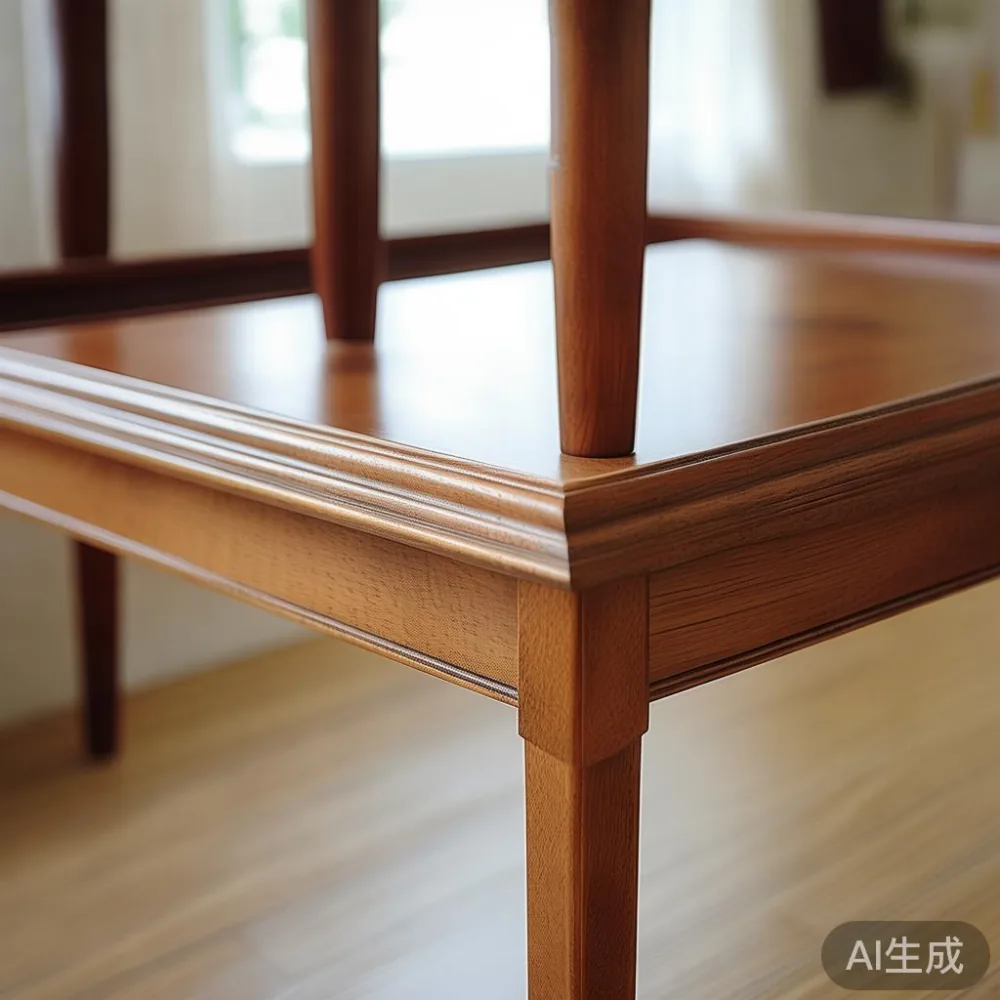
This guide is written for anyone in Singapore — HDB corridor in Bedok, condo lift in Clementi, landed porch in Bukit Timah — who owns a solid wood dining table, a lacquered wardrobe, a marble-topped side table, or a bed frame finished in piano gloss, and wants to keep it looking the way it looked on day one.
Why Singapore's Climate Is Specifically Harsh on Lacquer
Lacquer is a film. Unlike oil finishes that soak into the wood, lacquer sits on top as a continuous skin — usually 3 to 7 coats, each sanded and buffed before the next is sprayed. That skin is what gives a French light luxury sideboard its mirror-soft glow. It is also the first thing that fails under thermal shock.
Singapore sits between 24°C and 34°C for most of the year, with relative humidity routinely above 80%. When you run the air-conditioner at 22°C directly above a lacquered dining table, the surface temperature can swing 8 to 10°C within an hour. Lacquer expands and contracts at a different rate than the solid wood underneath, so the film stretches and pinches. After 200 to 400 such cycles, micro-cracks appear — the ones that look like the wood is "bruising" through the finish.
UV is the second enemy. UV penetration through a west-facing HDB window in the afternoon is around 800 to 1000 µW/cm². Lacquered surfaces exposed to that level of direct sun will amber noticeably within 6 to 12 months. A walnut dining table that arrived honey-brown will drift toward orange within a year if you skip the curtain.
Salt is the quiet one. Singapore's coastal air carries chloride particles that settle on every horizontal surface. On raw wood, they cause white bloom. On lacquer, they crystallise inside micro-scratches and make the scratches look deeper than they are.
The 7 Habits That Actually Make a Difference
I keep a laminated checklist taped inside my client's wardrobe door in Bedok. They tell me it is the most-used page in the house. Here is the same checklist, with the reasoning behind each line.
1. Keep humidity between 45% and 60%. A SGD 25 hygrometer from any neighbourhood electronics shop in Tampines Mall is the single best purchase you can make. Below 45%, solid wood shrinks and joints loosen. Above 65%, lacquer blushes and goes cloudy.
2. Maintain a 60 cm buffer from the air-con vent. Direct cold airflow is the number-one cause of the "spider web" cracking pattern across dining tables and bed frames. If your layout forces a table under a vent, angle the louvre 30° away and accept that the piece will need refinishing sooner.
3. Use coasters, every time, without exception. A cold mug of barley at 5°C on a 26°C lacquered nightstand creates the same thermal shock as the air-con vent. Felt-bottomed coasters in SGD 12 packs from IKEA Alexandra are perfectly adequate.
4. Wipe with a damp microfibre, never a wet cloth. "Damp" means wrung out so it feels almost dry. A wet cloth leaves water in the seams of the lacquer where it migrates under the film and turns the wood grey from within.
5. Clean spills within 60 seconds. Lacquer resists most household liquids for about a minute. After that, coffee, soy sauce, and red wine start to etch.
6. Dust weekly with a dry microfibre. Dust is mostly silica. Dragged across lacquer with a feather duster, silica scores the surface like wet sand on glass.
7. Apply a paste wax once every 4 months. A thin coat of Renaissance Wax or similar microcrystalline wax (SGD 35 to 55 a tin, available at Havelock hobby shops) buys the lacquer another layer of UV and moisture protection. Buff with a soft cotton cloth in the direction of the grain.
What is the difference between French sectional sofa and modern furniture?
The difference is mostly one of proportion, silhouette, and finish philosophy, not of era: a French sectional sofa refers to a modular upholstered seating system whose design vocabulary traces back to 18th-century French craftsmanship — fluted legs, shallow tufting, restrained curves, and a matte or low-sheen textile — whereas "modern furniture" is a broader umbrella covering pieces built from the early 20th century onward that prioritise clean lines, exposed structure, and industrial materials such as steel, glass, and engineered wood. In Singapore showrooms you will often see the two placed side by side because they share a quiet, light-luxury register, but the sectional will lean on hand-carved beech and down-wrapped cushions, while a modern sofa will lean on powder-coated steel legs and high-resilience foam wrapped in a single tailored cover.
The distinction matters when you are caring for lacquer in a tropical climate because French-style pieces often carry hand-applied shellac or conversion varnish that needs gentler solvents, while modern pieces tend to use catalyzed lacquers cured under UV lamps that resist household chemicals far better. Read the care card that came with your specific piece, not the category it sits under.
What to Do When Your Delivery Arrives With Missing Parts
It happens more often than people think, even with well-packed containers. Last quarter a MIDHILL customer in a Punggol Waterway Heights BTO opened her crate for a solid wood dining table set and found the corner blocks missing parts — three small foam protectors that should have held the table top against the metal bracket had come loose and were sitting in the bottom of the carton, rolled into a corner. The table itself was untouched, but the documentation sticker was scuffed.
Here is the protocol I recommend. Photograph the carton before you open it, then photograph each piece as you unwrap. Note on the delivery waybill, in writing, every visible issue: "missing parts — 3 foam corner blocks," "bracket scuff 4 cm," "minor lacquer nick on left apron." A photo with a coin or measuring tape next to the damage gives the claim team something to scale against.
Email the photos to the supplier within 48 hours. Reputable Foshan factories carry liability for transit damage and will ship replacement parts — corner blocks, cam locks, drawer slides, lacquer touch-up sticks — by air at their own cost. MIDHILL keeps a 14-day missing-parts window and a separate lifetime refinishing promise; the two together mean a small chip on a sideboard can be repaired at your home for the cost of a SGD 30 technician call-out, never a full replacement. When you evaluate any solid wood sofa, bed frame, or dining table maker, ask in writing whether missing-parts claims are honoured after the standard return window closes. The answer tells you almost everything about how the factory behaves three years later.
Spot Repair vs. Full Refinish: When to Do Which
A lacquered surface has three failure modes, and each one calls for a different response.
Surface marks — water rings, cup prints, light scratches — respond to a 10-minute buff with a polishing compound (SGD 18 to 28 a tube). Use a soft cotton cloth, work a 30 cm circle, and stop as soon as the mark fades. Over-buffing cuts through the lacquer and exposes the wood.
Localised damage — chips, deep scratches, peeled corners — needs a touch-up. Most Foshan factories ship a small tin of colour-matched lacquer with every dining table and wardrobe. A technician feather-coats the chip, lets it flash off for 20 minutes, levels with 1500-grit wet paper, and buffs. The cost in Singapore is typically SGD 80 to 180 per spot.
Widespread failure — ambering, full-surface spider-web cracking, peeling along the seams — means the piece is due for a full strip and re-lacquer. Strip a Post-modern cherry wood armchair by hand, scuff-sand to 320 grit, seal with two coats of sanding sealer, and spray six to eight topcoats. A workshop in Singapore charges SGD 380 to 720 for a dining table refinish, depending on size and number of coats. The piece comes back looking new because, chemically, it is new.
Humidity Control: The SGD 200 Setup That Pays for Itself
If you own more than two lacquered pieces — a bed frame, a wardrobe, a sideboard, and a dining table is already four — a room-level dehumidifier pays for itself within a year in saved refinishing costs.
The setup I recommend for a 90 sqm HDB flat in Tampines or Bedok: a 12-litre dehumidifier (SGD 220 to 320 from Courts or Harvey Norman, 12-month warranty), run on a plug-in timer for 8 hours overnight in the living area and 4 hours in the bedroom. Empty the tank in the morning. Pair it with a humidity gauge on the wall opposite the dining table so the reading reflects the worst-case spot.
Target 55% RH. At that level, lacquer is chemically stable, solid wood neither swells nor shrinks visibly, and the dust load on horizontal surfaces drops because humid air carries more particulates out through the air-con filter instead of letting them settle.
Condos with central air-handling already dehumidify to 50 to 60%, so a smaller 6-litre unit (SGD 150 to 200) suffices. Landed property in Bukit Timah or Loyang often has individual FCU units per room — run each at 24°C, not 22°C, and the furniture will thank you.
Light-Luxury Positioning, and Why It Matters for Care
The light-luxury segment — whether the vocabulary is French light luxury, American light luxury, or the post-modern light luxury you see in MIDHILL's catalogue — shares one practical trait: pieces are smaller in footprint, lighter in visual weight, and finished with multiple thin coats of conversion varnish rather than the heavy French polish of antique reproductions.
That finishing choice has direct care consequences. A French-polished escritoire needs a wax-and-spirit rub every quarter and never sees a damp cloth. A light-luxury lacquered sideboard accepts a damp microfibre, a paste wax, and a 12-litre dehumidifier without complaint. The trade-off is that the lacquer is harder and clearer than French polish, so a scratch shows up more sharply when it does occur — which is why coasters, placemats, and felt pads are not optional accessories but part of the spec.
When you shop for a new solid wood sofa, bed frame, dining table, wardrobe, or nightstand, ask which finishing system the factory uses, how many coats, and what the cure time was before the piece was crated. A piece that left the spray room less than 72 hours before packing will outgas inside your home for months, and the trapped solvents will bloom the lacquer as they try to escape. A properly cured piece — 7 to 14 days in a climate-controlled booth — arrives inert and stays that way.
Storage, Moving Day, and the HDB Lift Problem
Three numbers matter on moving day in a Singapore HDB: lift depth (usually 1.2 m), lift door width (0.9 m), and corridor turning radius (about 1.5 m at the stairwell). A queen-size bed frame in solid walnut will not fit standing up in most passenger lifts; it goes in flat, which means the lacquered headboard travels face-down on a moving blanket.
Buy two SGD 18 moving blankets, wrap the headboard twice, and tape the edges so the blanket cannot slide. A marble table top — even one with a lacquered underside — should travel in its own custom crate, never on its edge. Marble has a Modulus of Rupture around 15 to 20 MPa; on edge, a 120 cm tabletop concentrates its 35 to 50 kg weight onto a 4 cm contact strip and snaps cleanly.
If you are storing lacquered pieces during a renovation, do not put them in a storeroom that is not air-conditioned. A 90 sqm store room in Jurong with no climate control will hit 85% RH through the monsoon months, and the pieces will arrive at your new flat with mould blooms inside the drawer slides. Either rent a climate-controlled unit (SGD 220 to 320 a month for 50 sqm) or leave the pieces in the empty flat with the air-con running on a thermostat at 26°C.
When to Call the Factory Instead of the Local Repair Shop
Local technicians are excellent for spot repairs and routine waxing. For anything structural — a cracked bed frame joint, a drawer that no longer lines up on a wardrobe, a dining table that has cupped across the width because the leaves were stored in a dry room — go back to the maker.
MIDHILL, like most responsible Foshan exporters, keeps a 10-year structural warranty on solid wood frames and a lifetime refinishing promise on lacquered surfaces. Shipping a technician from Singapore to a customer's home costs the factory roughly SGD 180 to 260 per visit, which is why they only do it for genuine warranty work, but the warranty is real and the response is fast when the claim paperwork is in order.
The paperwork that gets claims paid quickly: the original invoice, the delivery waybill with the missing-parts note, three to five photos with a ruler in frame, and a two-line description of the issue in plain English. Send those four things and you will have a resolution — replacement parts, refinishing visit, or full credit — within 10 working days. Skip any one of the four and the claim sits in a queue.
A 12-Month Care Calendar for Singapore Owners
January: Deep wax all horizontal surfaces. Inspect the dining table for cup rings accumulated over Chinese New Year gatherings.
February to March: Humidity climbs past 80%. Empty dehumidifier tanks daily. Check wardrobe interiors for any musty smell.
April: Pre-monsoon inspection. Tighten any visible bolts on the bed frame and dining table. Wood moves with humidity, so an annual bolt check is not optional.
May to July: Peak monsoon. Keep windows closed between 6 a.m. and 10 a.m. when humidity peaks. Wipe down lacquer weekly even if it looks clean.
August: Mid-year wax.
September to October: Haze season. Particulate matter spikes. Dust daily instead of weekly. Replace air-con filters.
November: Year-end wax and inspection. Photograph any wear so you can compare against next year's cycle.
December: Holiday entertaining. Place felt runners on the dining table. Accept that the sideboard will see more glassware than usual and budget a polish for January.
What I Tell Every New Customer on Delivery Day
I wrap every delivery visit with the same five-minute conversation. Keep humidity at 55%. Coaster everything. Wring the cloth until it feels dry. Wax quarterly. Photograph the piece in the same spot, under the same light, every January. Those five sentences, repeated for the life of the furniture, are what separate a dining table that looks new at year ten from one that needs a full strip at year three.
The piece itself is built to last — solid wood, kiln-dried, properly jointed, finished in 6 to 8 coats, crated for a 25-day sea voyage. The owner is the variable. Give it two minutes a week and a wax twice a year, and the lacquer will outlast the warranty, the air-conditioner, and probably the lease on the flat.