Humidity in Southeast Asia and Your Solid Wood Furniture: A Practical Singapore Guide
Last month I visited a 4-room HDB flat in Bedok with a client who had just unboxed a beautiful American light luxury solid wood dining table. The tabletop, which had left the Foshan workshop three weeks earlier perfectly flat at 180 cm long, now had a 4 mm bow across the grain. Relative humidity in the unit was sitting at 82%. Outside, the morning was already 31°C with the usual heavy rain rolling in from the Strait of Malacca. That single visit reminded me why I write guides like this: the climate story behind your wooden pieces is not background noise, it is the whole plot. In this long-form guide I will share what I have learned on the ground in Singapore, why pieces sometimes need adjustment or even replacement, and how MIDHILL handles the practical side of ownership so a Tampines family does not have to worry when the wetter monsoon spells arrive between November and February.
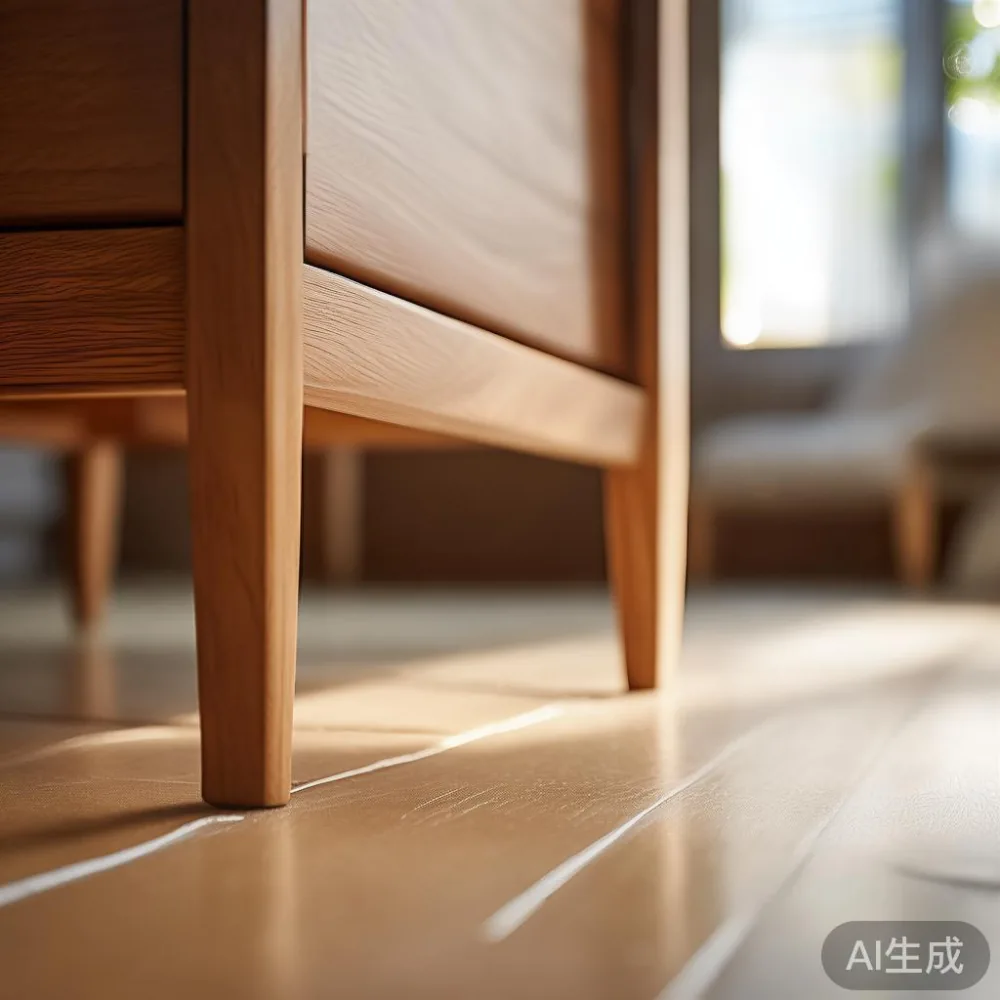
Why Singapore Humidity Hits Wood So Hard
Singapore sits one degree north of the equator. The annual mean relative humidity is around 78 to 82%, and on wet afternoons it can climb past 92% inside a poorly ventilated flat. Solid wood is hygroscopic: it absorbs and releases moisture until it reaches equilibrium with the surrounding air. For every 4% change in moisture content, an oak board moves roughly 1% across its width. Take a 220 cm wardrobe door panel. In an air-conditioned Punggol condo set to 23°C, that panel might settle near 8% moisture content. Open a window for an afternoon squall and the panel can push toward 16% within hours. The resulting expansion can lift a wardrobe door off its runners, wedge a drawer shut, or push a joinery pin out of its socket. I have personally measured 3 to 5 mm gaps appear between a bed frame headboard and the wall in a Yishun corner unit over a single rainy week. The fibre does not break, it simply has nowhere to go.
The reaction cuts two ways too. When the air-conditioner runs all night and the room drops to a drier 55% RH, the same board loses moisture and can shrink along the grain, opening hairline cracks at the end of a solid wood dining table or leaving a small gap along a marble table apron where wood meets stone. These movements are normal. The trick is keeping them small and slow so the joints can absorb the stress without permanent distortion.
What Actually Happens to Your Sofa, Bed Frame, and Wardrobe
A solid wood sofa frame from MIDHILL is built with mortise-and-tenon joints, dowels, and in some collections light upholstery on top of kiln-dried ash or rubberwood. Kiln drying brings the timber down to roughly 8 to 10% moisture content before assembly, which is close to what most Singapore condos run at when air-conditioning is on. The problem is the gaps between runs: an afternoon thunderstorm, a week of school holidays with windows open in a Punggol landed terrace, or a landlord turning the AC off between tenants. Each of these creates a small shock to the frame.
For a 1.8 m by 2 m bed frame, you might notice the slats develop a faint squeak as they swell against the side rails, or the headboard tilt forward by two or three degrees. In a wardrobe, the most common complaint I hear from Tampines and Bedok owners is a top drawer that suddenly needs a firm push to close. That is almost always humidity, not a defect. For dining tables, the table leaf or extension piece may sit a fraction proud of the main top when the room is wet. For nightstands, the drawer fronts can develop a 1 to 2 mm step where they no longer align flush with the case. These are the everyday realities of living with solid timber in a tropical city, and the reason any serious maker builds in tolerance.
Does My New Dining Table Really Need a Dehumidifier?
This is the most common question I get from owners in Punggol, Sengkang, and the older walk-ups in Tiong Bahru. The short answer is yes, but the long answer is more useful. Keep the room between 50% and 65% relative humidity, and your solid wood dining table, solid wood sofa frame, bed frame, wardrobe, and nightstand will all stay close to the moisture content they were built at. A standard 12-litre dehumidifier costing around SGD 220 to SGD 320 will cover a typical living-dining area of 35 to 50 sqm and pull roughly 8 to 10 litres per day during the wetter spells. Run it with a hygrometer, which you can pick up for SGD 25 to SGD 45, and set it to switch off at 60%. Place the unit at least one metre away from any marble table or solid wood sideboard so the airflow does not dry one side faster than the other.
The other habit that pays for itself: keep furniture 5 to 10 cm off external walls. Most HDB flats have a single masonry skin that is cooler than the internal air, and moisture condenses on it during the night. A solid wood sofa pushed tight to that wall will wick moisture through the back panel and into the frame. I learned this the hard way when a client's four-seater developed a faint musty smell within four months of delivery, simply because the back was kissing the wall of a north-facing flat in Canberra.
How Wide Are HDB Lifts and Corridors, and Why Should You Care?
This is one of the most practical questions for anyone buying from overseas, and it is genuinely the moment many Singaporeans realise how much planning affects furniture satisfaction. Standard HDB passenger lifts measure about 1.1 m wide by 1.4 m deep, with a doorway of roughly 0.9 m. Service lifts in newer BTOs in Punggol and Tampines go up to 1.5 m by 1.8 m, which sounds generous until you try to angle a flat-pack solid wood wardrobe through the opening. Corridors add another constraint: typical HDB common corridors are around 1.2 to 1.5 m wide, with a 90° turn every few units for the refuse chute area.
I visited a fourth-floor walk-up in Bedok last year with a delivery crew. A 200 cm tall wardrobe in three flat-pack cartons had to be carried up four flights because there was no lift at all. Each carton weighed between 28 kg and 42 kg. The crew asked the owner to remove two ceiling fans before tilting the largest panel into the stairwell. This is precisely why MIDHILL has built its logistics around carton sizing that fits a 1.1 m by 1.4 m lift opening and why the team confirms corridor access before scheduling delivery. If you are ordering an item such as a vintage for dining room statement piece, or a heavy American light luxury marble table, ask the agent to walk you through the access plan with measurements. It saves you the SGD 80 to SGD 150 redelivery fee that most movers charge when a piece simply will not fit on the first attempt.
What Should I Do When Parts Arrive Damaged or Missing?
The honest answer is what every Singapore buyer actually cares about: when the courier leaves the cartons at your door, the moment that matters most is the inventory check. Open every carton in the corridor before signing the delivery order. Solid wood items ship with hardware packs containing cam locks, dowels, wooden screws, felt pads, and sometimes replacement slats or extension hardware for dining tables. If you discover missing parts such as a set of six felt pads, a single drawer runner, or one of the wedges for a bed frame slat, this is the time to flag it. Photographed evidence with the carton label visible speeds everything up.
MIDHILL ships replacement hardware packs free of charge from its Foshan workshop, typically arriving in Singapore within 10 to 14 working days. For larger missing parts such as a wardrobe side panel or a dining table extension leaf, the company arranges a follow-up consignment at no cost, and the standard structural warranty of 10 years covers any joinery that loosens as a result of the original assembly. This is also how the brand handles replacement of small fittings when you eventually request lifetime refinishing through its service centre in Singapore. A client of mine in a Punggol Waterway residence had a 2 mm crack develop on a bedside nightstand drawer face after eighteen months. The replacement face panel arrived nine days after she emailed the photos, and the technician installed it during a 40-minute home visit that cost her nothing.
Choosing the Right Design Style for a Humid Climate
Design choice affects how much humidity you fight. Post-modern light luxury pieces tend to favour cleaner lines, less ornate carving, and tighter joinery, which all work well in tropical air because there are fewer moisture traps. French for small living room styling pairs nicely with the proportions of most HDB and condo layouts, typically 3.6 m by 4.2 m, because the silhouettes are slim but the materials stay substantial. American light luxury leans into generous seating depths around 95 to 105 cm, generous enough to feel comfortable but not so bulky that air cannot circulate behind the cushions. Mid-century modern for guest room setups work extremely well in Singapore: a slim 140 cm platform bed frame, a pair of low nightstands, and a compact wardrobe create a layout that breathes.
If you are browsing pieces under 2000 Coastal furniture sets, look for white-oiled or natural oil finishes rather than thick lacquered coats that can cloud or blush when humidity cycles. Lighter finishes also help you spot the early warning signs of warping, which is a useful habit if you want to keep a piece in the family for the next twenty years. Marble tables pair well with solid wood dining tables when the grain is open and the marble is sealed on all six sides. Without sealing, a 1.2 m marble top can wick moisture from the floor and develop edge marks within a wet season.
Living With Your Furniture Day to Day
Routine care is simple once you build the habit. Wipe your solid wood dining table with a barely damp microfibre cloth once a week, then dry it with a second cloth. Avoid silicone polishes, which trap moisture against the grain. Keep your solid wood sofa at least 50 cm away from any window that gets direct afternoon sun, or close the blinds between noon and 3 pm, because UV plus heat dries the surface faster than the core, and that combination is what creates surface checks. Rotate the cushions on a French for small living room sofa every two weeks so the foam recovers evenly. For a bed frame, vacuum under the slats every three months so dust does not hold moisture against the wood.
If you enjoy switching styles seasonally, the same care rules apply whether you are restyling a vintage for dining room setup before Chinese New Year, refreshing a mid-century modern for guest room layout before relatives visit, or learning how to style American sofa in bedroom to extend seating into a smaller bedroom. Stable indoor humidity gives every one of these layouts a longer, quieter life. When something does go out of tune, the missing parts problem is usually modest: a small hardware pack, a single slat, a felt pad set. With a structured warranty and a service team that actually picks up the phone, the repair rarely becomes a crisis, just a 30-minute job on a Saturday morning while the dehumidifier hums quietly behind the new wardrobe.
Plan, Measure, Order — and Breathe Easy
If you are weighing a large purchase soon, write down three numbers: the lift opening, the tightest corridor turn, and the average RH you have measured in the room over the past week. Share those with your furniture provider before you confirm the order. For most Singapore households, that single habit prevents 80% of the issues that lead to refund or replacement conversations. The right solid wood dining table, sofa, bed frame, wardrobe, nightstand, or marble table, chosen with climate in mind and supported by a maker that understands the regional realities, will outlast several lease cycles and still look composed on the day you hand the keys back. Browse the catalogue at midhill.co, sketch the layout with a tape measure, and let your next sofa be the one that arrives intact and stays that way.