Missing Parts: What Actually Drives the Price of Solid Wood Furniture
I spent a Saturday last month walking the factories down the Foshan-Lecong corridor with my colleague, who is sourcing a solid wood sofa and a 2-metre dining table for her new Punggol BTO. We compared boards from four workshops in one afternoon, and the spread between two identical-looking oak frames was S$1,640 for the same dimensions. Same colour, same silhouette, same number of legs. What changed the number was hiding in the parts nobody photographs for the catalogue: the moisture content of the planks, the joinery under the seat, the thickness of the tabletop, the grade of the finishing coat. Most buyers see the front of a piece; the price is decided by the parts you never see. That is what the industry quietly calls missing parts, and it is the single largest driver of price in solid wood furniture.
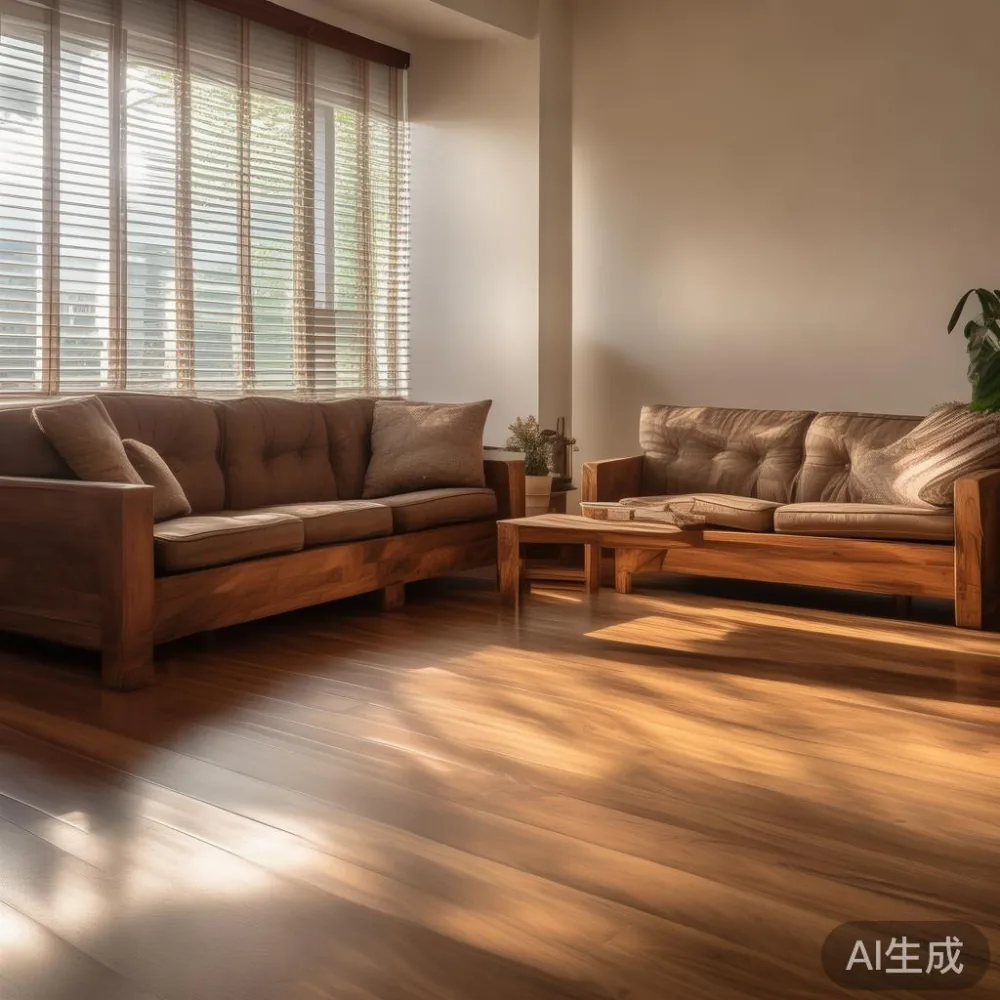
Singapore shoppers are unusually well placed to notice this. HDB doors in newer flats like those in Punggol are typically 0.9 m wide, with lift openings around 1.0 m and corridors that turn tightly at 1.2 m. A European-style wardrobe that arrives without a breakdown of panels often fails the building test, gets refused at the loading bay, and costs the buyer a second delivery fee of S$120 to S$220. When a piece is engineered to be carried up a Tampines corridor in flat-pack form, that engineering is part of the price, and so are the missing parts you would have paid for if the maker had skipped it.
What are "missing parts" and why do they matter so much in a price tag?
Missing parts, in plain language, are the components a furniture maker can leave out, downgrade, or quietly substitute without changing the look of the finished piece. They include the kiln-dried core under a tabletop veneer, the dovetailed drawer box behind a smooth MDF face, the corner blocks inside a sofa frame, the felt pads under a marble table, the full-extension soft-close rails in a wardrobe, and the wood plugs covering countersunk screws on a bed frame. None of these parts appear in the product photo. Every one of them appears in the bill of materials.
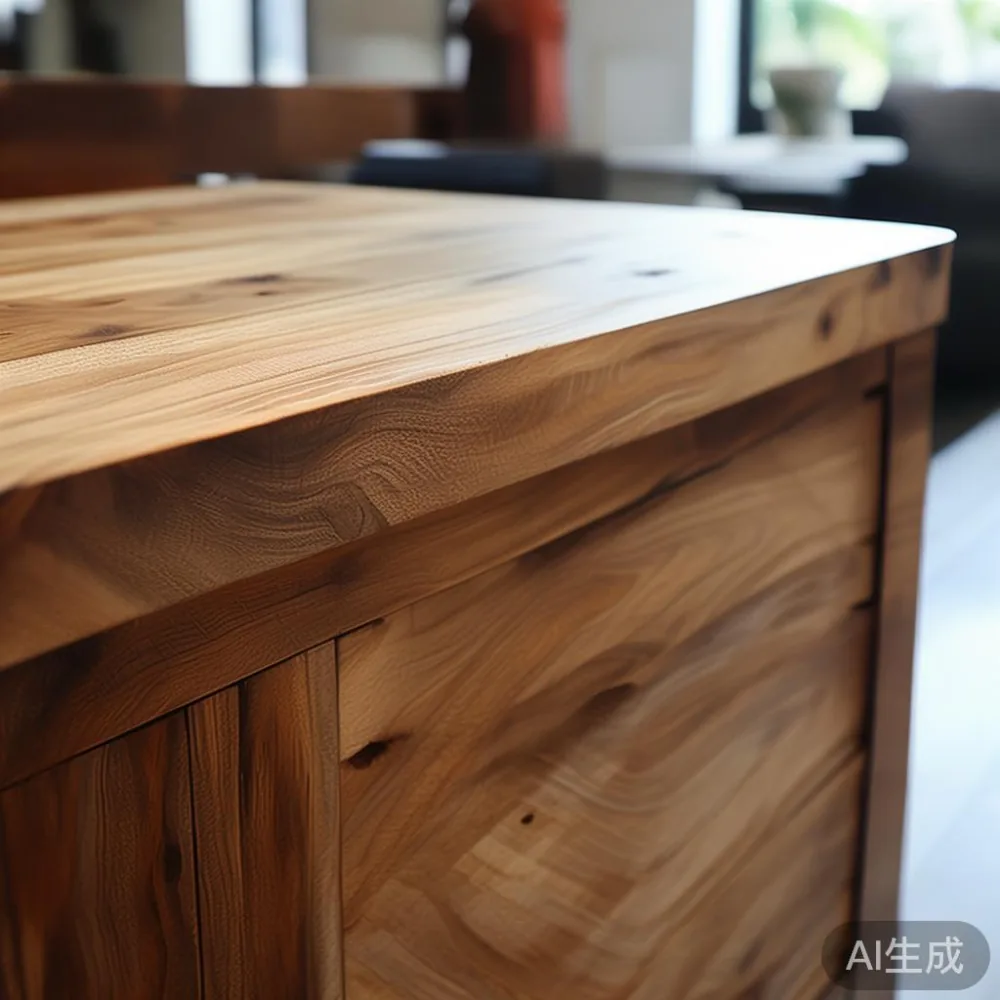
Two dining tables can both measure 1.8 m, both use a walnut stain, both retail around S$1,780, and still be S$700 apart in real value. The cheaper one ships with a 14 mm tabletop over a hollow core, the more expensive one carries a 32 mm solid plank. The cheaper one uses cam-lock fittings visible at the corners, the more one uses mortise and tenon with drawbore pins. Those are missing parts in the spec sheet, but they are not missing from the price. To understand what you are paying for, you have to understand which parts the maker has quietly taken out.
Wood species, board thickness, and the moisture number that decides whether your bed frame survives a Singapore year
Wood is the headline cost drivers see in 70 percent to 80 percent of the material budget for a solid wood sofa, bed frame, dining table, wardrobe, or nightstand. The species sets the band, the thickness sets the feel, and the moisture content sets whether the piece survives the first monsoon season. A kiln-dried white oak plank at 8 percent moisture is a different product from the same plank air-dried to 14 percent. The first is stable across the 24 °C to 32 °C, 70 percent to 90 percent humidity range of a Singapore bedroom; the second is the one that gaps, cracks, and twists the warp by Chinese New Year.

Counters in Foshan showrooms run from around S$2.80 per board foot for rubberwood and poplar, to S$6.20 for ash, to S$11.40 for white oak, to S$16.80 for walnut, and above S$22 for imported Burmese teak. A 2.0 m x 1.0 m dining tabletop in solid walnut at this rate already absorbs roughly S$1,330 in raw timber before a single coat of finish is applied. Add a 2 mm to 3 mm expansion gap along every long edge, a steel insert to control cupping, and the labour for a 6-step finishing cycle, and you are at S$1,900 to S$2,400 before freight. Those numbers explain the retail bands, and they also explain why a brand can claim walnut on the label while quietly using a 3 mm walnut veneer over rubberwood for an entirely different landed cost.
Bed frames are where moisture mistakes hurt the most. I have measured bed frame side rails in three Tampines homes this year that had opened a 4 mm to 6 mm seasonal gap within eight months of delivery, all because the timber was not properly conditioned before assembly. Properly kiln-dried hardwood, finished on all sides, with floating joinery that allows the rail to expand and contract, is what you want. If the spec sheet does not mention moisture content, kiln time, or finishing coats, that is one of the missing parts hiding in plain sight.
Is the price difference between a S$980 dining table and a S$2,800 dining table really just the wood?
Not really, no. Wood accounts for a meaningful slice, but the rest comes from joinery, finishing, hardware, and what is inside the case goods. A drawer box made with dovetail joints on solid poplar, riding on full-extension soft-close runners, costs the maker roughly four times as much as a stapled MDF box on a basic roller slide. A marble top from Carrara at 18 mm thick, sealed on all six sides, adds S$520 to S$780 over a printed porcelain alternative for a 1.4 m marble table. Leather for a solid wood sofa frame with a 1.6 mm to 1.8 mm top-grain hide runs from S$18 to S$34 per square foot, while corrected-grain or bonded alternatives drop to S$6 to S$10.
Hardware is another silent line item. A soft-close hinge from a recognised maker runs S$6 to S$14 each, while a generic pin hinge runs S$1.20. A wardrobe with 15 hinges and 4 soft-close runners absorbs S$180 in hardware alone. Glides, corner brackets, bed slats, levellers, and felt pads each cost a few dollars, and together they add up to S$60 to S$140 per piece. They are the most easily cut parts in a budget, which is why they are the most commonly cut parts on a spec sheet.
For French light luxury and American light luxury styling, the joinery under the surface has to do with country of origin and the labour rates behind it. Post-modern European and Asian workshops command different hourly rates, and that flows into the final number on furniture you buy. MIDHILL works with European-trained joiners in Foshan, which is why their S$2,400 to S$3,800 dining tables hold their tolerances through a Singapore shipment. I watched a colleague unpack a MIDHILL piece last month and the joinery was visible without a torch, which is not always the case in this category. The point is not the brand, it is the fact that consistent workshop rates pull labour hours into the final price.
Shipping, GST, and the delivery math that changes once you measure your Tampines corridor
Freight from Foshan to a Singapore address runs from roughly S$420 to S$780 per cubic metre for an LCL shipment, or S$2,400 to S$3,200 per 40-foot container for FCL. GST is calculated on the CIF value plus duty, currently 9 percent for furniture imports into the country. A S$1,800 stone, with S$540 freight and S$90 duty, lands at about S$2,640, and the 9 percent GST adds another S$238, taking the landed figure to roughly S$2,878 before last-mile delivery. Last-mile delivery inside Singapore, including the two-man lift carry into a Bedok HDB on the 7th floor without a direct lift, runs S$80 to S$180 depending on access.
This is where the missing parts discussion meets the corridor discussion. A wardrobe that arrives as five flat panels, a nightstand that ships as a single 22 kg box, a bed frame that breaks down into eight parts under 30 kg: each of these decisions saves on freight, on the risk of damage, and on the S$120 surcharge that some carriers levy for items over 1.6 m. The piece costs less to deliver if the team built it to be deliverable. That engineering is rarely listed as a line item, yet it can shift the total delivered price by 6 percent to 12 percent.
For shoppers searching the best Nordic sofa for 2026, the same logic applies. A Nordic sofa designed to ship as a 1.4 m x 0.7 m x 0.45 m flat-pack, weighing under 35 kg per package, saves roughly S$180 to S$260 on freight into a Punggol flat compared to a fully assembled 2.4 m sofa weighing 95 kg. The savings often fund the upgrade from a basic foam cushion to a pocket-spring core wrapped in down.
What should a Singapore buyer actually check on the spec sheet before paying?
Five numbers tell you almost everything. First, the wood species, written in full, with no vague phrases like "premium hardwood" or "imported timber". Second, the board thickness at the load-bearing planes: tabletop, seat platform, bed frame side rail, wardrobe side panel. Third, the moisture content and kiln time, if stated. Fourth, the hardware brand and slide/hinge type for any drawer or door. Fifth, the finishing cycle: number of coats, sealer type, topcoat, and whether all six sides of a panel are sealed. If any of these five are missing from the spec sheet, that is one of the missing parts you should ask the seller to draft the missing parts list for, in writing, before you commit.
Measure your access too. Width of every doorway from the loading bay to the bedroom, including the lift, in centimetres. Note the turning radius at the corridor in your Tampines or Punggol block. Ask the seller for a flat-pack dimension and a single-package weight for every piece above 25 kg. A S$1,600 dining table that cannot get through the door costs you more than a S$2,100 dining table that arrives in four packages and walks up the lift. Look for sellers who design for the corridor, not just the showroom floor.
When you are searching the best Italian light luxury bed for 2026, the right question is not whether the headboard is upholstered in Italian leather, but whether the bed frame carries a 10-year structural warranty, whether refinishing is included, and whether the workshop will replace damaged components rather than ship you a whole new frame. A workshop in Foshan that handles missing parts requests and patches instead of full replacements will quote you the next international piece at a different number than a workshop that treats every scratch as a full replacement. Watch how the seller responds to the missing parts question, and you will see the difference.
How do you style a light luxury bed in a Singapore bedroom without losing the joinery investment?
Styling light luxury for small living room or bedroom space is mostly about restraint. A single fabric, a single accent, one material repeated. The piece is the room, and the room is the piece. For a how-to on how to style light luxury bed in bedroom, the rule is one textured throw in a tonal family, two to three 40 cm to 50 cm cushions, a single warm-metal reading light, and a rug sized so the bed sits two feet on it. That is the styling guide, and it costs less than S$240 in accessories. The bed itself should carry the room. If you have spent S$3,800 on the frame, spend another S$400 on the mattress, S$220 on linen, and leave the rest alone.
For dining rooms, the same restraint works. A piece on the search for Mid-century modern for dining room often turns into a mid-century modern dining room, which means a 1.8 m to 2.2 m table with a tapered solid wood leg, three to six chairs with a slim profile, and one pendant light. The pendant is the lighting anchor. The chairs are where you spend the third amount, after the table and the light. The styling cost is a few hundred dollars. The engineering cost in the table is the part that lasts twenty years.
What does wholesale French provincial furniture pricing teach a retail Singapore buyer?
Wholesale French provincial furniture prices are typically 38 percent to 52 percent below retail, with the spread going to importer margins, showroom rents in Singapore, and last-mile delivery. A S$3,200 retail dining set in French provincial style can land at a wholesale figure of S$1,640 to S$1,980 per set for an order of five or more sets, ex-works Foshan. For a single household, the wholesale price is rarely accessible, but the wholesale numbers tell you what the maker is actually selling the piece for. When you see a retail price more than double the wholesale band, the markup is paying for the showroom and the marketing, not for the missing parts. When you see a retail price close to the wholesale band, the missing parts are likely still in the piece.
MIDHILL furniture operates in this band with export to 15+ countries, a 10-year structural warranty, lifetime refinishing, free shipping over US$350, and 14-day returns. The warranty is the part to read. A 10-year structural warranty on a solid wood sofa, bed frame, dining table, wardrobe, nightstand, or marble table tells you the maker has confidence in the joinery under the upholstery and the timber inside the case. That confidence is the difference between a piece that is assembled for the showroom and a piece that is engineered for the corridor.
So what is the real number behind a solid wood price?
A realistic budget for a fully engineered solid wood set for a Singapore 4-room HDB, bought direct from a Foshan workshop and delivered to a Bedok or Tampines flat, looks roughly like this: S$1,900 to S$2,400 for a 1.8 m dining table, S$1,400 to S$1,800 for six dining chairs, S$1,800 to S$2,600 for a queen, an upholstered bed frame, S$2,200 to S$3,400 for a 2.4 m wardrobe with soft-close hardware, S$520 to S$820 for a pair of nightstands, and S$1,600 to S$2,800 for a solid wood sofa in leather or high-grade fabric. Add S$720 to S$1,100 for freight, GST, and last-mile delivery. Add S$240 to S$420 for accessories and styling. The total for a complete living and dining set lands between S$10,500 and S$15,000 delivered. Below S$8,500, you are paying for missing parts you have not yet noticed. Above S$18,000, you are paying for missing parts you cannot see, plus a showroom you do not need.
The price of solid wood furniture is the price of the parts nobody photographs. Read the missing parts before you read the price, and the number will tell you whether the maker built the piece for your corridor or just for the catalogue.