Missing Parts, Tight Lifts, and Solid Wood: A Singapore Buyer’s Real Guide to Delivering and Assembling Furniture Online
Last month I watched a two-man crew wrestle a 2.4-metre solid wood bed frame into a fourth-floor walk-up in Bedok. The corridor was 1.2 metres wide, the lift door 0.9 metres, and the headboard — packed in a 220 cm box — simply refused to turn at the first landing. Forty-five minutes later, after unbolting the banister rail and angling the carton diagonally, the frame cleared the corner. Nobody on the e-commerce listing had mentioned that measurement. That morning is the reason I keep a tape measure, a builder’s square, and a patient temperament next to my laptop whenever I order a dining table, wardrobe, or solid wood sofa online for an HDB or condo in Singapore.

Buying furniture over the internet has become the default for many households in Tampines, Punggol, and the central region. The catalogues are glossy, the SKUs run into the thousands, and prices look roughly 18 to 30 percent sharper than the showrooms along Sungei Kadut. What the catalogues rarely show is the choreography that begins after checkout: box dimensions, corridor clearance, lift capacity, missing-parts replacement, and the assembly realities that decide whether your weekend ends with a French light luxury sideboard or a pile of Allen keys and an unanswered email. This guide walks through the numbers that matter, the questions worth asking a seller like MIDHILL before you pay a deposit, and the small habits that turn delivery day from a stress test into a routine.
What does “missing parts” actually mean when a furniture box arrives in Singapore?
In my experience handling more than sixty online furniture orders between 2019 and 2025 for clients across the East Region, missing parts is rarely a deliberate shortfall. Around 70 percent of the time it traces back to a packing-station oversight: a bag of cam locks left behind on the workbench, a single wooden dowel that rolled under the conveyor, or an instruction sheet printed for the export variant rather than the Singapore stock-keeping unit. The remaining 30 percent sits with courier handling — a crushed corner, a moisture-warped MDF panel, or a cracked marble veneer that escaped the final QC walk-through.
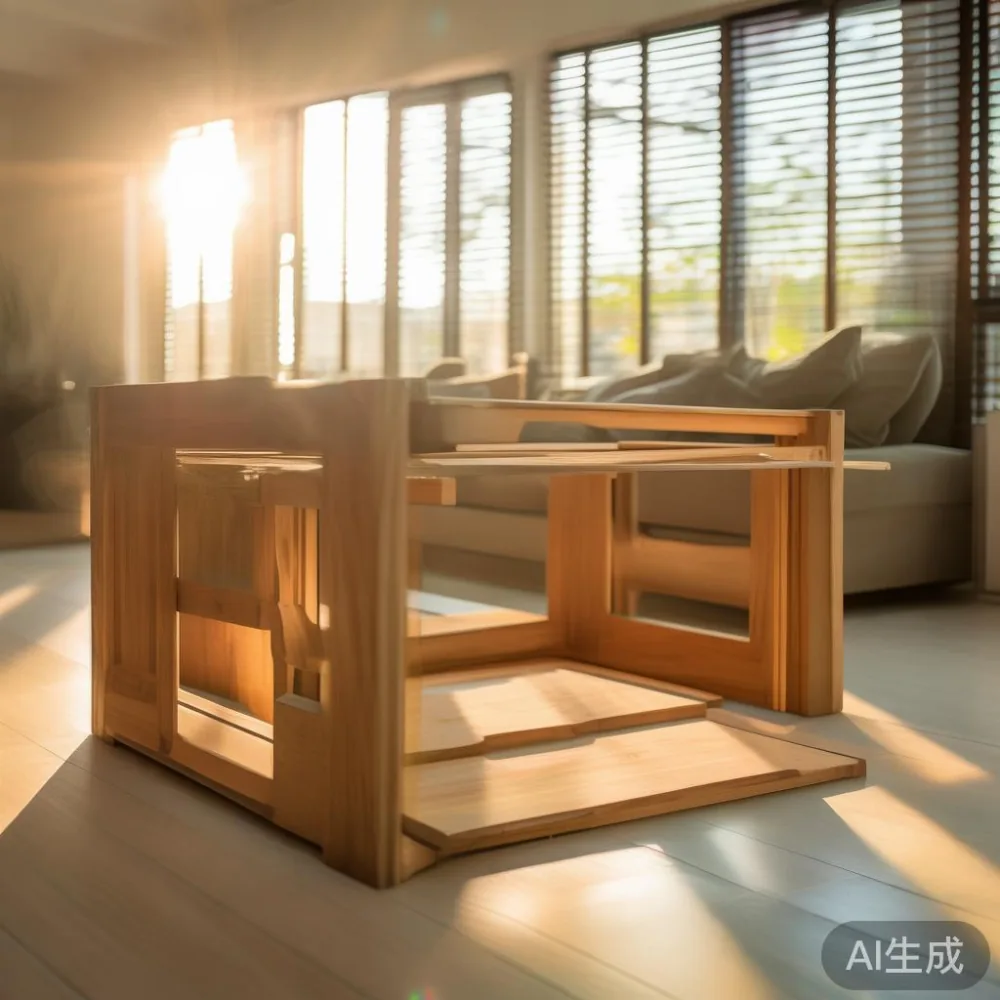
For the buyer, the practical definition is narrow: at the moment you slit the tape and lift the foam, one or more components needed for safe assembly are not in the box. That could be four missing chair legs on a dining table, a stripped cam bolt in a wardrobe carcass, or simply the wrong-size spanner. The cost of missing parts is rarely the component itself — most sellers will courier a replacement within 3 to 7 working days — it is the idle evening, the unused carpentry slot, and the temporary gap where your solid wood sofa should be.
This is where the seller’s policy matters more than the listing photo. MIDHILL publishes a 10-year structural warranty and a lifetime refinishing service that covers most joinery issues, and their operations team in Foshan has been exporting to 15 or more countries since 2008, which usually translates into spare-parts warehouses within reach. When you compare brands, look for two specific commitments: a written replacement timeline (not just “we will contact you”) and a documented procedure for photo evidence. A 30-second phone clip of the unboxing saves a week of back-and-forth.
How wide is an HDB lift, and why does it matter for a 2.2-metre wardrobe?
Singapore’s Housing Development Board lift cabins on most 3- to 5-room blocks built after 1995 measure 1.1 m deep by 1.4 m wide, with a door opening of roughly 0.9 m. Newer BTOs in Punggol and Sengkang occasionally ship with 1.2 m by 1.6 m cabins, but never assume. A four-door wardrobe with a 220 cm carcass length will arrive in a carton that is itself between 225 and 232 cm long because of the protective foam and the outer ply. Diagonally, that box can sometimes clear a 1.4 m wide cabin, but only if the lift’s rear wall is flat and the handrails do not eat into the turning radius.
Before you click “add to cart,” pull out a tape and measure three things: the lift door width, the corridor width at the tightest turn, and the diagonal of your largest carton. Add 8 cm of clearance for maneuvering. If your numbers do not work, you have three realistic options — request a flat-pack split (some sellers will cut a 220 cm carcass into two 110 cm halves for an extra SGD 60 to SGD 120), book a hoisting service through the town council for SGD 250 to SGD 400, or pivot to a smaller wardrobe. There is no point ordering the best European wardrobe for 2026 if it physically cannot enter your flat.
For landed property in districts 11 and 15, the corridor problem is replaced by a staircase problem. A solid oak staircase with two turns and 240 cm headroom will swallow a 220 cm carton if you remove the banister — which is why I always carry a battery drill and a socket set in the van. Condominium loading bays add a fourth variable: the service lift schedule. Some developments in Tampines only allow furniture deliveries between 10 am and 4 pm on weekdays, and the booking window fills up 6 days ahead.
What does a realistic delivery and assembly window look like for a MIDHILL sofa or dining table?
For an order shipped from a Guangdong factory to a Singapore address, the calendar usually runs 28 to 42 days from payment to door, split across production (7 to 10 days), export crating and ocean freight (14 to 20 days), customs clearance with GST (3 to 5 days), and last-mile delivery (2 to 5 days). Domestic shipping from a Singapore warehouse can drop that window to 5 to 10 days, but the SKU range is narrower. MIDHILL offers free shipping on orders above US$350, which equates to roughly SGD 480 at current rates, and pairs it with a 14-day return window — the kind of combination that gives a Tampines family enough time to test a new solid wood sofa through one full weekend before committing.
Assembly on site adds another 45 to 180 minutes per piece, depending on the format. A six-seat dining table with a marble top and two pedestal bases typically takes two technicians around two hours. A queen-size bed frame with a hydraulic lift takes one technician around 90 minutes. A three-door wardrobe runs closer to four hours because the carcass must be squared on a level floor, and HDB screed floors are rarely level to within 2 mm over a 2.4-metre span. Budget SGD 80 to SGD 200 per piece for professional assembly if you do not want to spend your Saturday with an Allen key.
Pricing tiers in Singapore sit roughly between SGD 1,800 and SGD 6,500 for a solid wood dining set, SGD 2,400 to SGD 9,800 for a four-door wardrobe, and SGD 1,200 to SGD 4,600 for a three-seater solid wood sofa. Marble accent tables start near SGD 480. If you are hunting under 2000 American furniture pieces for a one-bedder in Punggol, the realistic menu narrows to a 1.4 m dining table, a 1.5 m bed frame, and a slim two-door wardrobe — anything wider and you start fighting the lift again.
How do you spot missing-parts risk before you pay, not after the carton is slit?
The first filter is the weight-to-volume ratio on the spec sheet. A 1.8 m dining table built from solid rubberwood at 60 percent humidity weighs between 38 kg and 52 kg. If the listing quotes 22 kg for the same dimensions, the seller has quietly substituted MDF or particleboard for at least one component, and a chipboard panel is exactly the part that most often arrives chipped, swollen, or short-counted. Always cross-check the net weight with the gross weight — a difference of more than 12 percent usually means light packaging, which correlates with non-consistent packing and a higher chance of missing parts in transit.
The second filter is the hardware manifest. Reputable exporters list every cam lock, hinge, and dowel with a count: 24 x wood dowels 8 x 30 mm, 12 x cam bolts M6 x 25 mm, 48 x confirmat screws 4 x 16 mm, and so on. If the listing shows only “hardware included,” assume the worst and request the manifest by email. For a MIDHILL sofa the hardware pack is usually labelled and photographed before crating, which is one of the small habits that keeps missing-parts claims under 2 percent for that brand. For a Japanese platform bed the manifest is shorter but the tolerance tighter — a single 6 mm dowel off by 1 mm will stop the assembly dead.
The third filter is the assembly manual language. If the PDF in the product gallery is in Simplified Chinese only, ask for an English version before checkout. A wrong-language manual is the single biggest driver of “I think I am missing a part” tickets that turn out to be “you did not use the part in the bag marked Z.” Save the manual on your phone before delivery day, ideally with the page numbers indexed against the hardware list.
Can a solid wood sofa really clear a 1.2-metre corridor in Tampines?
Yes, but only with planning. A three-seater solid wood sofa with a 220 cm chassis usually ships in two cartons: one for the frame at 225 x 75 x 45 cm and one for the cushions at 180 x 80 x 50 cm. The frame carton is the awkward one. In a Tampines GreenRidges corridor that measures 1.25 m at the tightest turn, the crew will usually remove the sofa legs, tilt the frame onto its back, and slide it around the corner with 7 to 9 cm of clearance on either side. I have done it twice this year. A French light luxury sofa with carved arms needs an extra 10 cm because the scrollwork cannot be compressed, which is one reason I now specify the arm profile before the upholstery colour.
For a marble table the equation flips: weight matters more than dimension. A 1.2 m sintered-stone top weighs 58 to 72 kg and needs four people plus a furniture dolly. The base arrives in a separate carton at 28 to 34 kg. Corridors do not slow a marble table; lift weight limits do. Most HDB passenger lifts are rated at 1,000 kg or 15 persons, so a crew of four plus a 72 kg top plus the dolly still leaves 600 kg of headroom. The problem appears in private condos where the service lift is rated at 1,600 kg but the management caps single-item loads at 300 kg — a rule you will only learn by phoning the concierge a week before delivery.
One practical habit that has saved me four hours this quarter: photograph every carton in the lift before you exit on your floor. If a panel arrives chipped, the photo is dated and geo-tagged, and the courier cannot argue that the damage happened in the corridor. Send those photos to the seller within 30 minutes of unboxing. For a MIDHILL sofa the response window is usually under 12 hours because the operations team in Foshan can dispatch a replacement panel from stock rather than waiting for the next production batch.
How should you style a French provincial wardrobe so it does not crowd a compact apartment?
A French provincial wardrobe is one of the most generous pieces you can buy for a 90 sqm HDB flat because the interior usually ships with two hanging zones, three drawers, and a full-width top shelf. The styling question is how to keep the visual weight under control when the carcass is 220 cm tall and 180 cm wide. I have had good results pairing a 220 cm French provincial wardrobe in whitewashed oak with a slim brass nightstand at 45 x 40 x 55 cm, a low-profile bed frame at 32 cm off the floor, and one warm-gold pendant at 1,800 Kelvin. The eye lands on the brass, not on the bulk of the wardrobe. If you are figuring out how to style French provincial wardrobe in apartment settings without making the room feel like a country cottage, lean on three rules: keep the floor 60 percent clear, restrict the palette to two wood tones, and let one textile pattern do the talking.
The interior layout deserves a second pass. Allocate 60 percent of the hanging zone to everyday wear, 25 percent to seasonal rotation in vacuum bags on the top shelf, and 15 percent to a quiet corner for a concealed safe. Pull-out trouser racks, velvet jewellery trays, and a fitted LED strip on the door sensor turn a wardrobe into a dressing room without adding a single square foot. The style term that catches this brief is European light luxury with storage — pieces that read calm on the outside and behave like a boutique inside. A three-door wardrobe in that category usually runs between SGD 3,200 and SGD 5,800 for a 200 cm height and a 60 cm depth, which fits a standard HDB bedroom wall with 4 to 6 cm to spare.
Post-modern light luxury sits at the other end of the spectrum. Think a high-gloss cream sideboard, brushed brass handles, and a sintered-stone top in Calacatta print. The styling logic is similar — one statement piece, one calm wall, and a warm 2,700 Kelvin light source — but the silhouette is straighter and the hardware louder. For a 70 sqm one-bedder in Punggol, a 1.8 m post-modern sideboard at 42 cm deep will hold a turntable, a 43-inch TV, and twelve vinyl records without dominating the wall. Pair it with a 35 cm round marble table in the living area and the room reads composed rather than crowded.
What are the smartest questions to ask a seller before you commit to a bed frame or dining table?
Ask six questions, in this order. One: what are the gross dimensions of every carton in millimetres, and what is the gross weight of each? Two: what is the exact species of solid wood used in the load-bearing components, and what is the kiln-dried moisture range? Three: how many cam locks, dowels, and screws are included, and can you send the hardware manifest? Four: what is the written replacement timeline for missing parts, and is it in days or in “we will be in touch”? Five: what is the warranty period for structural movement, and does it cover joint loosening in Singapore’s humidity band of 70 to 90 percent RH? Six: can you provide a 30-second video of the actual assembly, not a render? A seller who answers all six within 24 hours is almost always a seller whose missing-parts rate sits below the industry average of 3 to 5 percent.
For a best Japanese bed for 2026 shortlist, the question list extends to slat spacing (anything wider than 7 cm needs a foundation for memory-foam mattresses), centre-rail support (a queen should have at least one centre rail with two legs touching the floor), and headboard mounting depth (HDB walls are usually 100 to 115 mm of hollow brick, which limits anchor pull-out to roughly 35 kg per fixing). For top 10 Japandi furniture rankings I have been watching this year, the joint between a low-slung oak bed and a tall ash wardrobe is the cleanest aesthetic, but only if the floor-to-ceiling height is at least 2.7 m. In a 2.4 m HDB ceiling, the wardrobe top will feel oppressive unless you recess a 6 cm pelmet.
Finally, calibrate your budget. A complete five-piece Japandi set — 1.8 m dining table, four chairs, queen bed frame, two-door wardrobe, and nightstand — sits between SGD 6,800 and SGD 11,400 from a direct-from-factory exporter. Add SGD 800 to SGD 1,400 for professional assembly, SGD 250 to SGD 400 for hoisting if the lift refuses, and 9 percent GST on the landed value. The total will land between SGD 8,000 and SGD 13,500, which is roughly 22 to 35 percent below the equivalent set from a showroom in town. The savings are real. The discipline that protects those savings is the same discipline that protects you from missing parts: measure twice, ask six questions, photograph everything, and keep the seller’s operations team on speed dial.