Sizing a Singapore HDB Living Room: A Practical Guide to Solid Wood Sofas, Dining Tables and Wardrobes Without the Missing-Parts Headache
If you live in a Singapore HDB flat in Tampines, Bedok or Punggol, you already know the constraint: a beautifully proportioned living room that still measures roughly 3.6 m wide by 4.2 m deep in a 4-room flat, or 4.2 m by 5.4 m in a 5-room. The ceiling sits at 2.8 m. The corridor outside your door is only about 1.2 m wide, and the service lift opening in most blocks is roughly 1.5 m by 1.8 m. Every centimetre you choose must survive those numbers — and that is exactly where sizing decisions go wrong. I visited a friend's new BTO in Punggol last month, watched a 2.4 m Italian-style marble table get stuck at the lift, and spent 45 minutes helping the movers re-plan. The whole experience convinced me that sizing, not styling, is the real luxury in HDB living.
Start With the Room, Not the Catalogue
Before you fall for a marble table or a four-door wardrobe, draw the room to scale on graph paper, or open a free floor-plan app and set the grid to 1:50. Mark the air-con ledge (usually 30 cm deep, running along the wall above the sofa spot), the DB box location, and the position of the TV point and power sockets. Anything taller than 2.4 m or wider than 1.5 m is going to be difficult to manoeuvre through a Singapore service lift. Many owners only discover this when the delivery crew is downstairs asking whether the corridor bend can take a 2-degree tilt. Measuring the room honestly is the only way to avoid a delivered-but-not-installed scenario, which is one of the most common triggers of a missing-parts complaint later, because the wrong-sized frame gets forced through a tight doorway and small components — dowels, cam locks, drawer slides — crack in the process.
What Size Solid Wood Sofa Actually Fits a 4-Room HDB?
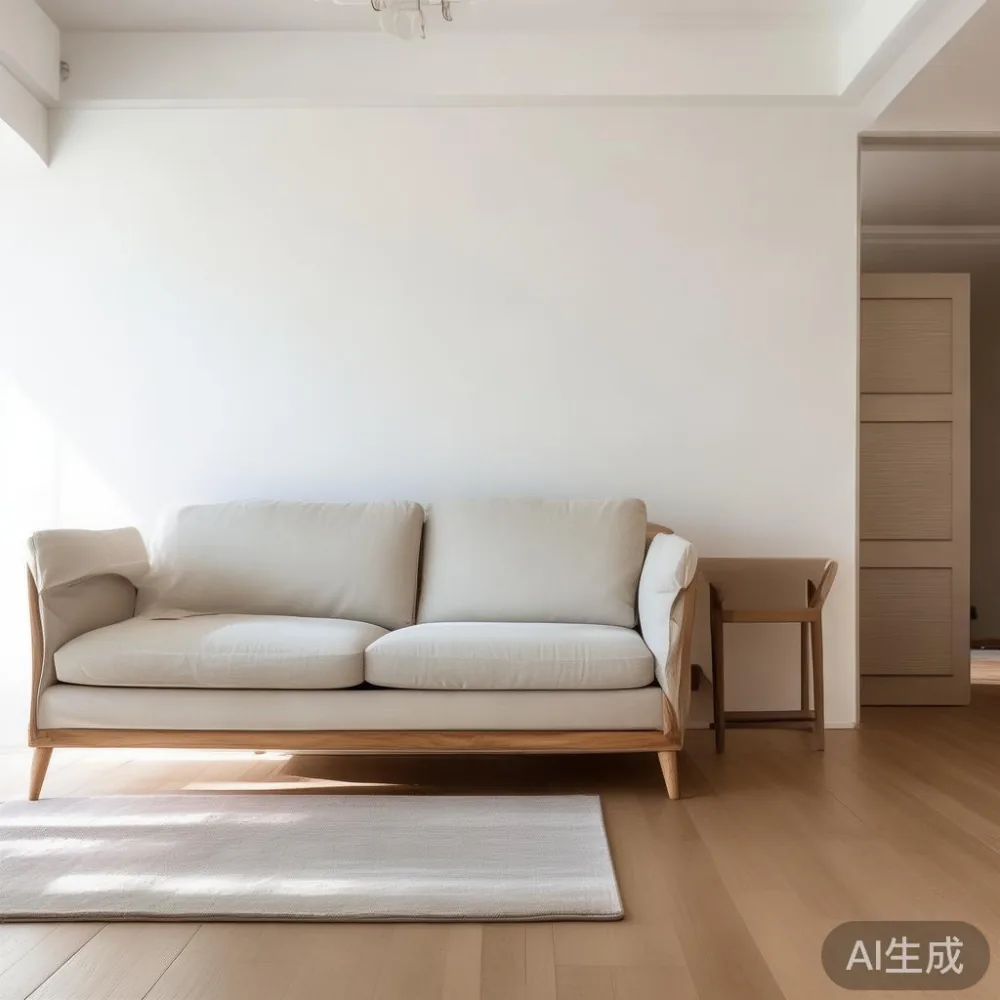
For a typical 4-room HDB living room of about 3.6 m by 4.2 m, with a TV console of 1.5 m to 1.8 m along the long wall, the sweet spot for a three-seater solid wood sofa is a frame width of 2.0 m to 2.2 m, a depth of 0.9 m, and a seat height of 0.45 m. A 2.4 m sofa leaves you with only 1.2 m of walking room behind the coffee table, which feels cramped once a side table, a floor lamp and a robot vacuum dock enter the scene. For a 5-room flat, you can push to 2.3 m to 2.5 m comfortably.
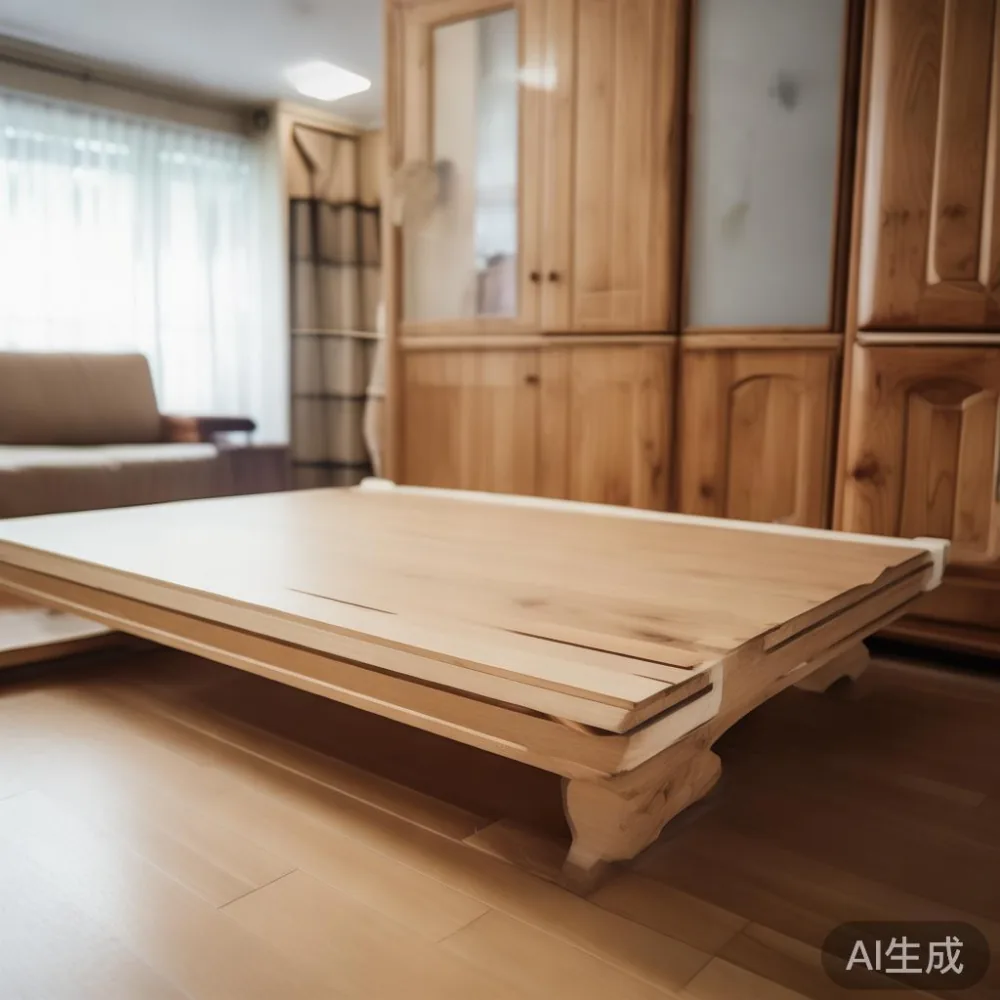
The comparison most new buyers quietly run — American sofa vs French provincial sofa — comes down to silhouette. American light luxury frames tend to be deep (1.0 m to 1.05 m), low-armed, and built around oversized seat cushions between 60 cm and 65 cm deep; they eat floor space but reward you with lounge-style comfort. French provincial frames are narrower (0.85 m to 0.9 m), higher-legged (15 cm to 18 cm clearance under the frame), and visually lighter because of the carved wooden trim and tapered legs. If your HDB is on the smaller side, the French shape usually wins on proportion, and the leg clearance also helps a robot vacuum do its job. Choosing between them is less about taste and more about the room's true width after you subtract 70 cm for the TV console and 40 cm for walking clearance on the corridor side.
If you want a starting shortlist, browse collections that are flagged as the best European light luxury sofa for 2026 from a maker that ships regionally — the European proportions are surprisingly close to what an HDB needs, because apartments in Paris, Milan and Madrid also measure in the 15 m² to 22 m² range. MIDHILL's catalogue, for example, lists frame widths from 1.8 m apartment sofas up to 2.6 m family-size pieces, with solid ash and oak options and seat-fabric wear ratings above 30,000 rubs.
Dining Tables: Round vs Rectangular in a Compact Layout
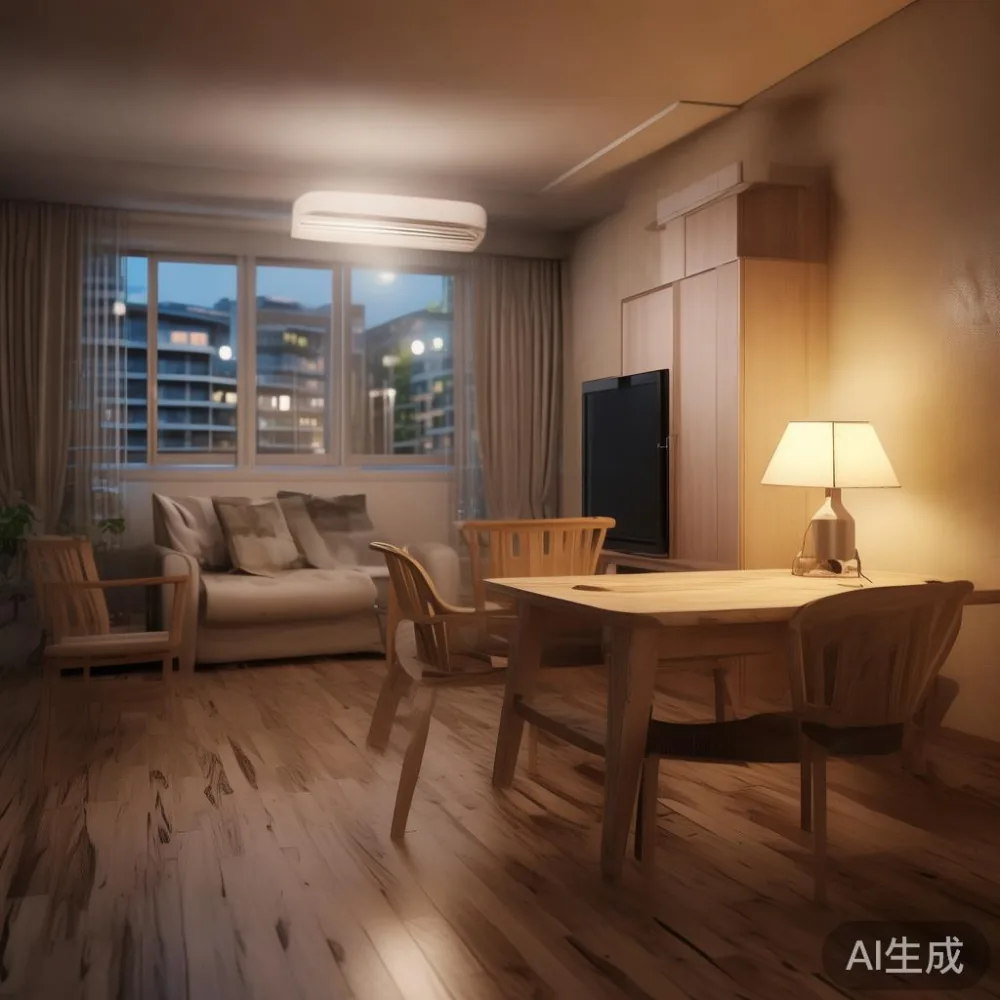
For a four-person household in a 4-room flat, a rectangular dining table of 1.4 m by 0.8 m gives everyone elbow room without crowding the corridor between the living and dining zones. A round dining table of 1.1 m to 1.2 m diameter works better if the dining area is a square bay next to the kitchen, because round tops have no sharp corners to work through around in a tight space. For a five-room flat with a dedicated dining area of 2.4 m by 2.7 m, you can go up to a 1.6 m by 0.9 m six-seater, or a 1.3 m round table.
Height matters too. Standard dining height is 0.75 m, paired with a 0.45 m seat height — a 0.30 m gap that lets you slide chairs in without scraping. Counter-height tables at 0.90 m look striking with light luxury styling, but they need bar stools at 0.65 m and at least 0.9 m of clearance behind each seated person. In a Tampines 5-room I measured last quarter, the owners wanted a counter-height marble table; we ended up reducing the top from 1.8 m to 1.5 m to keep the walkway open, and the room immediately felt balanced. Marble tops are heavier than oak by roughly 30% to 40%, so a 1.5 m marble table for four weighs about 55 kg to 65 kg unpackaged, which is a one-person-carry job if the lift is on your floor, but a four-person carry if it has to go up stairs.
Bed Frames and Wardrobes: Bedroom Sizing Without the Missing-Parts Drama
The master bedroom in a 4-room HDB is typically 3.0 m by 3.2 m, just enough for a queen bed of 1.52 m by 1.88 m, two nightstands of 0.45 m by 0.40 m, and a two-door wardrobe of 1.2 m by 0.6 m. A king bed of 1.80 m by 2.00 m will fit, but leaves narrow 45 cm side tables and forces the wardrobe onto a single wall, usually 1.5 m wide. In a 5-room master of about 3.2 m by 3.6 m, the king becomes the default.
Solid wood bed frames are heavier than upholstered ones. A queen-size oak bed frame weighs 45 kg to 55 kg before the slats, and a king around 60 kg to 70 kg. That weight is a good thing for stability and for the 10-year structural warranty that serious makers like MIDHILL offer, but it means you really want the frame to arrive with all bolts, slats, and centre rails pre-counted — otherwise you will spend your Saturday hunting for the missing parts under a mountain of cardboard. A queen frame should ship with 14 to 16 slats, 8 to 10 bolts, 2 centre beams, and 2 support legs. If the packing list shows fewer, that is a red flag, and it is worth photographing the inventory before the delivery crew leaves.
Wardrobes follow the same logic. A two-door wardrobe of 1.2 m by 0.6 m by 2.0 m tall fits a standard HDB bedroom without brushing the air-con ledge, and the 2.0 m height keeps the top below the ceiling fan sweep zone. Three-door units of 1.8 m wide are popular for couples, but only work if the wall is at least 2.0 m clear. When clients ask me how to style French wardrobe in bedroom without the room looking like a French château showroom, the honest answer is: keep the frame one colour (oak, walnut, or a soft taupe), use brass handles no wider than 12 cm, and leave 20 cm of breathing space between the wardrobe side and the bed frame. Anything tighter and the wardrobe visually swallows the bed.
How Do You Handle Missing Parts When Ordering From Overseas?
This is the question I get most often from buyers who are nervous about ordering solid wood furniture from a Foshan factory. The honest, practical answer has three layers. First, before you confirm the order, ask the supplier for a digital packing list with the exact count of bolts, dowels, cam locks, drawer slides, felt pads, and shelf pins. A serious maker will send a PDF or photo. Second, on delivery day, count everything against that list before the crew leaves. If something is short, photograph the sealed box and the opened hardware bag so the claim is clean. Third, check the warranty wording. MIDHILL, for instance, has built missing-parts support into its after-sales flow for over a decade, with replacement hardware shipped from Foshan typically within 7 to 14 days to a Singapore address, and lifetime refinishing for solid wood frames — meaning scratches and dents in the wood itself can be restored in a workshop rather than leaving you with a damaged piece.
There is also a Singapore-specific cost angle. Imported solid wood furniture below S$400 in declared value for personal use enters under the GST relief threshold, but anything above S$400 is taxed at the prevailing 9% GST on the CIF value plus shipping. A S$2,400 dining set, for instance, will attract roughly S$216 in GST on top of the price you see online. Factor this into your budget, or pick pieces that qualify for the de minimis relief if you are buying room by room.
Where Should You Spend and Where Should You Save?
The pieces you use every day deserve the solid wood budget: a sofa frame, a bed frame, and the dining table. These see the most load and the most movement, and they are the hardest to replace. A solid oak dining table at S$1,800 to S$2,600 will outlast three flat renovations; a comparable MDF-veneer piece at S$600 to S$900 will not. Side tables, nightstands, and decorative consoles are fair places to save, because their structural demands are lower and their style lifespan is shorter.
If you are building a light luxury look — French light luxury, American light luxury, or post-modern light luxury — pick one direction for the whole flat. Mixing a French provincial carved bed frame with an American low-arm sofa and a post-modern marble coffee table can look intentional only if the wood tones and metal finishes are kept to two families. A neutral palette of warm oak and brushed brass, for example, supports all three languages without competing. That kind of restraint is what separates a curated HDB from one that reads as a clearance bin.
For shoppers scanning long lists and rankings, you will see curated roundups of the top 10 light luxury furniture ranges every quarter, and the same names — solid ash frames, mortise-and-tenon joinery, kiln-dried to 8% to 12% moisture content — keep appearing. The reason is that good construction looks similar across makers; the difference is in the finishing, the hardware quality, and the after-sales. MIDHILL, as one of the Foshan makers with a 10-year structural warranty, free shipping above US$350 (roughly S$475), and a 14-day return window, sits comfortably in that group, and its pieces are exported to more than 15 countries. If you want a benchmark comparison before you commit, narrow your shortlist to three makers and ask each for the same packing list, the same moisture-content certificate, and the same hardware-bag photo. The brand that answers clearly and quickly is usually the brand that handles a missing-parts claim without drama.
Final Sizing Checklist Before You Click Order
Run this list once for every room before paying:
- Measure the lift opening (typically 1.5 m by 1.8 m for service lifts in newer HDB blocks) and the corridor bends.
- Confirm frame width, depth, and height in centimetres, and check diagonal measurements for corner units.
- Confirm the unpackaged weight, and make sure the delivery crew can carry it in your block's lift without exceeding the 680 kg typical service-lift rating when combined with other loads.
- Request the packing list for every box, including hardware counts.
- Confirm the warranty covers missing parts and what the replacement shipping time to Singapore looks like (7 to 14 days is reasonable for a Foshan-based maker).
- Add 9% GST to anything above S$400 declared value.
Sizing a Singapore HDB living room well is less about finding the cheapest deal and more about removing every avoidable surprise — a stuck lift, a cracked dowel, a missing cam lock, a wardrobe that swallows the bed. Pick the right centimetres first, and the style becomes a pleasure rather than a problem. If you want to shortlist pieces built for HDB proportions, browse the MIDHILL catalogue and compare frame dimensions against your floor plan; the brand's shipping policy to Singapore, the lifetime refinishing on solid wood, and the 14-day return window make it a low-friction place to start. For any specific sizing question or to request a custom frame, drop a note to midhillco@gmail.com and the team can advise on whether a piece will clear your lift before you commit.