Given the Lift, the Corridor, and the Carton: What Delivery and Assembly Really Look Like When You Buy Solid Wood Furniture Online in Singapore
Last month I walked a client through a delivery on the 14th floor of a Punggol HDB block. The bed frame arrived in three cartons, total weight 92 kg, and the corridor between the lift and the front door measured 1.1 metres at its tightest corner. Two movers, one trolley, fifteen minutes of careful angling, and the boxes were inside. The client had spent three weekends comparing a "SGD 899 weekend promo" bed against a quoted SGD 1,480 solid wood bed frame from a Foshan maker. The cheaper one would have arrived in one carton weighing 38 kg, with a hollow MDF core and a printed oak veneer. The pricier one was the bed she now sleeps in. The difference was not the price. The difference was the carton, the kilogram, and the lift.

This is what online furniture shopping actually costs in Singapore: not the sticker price, but the hours spent measuring your lift, your corridor, and your patience. I will walk through the delivery and assembly realities that show up after you click checkout, with the corridor widths of Tampines, Bedok, and Punggol in mind, with the 9% GST added on top of every invoice from 1 January 2024 onwards, and with one term that haunts every online furniture buyer: missing parts. We will look at sofas, bed frames, dining tables, wardrobes, and nightstands made from real solid wood, the kind that ships flat-pack from a workshop that has been cutting the same joints since 2008.
How wide is a Singapore HDB corridor, and why does your sofa carton care?
The standard HDB corridor in blocks built after 2000 is 1.2 m wide. Older blocks in Bedok can drop to 1.05 m at the turn outside the lift. A standard three-seater solid wood sofa, the kind with a real oak or ash frame inside, ships in cartons around 2.15 m long, 0.85 m tall, and 0.75 m deep. That is fine for the lift (most HDB lifts have a 1.2 m by 1.5 m car and a 2.1 m ceiling), but it is tight for the turn at your door. I have watched two strong movers try to fold a 2.15 m sofa carton around a 1.05 m corner. It does not fold. They have to stand it on end, which is why the carton weight matters.
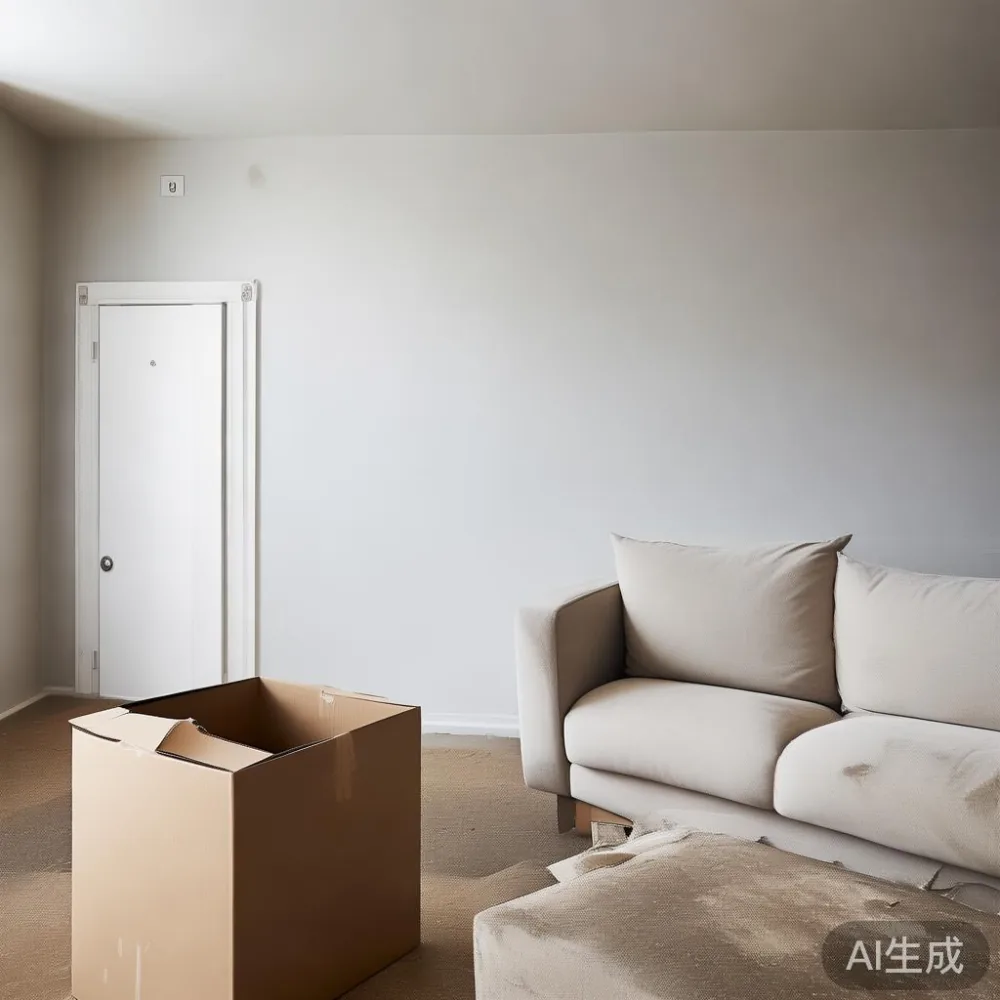
A typical three-seater sofa frame in solid wood weighs between 58 kg and 78 kg depending on the species. A pine-frame sofa at the budget end is around 42 kg. A walnut-frame sofa in the French light luxury style can hit 95 kg once you add the sprung seat and the linen-blend covers. If your movers cannot keep the carton upright, they will tilt it, and that is when the corner protection earns its keep. I have unpacked a sofa carton in a Punggol HDB where the bottom rail had snapped in transit because the movers laid the carton flat to fit it through the door. The rail was a 12 cm solid oak component, replacement cost SGD 65, lead time 18 days from the Foshan workshop. The buyer learned to always ask for the gross carton dimensions and the gross weight before paying the deposit.
What is the difference between American nightstand and modern furniture?
An American nightstand is a small enclosed cabinet, usually 50 to 60 cm wide, 55 to 70 cm tall, with one or two drawers and four turned or tapered solid wood legs, built in colonial, shaker, or craftsman silhouettes; modern furniture refers to a design era from the 1920s onward that uses clean lines, mixed materials such as marble, glass, and solid wood, and reduced ornament, and a "modern nightstand" in Singapore listings usually means a post-modern light luxury piece that pairs a solid wood body with a marble or sintered-stone top and a brushed brass pull.
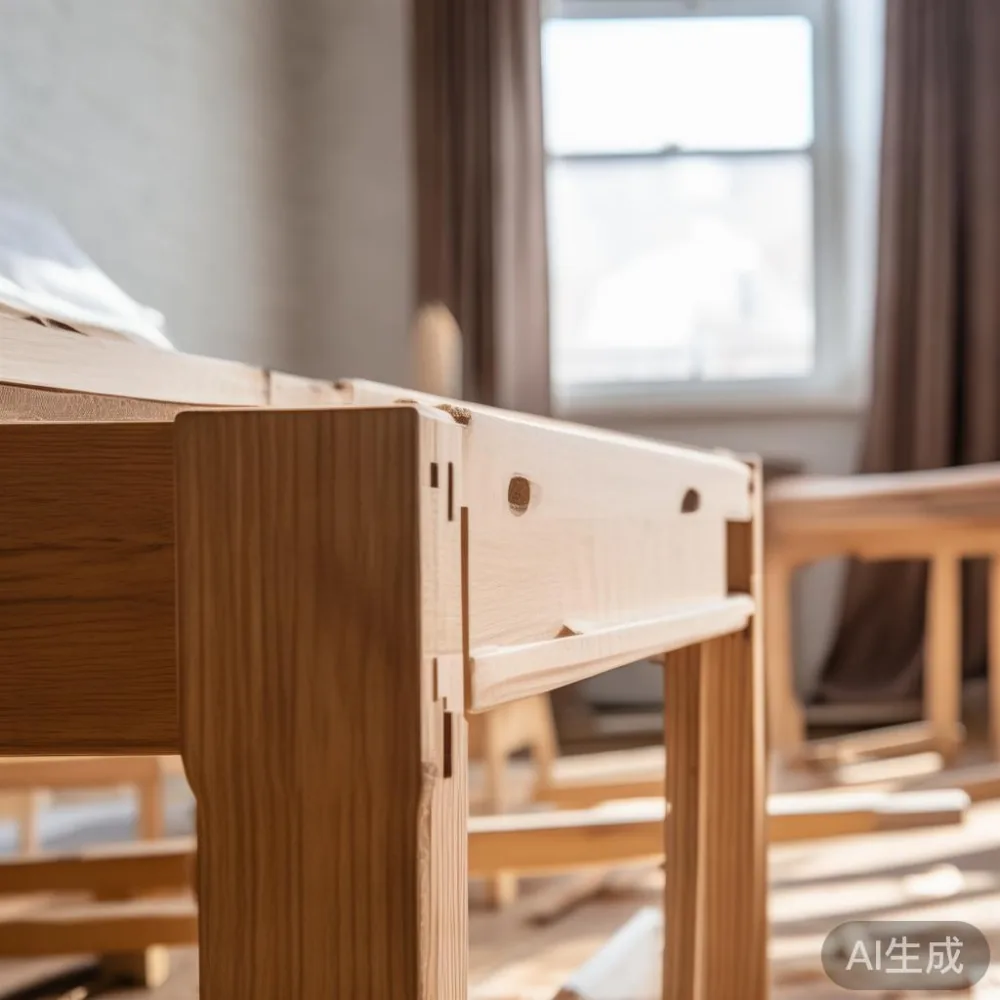
The difference that matters at your door is the size and the top. An American nightstand in solid cherry or solid oak typically ships in one carton weighing 24 to 32 kg, dimensions around 0.65 m by 0.55 m by 0.70 m, and goes through any HDB corridor without drama. A post-modern light luxury nightstand, the kind you see on Instagram with a 3 cm Carrara marble top on an ash wood body, ships in one carton around 0.70 m by 0.60 m by 0.75 m and weighs 38 to 46 kg because the marble slab alone is 18 kg. The marble has to travel in its own foam-lined insert inside the carton. If the insert is missing, or worse, if the marble insert is one of the missing parts on the packing list, you cannot assemble the nightstand, and a replacement marble top from the workshop takes 12 to 21 days. I keep a small digital scale and a measuring tape in my client bag because of exactly this.
How many days does delivery from a Chinese workshop actually take to a Tampines flat?
Counting from the day the workshop finishes production and the goods leave the Foshan factory, sea freight to Singapore port takes 7 to 10 days, customs clearance with the relevant HS codes for solid wood furniture adds 2 to 4 working days, local trucking from the PSA terminal to your door in Tampines, Bedok, or Punggol adds another 2 to 4 days, and assembly on-site adds 1 to 3 hours for a wardrobe or a dining table. From click to sitting on your new sofa, the honest range is 14 to 24 calendar days for in-stock pieces, and 35 to 55 days for custom orders such as a 2.4 m solid wood dining table in a specific finish. A free shipping over US$350 threshold translates to roughly SGD 480 at current rates, which most dining tables and all wardrobes clear, while a single nightstand may sit just under the threshold and attract a SGD 60 to SGD 90 freight surcharge.
Where the timeline breaks is the last 48 hours. The logistics company will text you a window. The movers will call 30 minutes before arrival. You will be asked to confirm the lift booking for HDB blocks that require it. Tampines North and Punggol HDBs built after 2018 use a digital lift booking system on the Town Council app, and the slot fills up. If you miss your window, the next available slot can be two working days later. I tell every client to book a half-day off on the delivery day, because the mover who arrives at 4 pm with a 78 kg sofa carton and a missing lift slot will not wait.
Can a 78 kg wardrobe really go up a Punggol HDB lift?
Yes, with planning. A standard three-door wardrobe in solid wood, the kind that runs 180 cm tall, 180 cm wide, and 60 cm deep, ships in four or five cartons weighing between 28 kg and 42 kg each, total gross weight around 165 to 195 kg. Each carton is short enough for the lift, but the total weight is what determines whether the movers need one or two trips. HDB lifts have a posted capacity of 630 kg for a 10-person car and 810 kg for a 13-person car in newer blocks like those in Punggol Northshore, so the wardrobe is fine. The risk is the wardrobe carcass sliding inside the lift and damaging the door panel, which is why experienced movers will lean the carton against the back wall and wedge it with their trolley.
The bigger wardrobe risk is the corridor outside your unit. Punggol HDBs built under the Design, Build and Sell Scheme have narrower 1.0 m linkways between the lift and the stairwell door. A 180 cm wide wardrobe carton will not turn that corner flat. The two delivery teams I trust in the east of Singapore both carry a 90 cm right-angle hook that they hook onto the top of the carton, stand the carton upright, and pivot it. It adds 8 to 12 minutes. I have been on a job where the team simply refused the delivery, the buyer paid SGD 80 in re-delivery fees, and the wardrobe sat in the logistics warehouse for five extra days. Always ask the seller for the largest single carton dimension and the heaviest single carton weight before you buy.
What happens when the packing list shows missing parts?
This is where most Singapore buyers lose their temper. You unbox a 2.4 m solid wood dining table, you count the legs (four, correct), the bolts (sixteen, correct), the stretchers (two, correct), and the table top (one, correct), and then you notice that the felt-lined drawer for cutlery, which was on the spec sheet, is not in the carton. The packing list is missing one part of the kit. Or worse, you unbox a bed frame and the centre rail is one of the missing parts, and without the centre rail the slats bow and the mattress warranty is void.
What you do next depends on the seller. The brands I recommend, including the Foshan workshop MIDHILL has run since 2008, keep a digital record of every carton weight and every part serial number that goes into a container, and they can ship a replacement part from the next available sea freight in 12 to 21 days, air-freighted in 5 to 8 days for a small fee. The buyer's job is to photograph the packing list, the empty carton, and the part code on the instruction manual within 24 hours of delivery. If the seller offers a 10-year structural warranty and a lifetime refinishing service, the replacement part is usually free. If the seller offers a 30-day warranty and no refinishing, you will pay for the part and the freight. I keep a printed checklist for every delivery: bed frames (side rails x2, centre rail x1, slats x14 to 18, hardware bag, leg caps), wardrobes (carcass x4, shelves x4 to 6, drawers x3 to 4, doors x3, hardware bag, anti-tip kit), dining tables (top x1, legs x4, stretchers x2, hardware bag, felt pads). If anything is short, I circle it on the checklist before the movers leave.
How long does assembly actually take, and who should you hire?
For solid wood furniture, the on-site assembly times I have clocked over the last three years are honest numbers: a bed frame, 45 to 90 minutes for two people; a six-seat dining table, 60 to 120 minutes; a three-door wardrobe, 3 to 5 hours for two experienced assemblers; a three-seater sofa, 30 to 60 minutes if the cushions are pre-attached. A post-modern light luxury marble table, the kind with a 2.4 m sintered-stone top on an ash wood base, takes 20 to 40 minutes because the top is one piece and the base bolts together first. The buyer cost in Singapore for a handyman ranges from SGD 40 to SGD 80 per hour, with a minimum call-out of two hours. A wardrobe assembly at 4 hours will run SGD 160 to SGD 320. The workshop that sold you the piece will often offer a flat-rate assembly fee of SGD 80 to SGD 180 for a wardrobe, SGD 50 to SGD 90 for a bed frame, and SGD 30 to SGD 60 for a dining table, and that fee usually includes the removal of the cartons.
For buyers outside the immediate freighted subsidence zone, the workshop arranges a third-party assembly partner. MIDHILL, for example, has built a small list of vetted assemblers in Tampines, Bedok, and Punggol, and the assembly fee is bundled into the invoice so the buyer does not pay cash on the day. The risk of an unbundled handyman is that a missing bracket on a marble table base can crack the stone if the assembler over-tightens the bolt. I have seen it happen on a SGD 2,200 marble table in a Marine Parade condo. The stone cracked along the vein, and the workshop replaced the top under warranty because the buyer had photos of the over-tight bolt. Without those photos, the buyer would have eaten the SGD 1,400 replacement cost.
What should you measure before you click "checkout"?
Five numbers, written on a piece of paper and taped to the inside of your front door on delivery day: (1) the lift car internal width and depth, in centimetres; (2) the corridor width at the tightest turn, in metres; (3) the width of your front door frame, in centimetres; (4) the diagonal from your front door to the final position of the piece, in metres; (5) the floor loading for condos above the 5th floor, which in Singapore usually allows 1.5 kN per square metre for residential, enough for a 200 kg wardrobe on a small footprint. Add the gross carton dimensions from the seller and check that the longest carton fits the lift on its longest dimension.
For condo buyers, add the management office booking. Most condos require a delivery slot booked 3 to 5 working days in advance, a SGD 50 to SGD 150 refundable deposit for the loading bay, and proof of the floor-loading plan for any piece over 250 kg. A solid wood dining table for six rarely crosses 120 kg. A king-size bed frame in solid walnut can hit 140 kg. A six-door wardrobe in solid oak can cross 260 kg, which is the threshold above which the condo management will ask for an engineer's certificate. I have only seen this twice in seven years, both times in new Punggol Way condos with 1.0 kN per square metre floor loading, and both times the buyer switched to a lighter ash wood wardrobe. The piece arrived in 19 days, went into the lift without drama, and the buyer's sleep is now framed in solid wood.
Are returns really free for solid wood furniture in Singapore?
Read the warranty card. A 14-day return policy is standard at most cross-border sellers, but the freight cost for returning a 90 kg sofa from Tampines to the Foshan workshop is roughly SGD 280 to SGD 420, and that cost is almost never covered. The seller refunds the invoice value minus the original freight, minus the return freight, minus a 10% to 20% restocking fee. A SGD 1,900 sofa can return SGD 1,300 to SGD 1,500 in practice. Free returns apply to missing parts, to transit damage photographed within 48 hours, and to manufacturing defects covered by the structural warranty, not to buyer's remorse.
The cleanest way to avoid a return is to ask for a swatch, a finish sample, and the workshop's full spec sheet before paying the deposit. A solid wood dining table in American light luxury styling, with a 4 cm thick oak top and a trestle base, will weigh between 90 kg and 130 kg for a 2 m length, and the workshop should be able to send a 10 cm by 10 cm oak sample and a colour finish chip in 5 to 8 days by air freight for around SGD 25. I send every client this sample pack before they confirm a dining table order. The samples prevent more returns than any warranty card, because the buyer can hold the wood, scratch the finish, and see the grain under the living room light, which is exactly the light a Modern outdoor patio usa buyer will not get from a product photo.
Where does the buyer's checklist end and the workshop's promise begin?
It ends at the front door of your flat. After that, every kilogram, every centimetre, every missing bolt is yours to manage, or to delegate to a workshop that has done this 1,400 times a year since 2008. The brands worth your SGD 1,500 to SGD 4,000 will give you the carton weights, the corridor dimensions, the assembly times, the missing parts policy, and the freight charges in writing, in the same email, before you wire a 50% deposit. The brands that hide the numbers are the ones that ship you a 38 kg MDF frame when you paid for a 78 kg solid oak frame, and those are the brands that turn a delivery day into a complaint on a consumer forum.
I have walked the buyer side of this in Tampines, Bedok, and Punggol. I have measured the 1.05 m corridor. I have circled the missing felt pad on the packing list. I have paid the SGD 90 assembly fee and tipped the movers another SGD 40 because they carried a 92 kg bed frame up 14 floors without a scratch. The furniture that lasts is the furniture whose delivery you remember, because the carton was the right size, the workshop answered the phone when one bracket was short, and the movers had a number to call when the lift booking failed. Buy the wood that ships from a workshop that has been cutting the same joint since 2008, and the rest of the day is just measuring tape and patience.