Decoding Solid Wood Furniture Prices: What's the Real Cost?
A solid wood dining table can cost S$900 or S$6,500. Both may use oak, and both may arrive with a 10-year structural warranty. The difference often has little to do with the wood species alone; it comes from board selection, construction, dimensions, hardware, finish, packaging, and the design decisions that shape the finished piece.
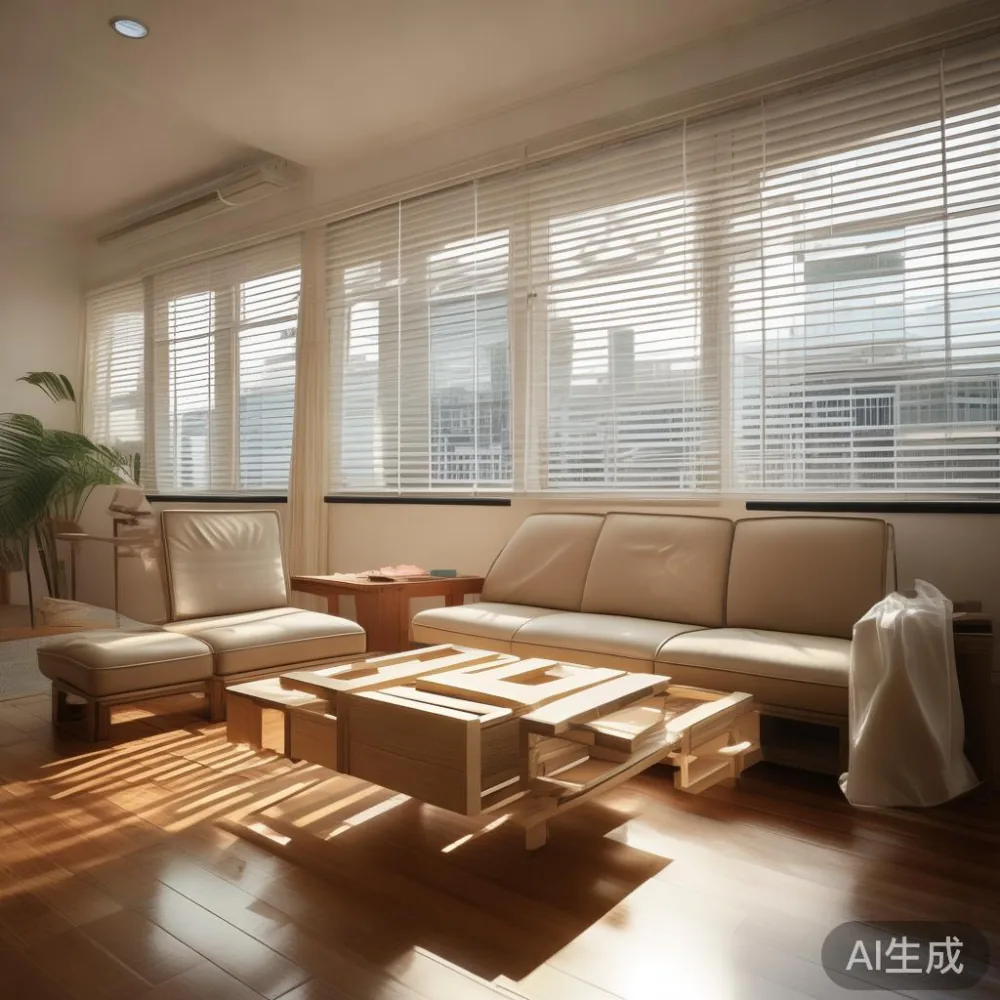
For Singapore homes, price comparisons also need to account for GST, lift access, corridor turns, and delivery schedules. A table that measures 220 cm may fit through an HDB flat entrance but cannot be manoeuvred around a tight common corridor. A solid wood sofa or wardrobe may be inexpensive before delivery, then expensive once two delivery men must carry it up 12 floors.
This guide explains the actual cost drivers behind solid wood furniture, including solid wood sofas, bed frames, dining tables, wardrobes, nightstands, and marble tables. It also covers the awkward question of missing parts: are they signs of poor quality, or simply the result of packaging and shipping?
What is the difference between solid wood and wood-look furniture?
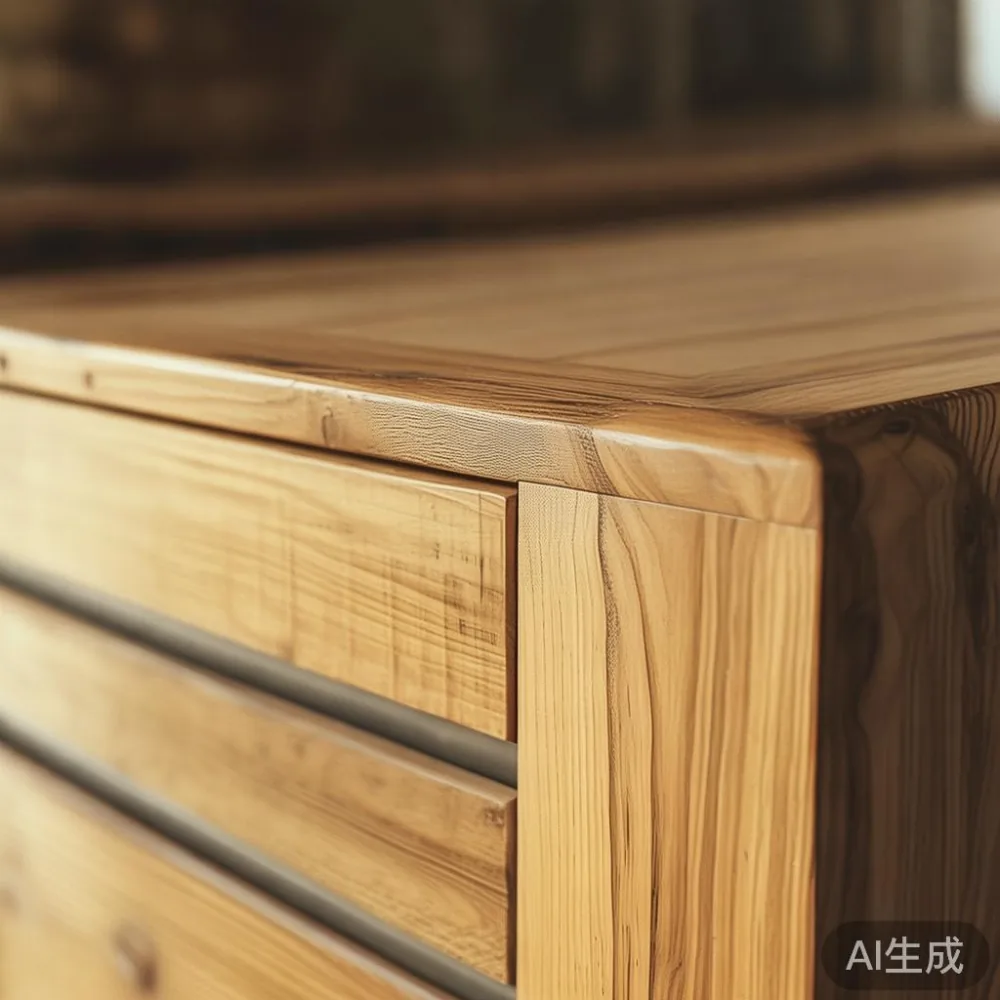
Solid wood means that the visible structural components are made from timber, rather than particleboard, MDF, or plastic laminate covered with a printed wood surface. That distinction matters, but “solid wood” is not a single grade or a guarantee of identical quality.
Price usually begins with the timber and board format. A 180 cm dining table made with 20 mm boards may use less timber than a 220 cm table made with 28 mm boards. Wider, thicker boards create a heavier product, require stronger joinery, and usually cost more to machine, sand, and finish. Rough-sawn material also creates waste because knots, cracks, colour variation, and unstable sections must be cut away.
Hardwood species carry different working costs. White oak, walnut, teak, and ash differ in availability, grain behaviour, and machining demands. A live-edge slab retains more of the original tree and may include irregularity; straight-cut boards favour repeatability. Veneered furniture can use a thin, carefully sliced outer layer over engineered wood. That can reduce material cost while producing a consistent appearance, but it does not provide the same solid-wood repairability across the entire panel.
The correct comparison is therefore not simply “wood versus wood.” Ask for the panel thickness, timber species, moisture target, joinery, finish, and warranty terms. For a bed frame, for example, a 40 mm side rail is not economically equivalent to a 20 mm rail. For a wardrobe, the back panel, drawer boxes, hanging rails, and door frames may reveal more about construction than the broad product description does.
How much should solid wood furniture cost in Singapore?
Useful price bands provide a starting point, but specifications must still be checked. Before GST, a compact solid wood nightstand may fall around S$180-S$350. A 140 cm solid wood bed frame may cost S$700-S$1,600 depending on the timber, headboard, and storage. A four-seat dining table of roughly 160-180 cm may range from S$900-S$2,600, while a 220 cm table with a substantial base can reach S$3,500-S$6,500.
A wardrobe may move from about S$900 for a relatively simple freestanding design to several thousand dollars for a fitted configuration with doors, drawers, internal fittings, and a more demanding finish. A solid wood sofa may begin around S$1,200 for a narrow, straight-edged model and exceed S$3,000 when deep seating, shaped arms, loose cushions, and complex upholstery are involved. A marble table may sit around S$900-S$3,500, with slab thickness, stone selection, edge treatment, and base design causing large differences.
These figures help when shopping for under 2000 Minimalist furniture, because a S$1,800 bed or dining table can still be over-engineered or overpriced. Compare like with like. Prices shown in Singapore typically include 9% GST; export pricing should be checked separately, along with freight, insurance, customs duties, and local delivery charges.
Design language also affects cost. A rectangular table with four square legs is easier to manufacture than a curved trestle base. A Japanese bed vs Mid-century modern bed comparison may reveal substantial differences: tapered legs and clean planes are relatively direct, while sculpted joinery, integrated lighting, or articulated storage adds parts and labour. French light luxury often introduces carved details, shaped profiles, and a more decorative finish, whereas American light luxury commonly emphasises generous scale, deep cushions, and substantial frames.
Which production choices make a solid wood dining table more expensive?
Start with the top. A 220 cm by 100 cm top with 25 mm boards requires 55 square centimetres of surface area, but the usable yield may be lower because defects must be removed. Matching boards for colour can reduce yield further. Thickness is a cost multiplier: increasing the top from 20 mm to 30 mm adds material, weight, machining, and finish surface area.
Next comes the base. Four legs and rails may require a straightforward assembly. A pedestal, trestle, or cross-braced structure can carry a larger top while preserving leg clearance, which matters for chairs and HDB dining corners. But it also needs accurate joinery. A dining table needs to resist racking, not merely hold objects in place. Look for mortise-and-tenon joints, dowelled or screwed rail connections, and fasteners appropriate to the timber.
Finishing may appear minor in a photograph but is a major cost line. A hand-rubbed oil finish can require more preparation than a standard lacquer system. Matte coatings often require additional sanding because they show surface irregularities. Water-based finishes may have lower solvent-related production costs, while oil and hardwax treatments offer different repair habits. Dark stains can also conceal less than pale natural finishes, leading some makers to add extra sanding or layers.
Weight should not be confused with quality. A 95 kg dining table is not automatically better than a 65 kg table; it may simply use a thicker top or denser timber. Dimensions, board thickness, fastening method, underside construction, and stability under load are more informative. Ask the seller for the product’s assembled weight and packaging measurements, ideally in centimetres.
Why do bed frames, wardrobes, and nightstands have such different price tags?
A bed frame’s apparent simplicity can hide several components: slats, centre supports, brackets, connectors, a headboard, footboard, and sometimes a lifting mechanism. Storage beds add hydraulic hardware, panels, and more complex assembly. A Japanese bed vs Mid-century modern bed comparison often turns on platform construction and visual restraint; a storage bed can add S$300-S$900 even when the timber specification looks similar.
For light luxury for bedroom projects, the headboard may be the centrepiece. Upholstered panels add fabric, padding, stitching, and attachment points. Slatted timber heads are simpler, but each slat still needs shaping and accurate spacing. Inspect whether the slats are solid wood, how they are supported, and how many contact points the frame provides.
Wardrobes are governed by usable volume and fittings. A 180 cm wardrobe may contain 6-8 linear metres of hanging space, depending on internal division. Expect more expense from full-depth drawers, soft-close hinges, mirrored doors, drawer organisers, and integrated handles than from a plain internal layout. In a Tampines or Punggol HDB bedroom, a 60 cm wardrobe may be practical, while a 90 cm model requires careful turning space and careful measurement of the bedroom door.
Nightstands often reveal whether a manufacturer controls small details. A low-cost unit may use thin backs, undersized drawer boxes, inexpensive slides, and a surface finish applied unevenly. A stronger version may use solid drawer sides and bottoms, solid-wood slides, recessed handles, and stabilising feet. A S$30 difference can become significant after a few years of daily use.
Does a solid wood sofa cost more because of the wood or the upholstery?
Both matter, and upholstery can dominate. Frame timber, joinery, seat suspension, foam density, fibre wrapping, fabric, stitching, and the number of upholstered components all affect labour. A broad category comparison of American sofa vs French provincial sofa can mislead because American-style seating frequently favours deeper seats and larger proportions, while French provincial styling may add curved arms, carved outlines, and shaped frames. The latter can demand more timber and fabrication time.
For a solid wood sofa, look beneath loose cushions. The frame should have consistent joints, close-fitting corners, and properly anchored webbing. Ask whether the visible frame is solid wood and whether plywood or engineered panels are used elsewhere. Seat height matters in Singapore living rooms: approximately 42-45 cm is common for a standard adult seat, while 38-40 cm suits lower seating. Check that the sofa’s depth leaves at least 75-90 cm of clear circulation when opposite a coffee table.
Textile costs vary widely. A tightly woven performance fabric may be durable but expensive to cut and sew; a softer material may cost less per metre yet require more pattern matching. Curved upholstery also takes longer than a rectangular cushion. Removable covers, feather-and-down wraps, and high-density foam add cost. Compare fill specifications rather than words such as “luxury” or “comfortable.”
After delivery, movement and colour change are normal for natural timber and some fabrics. A maker that provides clear care instructions and a repair pathway offers more practical value than one promising an artificially uniform appearance.
How much do marble tables and mixed-material designs cost?
A marble table is not priced only by its surface. Stone slabs vary in pattern, wastage, thickness, and reinforcement needs. A 120 cm round marble table may require a separate top and base, while a 160 cm rectangular table may need a longer support frame. A 20 mm slab is lighter than a 30 mm slab, but thin slabs can be more vulnerable to edge damage. Areas around basins or dining surfaces may need sealing, and natural pores can affect stain resistance.
The base may be solid wood, metal, or stone. A marble table on a metal frame can cost less than one with a carved timber pedestal, yet the metal may provide a cleaner, more contemporary French light luxury effect. Post-modern light luxury often mixes materials, but combinations complicate packaging, assembly, and replacement: a damaged stone top cannot simply be swapped like a timber shelf.
Mixed-material designs should disclose every major component. Ask whether “marble” refers to natural marble, sintered stone, or porcelain, and whether the listed price includes the top, base, hardware, and protective treatment. A S$1,200 marble table with a simple base is not directly comparable with a S$2,900 version featuring book-matched stone and a solid wood structure.
Are missing parts a quality problem or a shipping issue?
Missing parts are not automatically evidence of poor furniture. They are also not something to ignore. A solid wood bed frame may arrive with a disconnected slat because the set contains 16 slats rather than 18, or a wardrobe may lack a pair of shelf pins because those were packed separately. In other cases, a screw may be trapped under the carton flap, or a component may have been omitted during packing.
The distinction lies in the process. A responsible maker should have documented packing lists, component labels, an accessible spare-parts system, and clear instructions. A complete set should include every connector visible in the assembly diagram. The absence of screws can be obvious; the absence of shelf pins, dowels, cam locks, or brackets may not be.
This is where the phrase missing parts has real commercial meaning. Buyers often focus on the large timber components and assume the rest is included. Before accepting delivery, open every carton, count accessories against the manual, and photograph serial labels and packing lists. Record any missing parts before the drivers leave. In a condominium, the building’s loading bay or lift booking may limit how long a crew can wait, so a 10-minute inspection is sensible.
MIDHILL established its Foshan operation in 2008 and exports to more than 15 countries. Its 10-year structural warranty and lifetime refinishing policy address long-term furniture care, while its 14-day returns policy gives buyers a defined window to report faults. Those service terms help distinguish a replacement or remedy from “missing parts” ambiguity. Parts support should identify whether a missing item is covered, refundable, or replaceable.
For wholesale light luxury furniture enquiries, the same component clarity matters even more. A showroom sample may contain hardware that is not included in the standard export carton. The quotation should state the exact specification, package count, dimensions, gross weight, and contents of each carton.
What should delivery add to the price in a Singapore HDB flat or condo?
Delivery is a measurable line item. A compact nightstand might be delivered to the unit lobby for S$25-S$60. A lift-access delivery for a bed frame or dining table may cost S$80-S$180. If the item cannot enter the lift, stairs or hoisting may require a separate quote. In some buildings, the management corporation charges an additional service fee or restricts moving hours to 9 a.m.-1 p.m. or 2 p.m.-5 p.m.
Measure the route before ordering. Typical HDB and condo doors are about 80-90 cm wide, while common corridors and lift cars vary by development. A 200 cm dining table top may be carried diagonally, but a 220 cm top with a deep frame may not turn safely. The assembled item may fit even when the boxed item does not, or the reverse may be true if the top is detachable.
Ask for three numbers: packaged length, width, and height; total gross weight; and the largest carton dimensions. A 75 kg table in 3 cartons will require more handling than a 45 kg set in 1 carton, even if both arrive on the same van. Delivery commonly takes 7-14 working days after production for made-to-order items, while ready stock may be faster. Singapore orders should also clarify whether the quoted price includes GST.
Product pages may mention free shipping over US$350, but that is an export threshold rather than a universal Singapore delivery promise. Compare the actual destination charge, lift service, assembly, and disposal of packaging. A lower product price with a S$220 delivery charge is not necessarily cheaper than a S$120 higher product delivered free to the unit floor.
How can buyers compare quotations without being misled?
Use a written specification. For a dining table, request timber species, top dimensions, board thickness, base construction, finish, load expectations, assembled weight, carton dimensions, warranty, and delivery terms. For a bed frame, request rail dimensions, slat count, support arrangement, mattress clearance, and whether the headboard is included. For a wardrobe, request internal measurements, drawer construction, hinge type, and wall or floor clearances.
Compare prices with the same tax basis. Singapore’s 9% GST applies to most local sales, but the displayed product subtotal can obscure the final payable amount. For example, a S$1,200 before-GST table becomes S$1,308 after GST, before any lift or delivery surcharge.
Appearance also involves concentrated costs in the wrong places. A complicated handle can cost more than it contributes to daily use; a strong joint system is more important. Conversely, a simple product may be made with excellent timber and hardware. Solid wood furniture earns its price through controlled materials and sound construction, not through unnecessary ornament.
One recent visit taught me to look beneath the showroom finish. Last month I inspected a dining table in a supplier showroom and found that its two visible tops had different depths of colour, while the underframe used simpler wood and the drawer-like storage box was assembled with short screws into thin particleboard. The retail presentation suggested a coherent solid-wood product; the component details explained much of the price variation between models. That does not make it a bad table, but it tells a buyer where the money was and was not being spent.
The most useful question is not simply “Is this solid wood?” It is “What exactly is included, how is it built, and what happens if something is missing or damaged?” Clear answers indicate a controlled product. Vague answers indicate that the missing parts question will be settled only after the furniture reaches your home.