Warm Minimal in Singapore: Matching Solid Wood Furniture to a Quiet, Sunlit Home
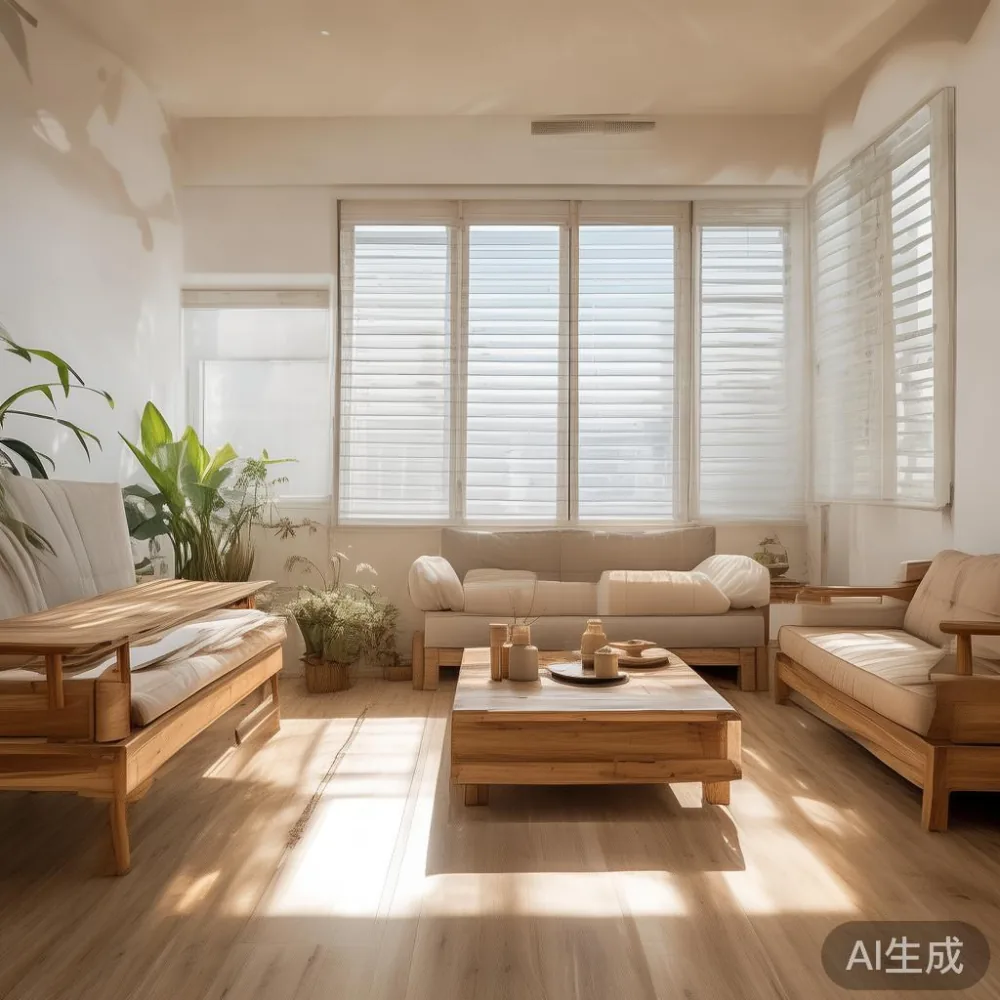
Walk into a Tampines 5-room HDB flat on a Saturday afternoon and the light tells the story. The afternoon sun pushes through the east, bounces off the white ceiling at roughly 2.7 metres, slides across the laminate floor, and lands on whatever piece happens to be in the room. If that piece is cold grey, the room feels clinical. If it is warm solid wood with visible grain, the room feels like a quiet weekend. That, in plain terms, is warm minimal. You do not need a five-figure interior designer to get there. You need furniture that knows how to behave around light.
I spent the past few weeks looking at this problem from the missing parts angle, which is a slightly unusual way to look at design. Most people panic when a hex bolt, a wooden dowel, or a cam lock goes missing during assembly. I opened it at the opposite end: what if the missing parts were the easy part, and the harder decision was the wood tone, the height, and the way a wardrobe door swings in a 0.9-metre HDB corridor? Once you accept that the missing parts will always be resolved by a real factory with a 10-year structural warranty, the design question becomes much more honest. You can slow down and choose pieces that you will actually want to live with for ten years. That is the frame I want to use for the rest of this guide, with Singapore flats, SGD prices, and lift widths in mind.
What exactly is a warm minimal interior, and why does it suit HDB flats?
Warm minimal is the middle path between Scandinavian cool and Japanese wabi. The walls are still pale, the lines are still clean, the surfaces are still quiet, but the palette leans honey, oat, walnut, and warm white instead of charcoal and cement. In a 90 sqm Punggol BTO with a 2.6-metre ceiling, that palette buys you something Scandinavian does not: it makes the room feel like it has afternoon light even on a cloudy day.
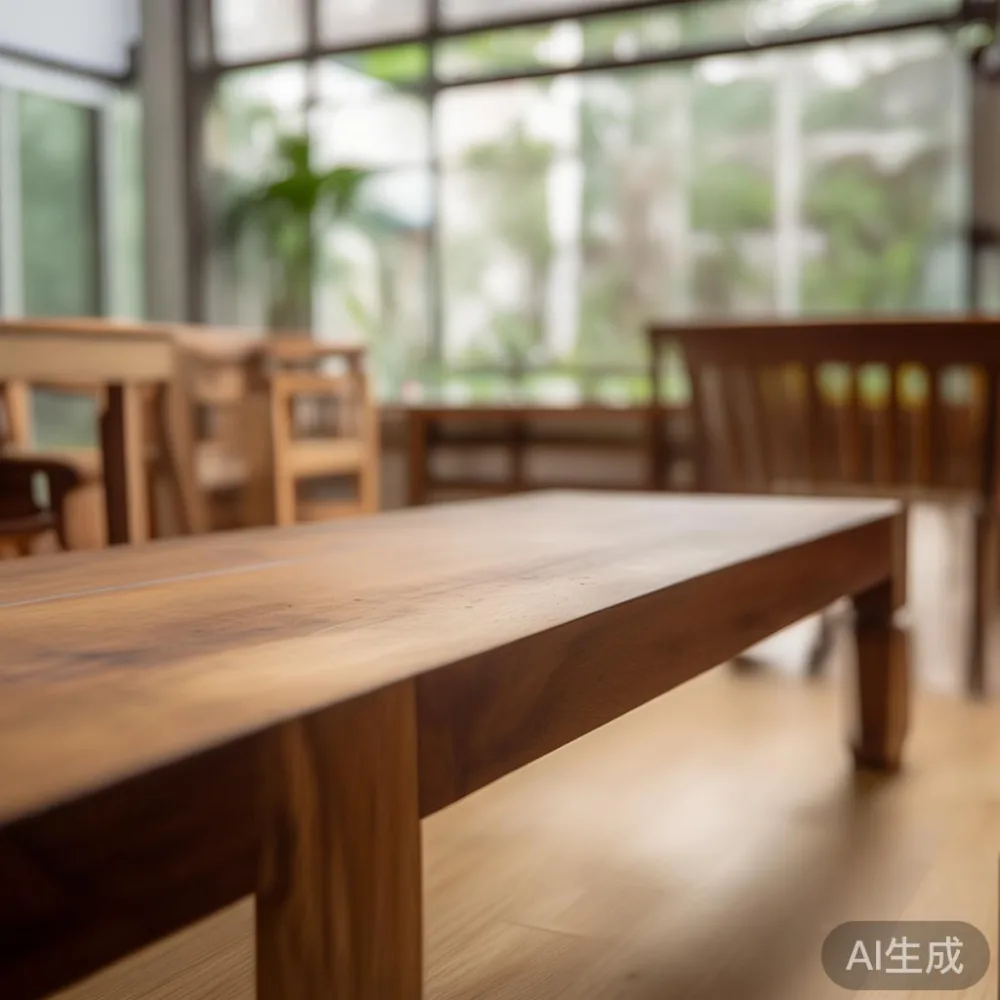
Three numbers tell the story. A warm oak solid wood dining table at roughly 180 cm x 90 cm fits six in a standard HDB dining area with about 80 cm of circulation on each side. A solid wood bed frame at 152 cm x 188 cm for a queen, or 183 cm x 188 cm for a king, leaves room for a 50 cm nightstand on each side without crossing the 60 cm walking aisle rule. A 1.6-metre solid wood sofa with arms at 8 cm width sits against a 3.2-metre feature wall without crowding the TV console. These are not aspirational numbers. They are what most Singapore living rooms actually allow after you subtract 8 to 12 cm of skirting and the radius of a ceiling fan.
Local context matters here. HDB corridors are typically 1.2 to 1.5 metres wide, so a flat-pack wardrobe at 60 cm deep is the practical maximum before delivery crews start sweating. Passenger lifts in most blocks allow a package length of about 2.1 metres on the diagonal; a bed frame at 188 cm long usually clears with the headboard unbolted, and that is exactly when a missing parts kit saves the day. I learned this last month when a delivery team in Bedok had to bring a 198 cm-long solid wood bed slat up in two pieces because the building lift opening was 80 cm wide and 210 cm tall. The replacement dowels and bolts arrived by courier the next morning, and the frame was up in 25 minutes.

Which solid wood pieces actually earn their floor space?
Not every piece needs to be solid wood. In a warm minimal home, the rule of thumb I use is simple: anything you touch daily, anything that holds weight, and anything that lives in the centre of the room should be real wood. The accent pieces can be marble, rattan, brushed brass, or linen.
The five categories worth the investment in a Singapore home are a solid wood sofa frame, a solid wood bed frame, a solid wood dining table, a solid wood wardrobe, and a pair of solid wood nightstands. A marble table, often a round 90 cm or 110 cm coffee table in warm travertine or beige sintered stone, works as the cool counterpoint that keeps the wood from looking one-note. For buyers who want the post-modern light luxury feel without the post-modern price tag, this combination is the shortcut. The sofa frame carries the soft beige boucle or linen-cotton blend upholstery in a 3-seater at about 1.6 m, the bed frame in walnut or white oak sits on 12 cm legs so the robot vacuum can pass under, the dining table seats six without leaves on most nights, the wardrobe uses 80 cm-wide sliding doors that suit a 1.5-metre HDB bedroom wall, and the nightstand at 45 cm wide by 40 cm deep gives you a lamp and a glass of water without dominating the wall.
For shoppers comparing a Japanese bed vs Nordic bed, the practical Singapore answer is usually a hybrid: the low-profile 8 to 12 cm leg clearance and headboard height of a Japanese-style frame, but the slightly warmer honey or smoked oak tone of a Nordic-style frame. Both traditions suit warm minimal. The difference shows up in the spare parts drawer five years later, and this is where a brand that supplies replacement dowels, cam locks, slats, and felt pads starts to feel less like a vendor and more like a long-term partner.
How do you match wood tone to wall colour without hiring a colour consultant?
Match by undertone, not by name. Three undertones cover almost every warm minimal home in Singapore.
- Honey undertone (oak, ash, light walnut): pairs with off-white walls at NCS S0500-N or S0502-Y, the colour most resale flats ship with. Works with the 4000K warm white downlights that PropertyGuru renovation guides recommend for HDBs.
- Warm caramel (acacia, teak, mid-walnut): pairs with greige walls in the Dulux 30YY 64/060 range. Strong choice if your windows face west and you get strong afternoon light in Jurong or Bukit Batok.
- Smoked brown (dark walnut, fumed oak): pairs with putty or mushroom walls at around NCS S2005-Y50R. Use this only if the room has at least one large window, otherwise the room will feel smaller than its actual 12 sqm.
If you want the French light luxury look, push the walls a touch warmer, around the Farrow & Ball equivalent of Drop Cloth or Shaded White, and pick a solid wood piece with a 5 to 10 percent grey cast in the grain, such as white oak with a lime wash. For American light luxury, which tends toward larger proportions and slightly darker walnut, go for a 200 cm dining table with 4 cm-thick legs and pair it with a stone or marble table on the adjacent sideboard. Both directions are valid. Both look bad if your floor is also a warm dark tone, so if your HDB came with the standard 8 mm laminate in cherry or mahogany, plan to overlay it with 5 mm engineered wood in a neutral oak before the furniture arrives. That step alone costs about S$7 to S$11 per square foot installed and pays for itself in design cohesion.
What about the dimensions, the lift, and the awkward HDB corridor?
Always design backward from the building. The single most common mistake I see in Singapore is buying a 220 cm sofa for a 280 cm living room wall, then losing 60 cm of usable space because the arms are 25 cm each. Reverse that. Measure the wall, subtract the desired clearance on each side, then look for the largest piece that fits the remaining number.
For reference, the typical dimensions to keep in mind:
- Passenger lift opening: about 80 cm wide by 210 cm tall in most HDB blocks.
- Service lift opening: about 120 cm by 220 cm, but not every block has one.
- Corridor width: 1.2 to 1.5 m.
- Door width into the flat: 90 cm for the main door, 70 to 80 cm for internal doors.
- Standard wardrobe depth: 55 to 60 cm (including doors).
- Bed clearance to the wall: 5 cm minimum, 10 cm comfortable.
- Nightstand clearance above mattress top: 5 to 8 cm so the lamp shade does not brush the wall.
This is also where the missing parts conversation gets practical. A 198 cm-long solid wood bed slat rarely fits an HDB lift in one piece. MIDHILL ships slats, side rails, and headboard panels as separate items in the same carton, with labelled hardware bags and a paper drawing that a first-time assembler can read in under 10 minutes. When the corridor delivery window is tight, as it often is in Bedok and Toa Payoh where SERS moves are common, the box that splits cleanly into three or four carryable pieces is the box that gets up the stairs without drama. I watched this happen at a colleague's Punggol unit last month: two delivery staff, one elevator trip, four flat-pack components, and the wardrobe was in the bedroom in 18 minutes from lobby door to final position. The same wardrobe from another brand arrived in two giant un-split cartons and took 90 minutes, plus a scratch on the corridor wall that cost S$120 to repaint.
How long does delivery take, and what about GST and landed cost?
For an HDB or private condo in Singapore, the realistic numbers look like this.
- Sea freight from Foshan to Singapore port: 7 to 12 days, depending on the shipping line and the PSA terminal congestion window.
- Local delivery from a Singapore warehouse to your door: 3 to 7 working days, with free delivery above S$350 spend on most direct-from-factory sites.
- Total door-to-door: 10 to 19 working days for in-stock pieces, 25 to 45 days for made-to-order items such as a custom 220 cm dining table.
- GST on imported furniture: 9 percent on the CIF value plus duty, with duty at 0 percent for most wooden furniture under HS code 9403.60.
- 14-day returns are practical for in-stock pieces, less so for custom upholstery. A solid wood frame, however, can usually be returned because the carton has not been opened.
As a rough pricing band, a solid wood queen bed frame in white oak or ash lands around S$1,400 to S$2,400 landed in Singapore. A 180 cm dining table in solid acacia or walnut lands around S$1,200 to S$2,200. A 3-seater solid wood sofa frame with upholstery lands around S$2,400 to S$4,200 depending on fabric. A two-door sliding wardrobe in solid wood with internal drawers lands around S$2,000 to S$3,800. A pair of nightstands lands around S$500 to S$900. Add a marble table or sintered stone coffee table at 90 cm and you are looking at another S$600 to S$1,400. These are ranges for direct-from-factory light luxury pieces, not retail numbers from a showroom in Tan Boon Liat Building. If a price looks 40 percent below this band, the wood is probably veneer, MDF, or a fast-farmed softwood with a thin solid wood outer layer.
"Will solid wood furniture warp or crack in Singapore humidity?"
Short answer: it can, but a properly dried piece will not, and a brand with a lifetime refinishing service will handle it if it does. Singapore sits at 80 to 90 percent relative humidity for most of the year, with diurnal swings of 10 to 15 percent indoors depending on air-conditioning use. Solid wood moves with humidity. That is not a defect, that is the material.
Three buying rules keep movement cosmetic rather than structural.
- Choose kiln-dried wood with a moisture content of 8 to 12 percent at the time of packing, and ask the seller to confirm in writing. Anything above 14 percent will move too much after the air-con dries it.
- Pick frame designs that allow movement. A solid wood bed frame with floating slats and bolts that pass through slotted holes will outlast one that is glued at every joint.
- Avoid pieces that combine a 4 cm solid wood top with a steel sub-frame in a high-humidity corner. The differential movement will crack the top within a year.
This is also why the missing parts service matters in year three, year five, year eight. A cam lock can loosen as wood moves. A wooden dowel can shrink 0.5 mm over a humid season. A responsible maker who treats replacement dowels, cam locks, felt pads, and care kits as a normal cost of doing business will keep a warm minimal interior looking the way it did on the first day. That kind of after-sale behaviour is worth more than a S$200 discount on day one.
What does "light luxury" actually mean in furniture, and how do the styles differ?
Light luxury, sometimes translated as qing du shang pin or 轻奢, sits between mass-market furniture and full designer furniture. The finish is better, the joinery is visible, the hardware is heavier, the proportions are more generous, but the price does not enter the S$20,000-and-up territory of a fully bespoke Italian commission. Within that band, three regional styles are worth knowing.
- French light luxury: curved silhouette, cabriole or tapered legs, soft beige and cream upholstery, brushed brass or champagne hardware. Pairs with a white oak bed frame and a slim Italian light luxury sideboard at 160 cm wide for the dining wall.
- American light luxury: bigger seat depths (60 to 65 cm instead of the European 55 cm), darker walnut, oversized cushions, low arms. Pairs with a 110 cm round marble table and a 220 cm four-seat sofa.
- Post-modern light luxury: geometric forms, mixed materials such as solid wood with sintered stone, asymmetric hardware, a single bold colour block in the upholstery. Pairs with a fluted wardrobe door and a sculptural dining chair.
For shoppers browsing 2026 Modern light luxury furniture, the trend line is clear: warmer woods, fewer metal accents, more visible hand-finishing, and a return to quarter-sawn white oak and rift-sawn walnut after a decade of grey-stained ash. If you are sourcing for a small studio in a Tiong Bahru walk-up or a 4-room BTO in Sengkang, the French and post-modern directions translate better than the American one, simply because the American silhouette wants the 4-metre wall you may not have.
How do you actually style the room once the furniture arrives?
Styling is where most warm minimal homes slide into cold minimal or busy maximalist by accident. Three simple rules keep the room on track.
- One hero piece per zone. In the living room, that is the solid wood sofa or the marble table, never both. Pick one and let the other support.
- Two materials per surface. The dining table is wood and linen (placemats). The console is wood and brass (lamp). The bed frame is wood and cotton (throw). Three materials on one surface is the slippery slope.
- One warm light source per 4 sqm. A 2700K floor lamp in the reading corner, a 3000K picture light over the art wall, a 4000K downlight over the dining table for tasks. Anything cooler makes the wood look grey; anything warmer makes the cream walls look yellow.
For shoppers comparing wholesale light luxury furniture against retail showrooms, the honest difference is service rather than material. A wholesale channel from a Foshan factory with a 10-year structural warranty, lifetime refinishing, and free shipping above US$350 translated to roughly S$475 will give you the same kiln-dried white oak at a 30 to 50 percent lower price, because the showroom rent and the agent commission are removed. The trade-off is you cannot see the piece before it arrives, which is why the missing parts guarantee, the 14-day return window, and the clear replacement parts policy matter more than the sticker price.
What should buyers check before they click "buy"?
Five short checks that take two minutes and save a decade of regret.
- Ask for the actual moisture content range at packing, not just "kiln-dried".
- Ask whether spare dowels, cam locks, bolts, and felt pads are stocked and how fast they ship. 24 to 72 hours by courier is normal for a serious maker.
- Ask for the inner frame dimensions, not just the outer. A 180 cm dining table with 30 cm of leg overhang every side actually seats four, not six.
- Ask whether the brand offers a MIDHILL coffee table style modular programme where tops, bases, and finishes can be swapped after a few years. The ability to refresh the surface without throwing out the frame is a quiet form of sustainability.
- Ask whether the 14-day return covers the cartoned item only, or also the assembled item. The wording differs and matters when the box is already opened.
If all five answers are clean, the brand is probably one that will still be answering the phone in 2030. That is the test for any designer light luxury furniture purchase. Wood tone, proportions, and lift clearance get you to the door. After-sale discipline is what keeps the warm minimal interior looking the way it did on the day you assembled it, dowels in place, cam locks tight, and the afternoon Tampines light falling exactly where you wanted it.