Missing Furniture Parts in Singapore: Who Pays, How Fast, and What Actually Works
How do I know if a furniture part is actually missing or just lost in the box?
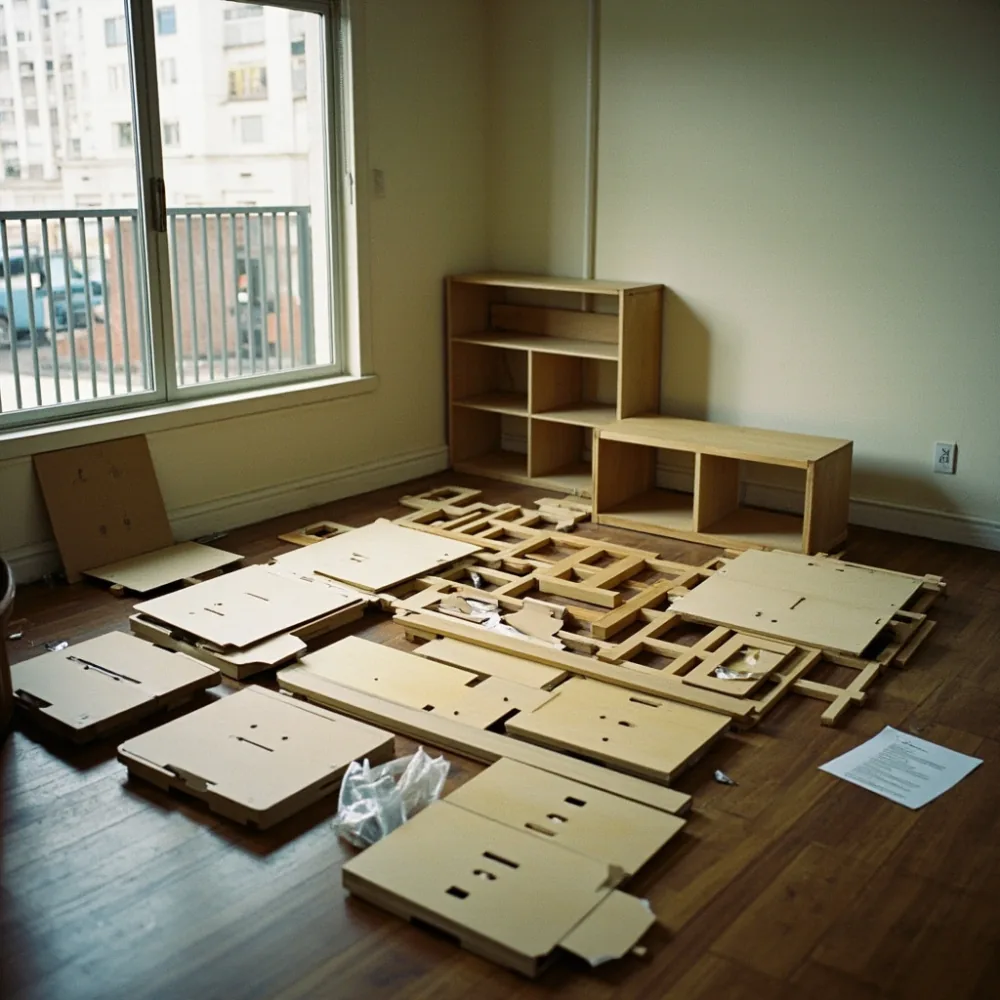
The 10-minute unboxing check
Hardware kits vs structural pieces
I learned this the hard way with a 6-seater solid wood dining table that arrived on a Saturday morning. The carton looked fine from the outside, but when I pulled out every foam cap and cardboard insert, three of the eight leg brackets were nowhere to be found. Before you panic, run through this quick triage:
- Count every labelled bag. Most flat-pack and RTA (ready-to-assemble) pieces ship hardware in a single plastic sleeve taped to the frame or bundled in a small kraft envelope. If the bag is torn or missing entirely, the screws, cam locks, dowels, or Allen keys often fall into the bottom of the carton.
- Shake the carton gently. A small rattle means a loose fitting is hiding under the bottom cardboard or inside a hollow leg.
- Check inside upholstered components. Legs for a leather sofa or ottoman are sometimes strapped to the underside of the seat platform, wrapped in foam under the backrest, or even taped to the bottom of the base.
- Look at the manual's parts list. Every credible spec sheet shows a quantity per item (M6x40 bolts x 12, wooden dowels x 8, etc.). Cross-check what is in the bag against that list.
If a structural piece — a tabletop panel, a sofa arm, a bed side rail — is genuinely absent, you have a different problem than a missing bolt. Hardware kits are typically replaced by the seller within 5-10 working days. Structural panels usually mean a partial replacement order or, in the worst case, a full redelivery.
Which missing parts happen most often on flat-pack furniture in Singapore?
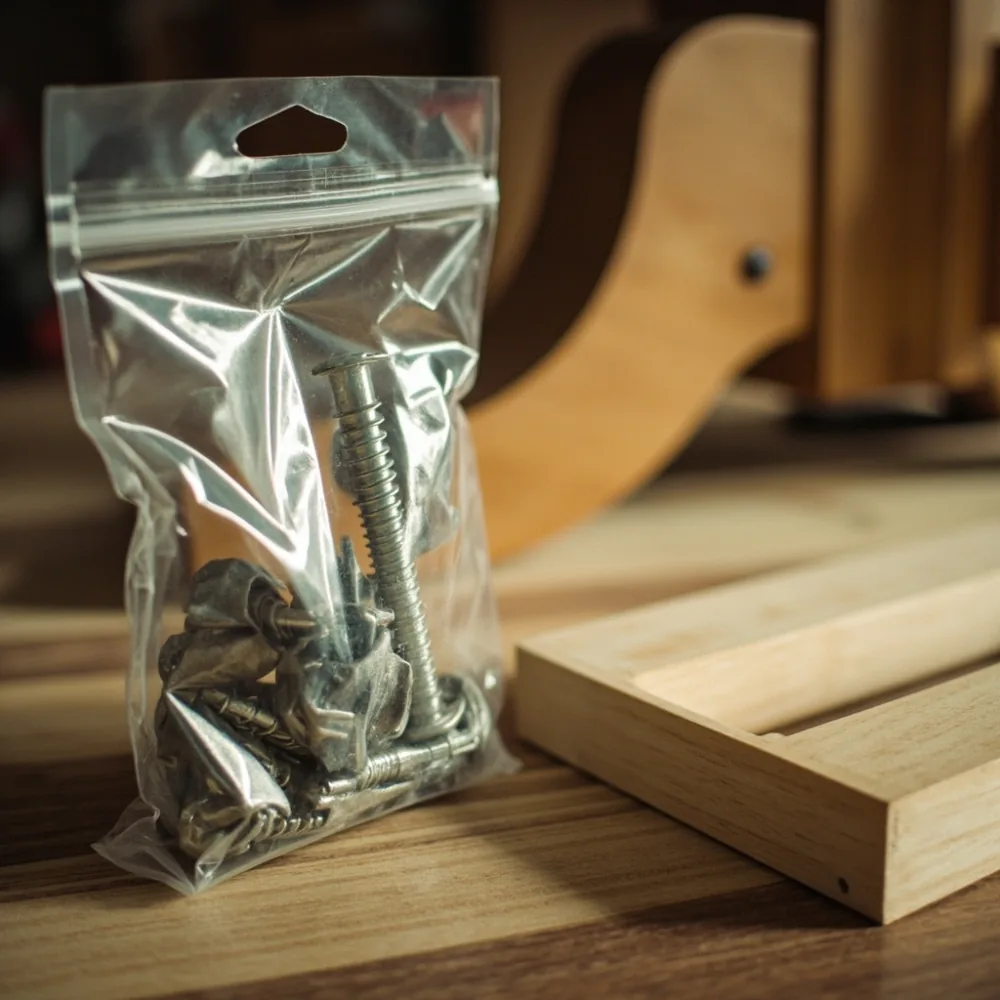
Hardware (screws, dowels, cam locks)
Small accessories (handles, feet pads, gas struts)
Visible panels and trims
From my own purchases and from conversations with delivery crews working across HDB estates in places like Tampines, Sengkang, and Jurong, the same handful of parts go missing again and again:
- Cam locks and Minifix bolts. The little 15 mm zinc barrels that join two panels of a wardrobe or bookcase. They are small, shiny, and they slide out of torn plastic sleeves without anyone noticing.
- Wooden dowels and biscuit joints. A 200-piece wardrobe can use 40-60 dowels. Losing four or five is common.
- Drawer runners and soft-close adapters. Especially on small space furniture where the runners ship separately to keep the carton slim enough to fit through HDB doorways around 90 cm wide.
- Gas lift cylinders for office chairs and storage beds. Often packed in a separate cardboard tube inside the main box.
- Decorative handles, feet caps, and felt pads. Frequently bagged separately and tossed by mistake.
- One side panel or door. Less common, but it does happen when a multi-parcel order is split.
Hardware is replaceable in days. Panels and doors mean a longer wait — typically 2-4 weeks if the piece is still in production, or 7-14 days if it ships from regional stock in Foshan or Johor.
Who is responsible for a missing part — the brand, the retailer, or the courier?

When the brand is on the hook
When the retailer handles it
Courier liability in Singapore
Responsibility usually flows with who you paid and what the warranty document says. In my experience there are three clean cases:
- You bought directly from a brand or its local distributor. The brand owns the problem. A maker like MIDHILL, a Foshan solid-wood furniture manufacturer established in 2008, ships replacement hardware from its Guangdong warehouse within 7-10 working days for screws, dowels, and small fittings. Their 10-year structural warranty covers split panels, cracked frames, and joinery failures — not "I lost a bolt," but it does cover genuinely missing structural components.
- You bought through a local retailer or marketplace. The retailer is your first stop. They will either source the part from the brand or, for common fittings, pull a replacement from their own service inventory. Expect 5-14 working days depending on the part.
- Damage in transit. If the box itself looks crushed, punctured, or water-stained, photograph the carton before opening it. Couriers in Singapore (DHL, Ninja Van, door-to-door logistics arms of furniture retailers) carry liability insurance, and a clear photo of the damage is the difference between a free replacement and a fight.
Always keep at least three photos: the unopened carton from two angles, the inside packaging, and the affected part with a ruler for scale. These images move claims along much faster than a written description alone.
How fast can missing parts actually be replaced in Singapore?
Realistic timelines by part type
Where the stock lives
Express options and what they cost
Timelines are not what marketing pages suggest. Here is what I have actually seen across furniture orders placed in Districts 14, 19, and 23 over the last two years:
| Part type | Local stock | Malaysia / Johor | China factory (e.g. Foshan) |
|---|---|---|---|
| Bolts, dowels, cam locks, Allen keys | 2-5 working days | 5-7 working days | 10-15 working days |
| Drawer runners, hinges, gas struts | 3-7 working days | 7-10 working days | 14-21 working days |
| Handles, feet caps, felt pads, decorative trims | 3-5 working days | 7-10 working days | 14-21 working days |
| Single panels, shelves, doors | 5-10 working days | 10-14 working days | 21-35 working days |
| Full structural frames (table base, sofa arm) | 10-14 working days | 14-21 working days | 30-45 working days |
Express courier upgrades are real but pricey. Air-freighting a 2 kg hardware kit from Shenzhen to Singapore costs around SGD 35-60 on top of the part fee, and shaves 5-7 days off the wait. For a small missing handle I would not bother; for a missing bed side rail holding up a project I would.
What should I write in a missing-parts claim to get the fastest response?
The four details that matter
What to attach
Common replies and how to handle them
Most slow replies are caused by vague claims. A good claim looks like this, and I have used this template three times with success:
"Order #12345, placed 12 March, delivered 18 March to a 4-room HDB in Punggol. Item: 1.8 m solid wood dining table (SKU D180-OAK). The carton was sealed and undamaged. Part M6x40 bolt x 4 and wooden dowel 8x30 x 6 are missing from hardware bag HWB-04 (see attached photo). I cannot complete assembly. Please quote lead time and shipping cost, or arrange a replacement bag."
- Order number and SKU. Without these, the brand has to search their own database.
- Exact part name from the manual. "Small metal bolt" means nothing; "M6 x 40 mm socket head cap screw, part code HWB-04" means everything.
- Quantity missing. Specific numbers, not "a few."
- Two or three photos. The hardware bag, the empty slots in the assembly manual diagram, and the missing item area on the furniture itself.
If the first reply asks you to disassemble and ship the whole piece back, push back. For a single missing bolt, no reasonable seller needs the entire 80 kg wardrobe returned. A photo-based approval is standard practice for parts under SGD 50 in value.
Does humidity in Singapore cause parts to swell, crack, or fit poorly — and is that a missing-parts issue?
Why wood moves in HDB flats
Engineered wood vs solid wood
When swelling is not a warranty case
This is one I get asked constantly, and the answer matters because what looks like a missing part can actually be a moisture problem. Singapore's relative humidity sits between 70% and 85% for most of the year, and that does real things to furniture:
- Engineered boards (MDF, particleboard, plywood with veneer) absorb moisture along exposed edges. A 25 mm particleboard shelf in a wardrobe that fits perfectly in the dry season can swell by 1-2 mm by September, enough to jam a drawer or prevent a cam lock from seating fully.
- Solid wood furniture — the kind of durable furniture most buyers in Singapore want for longevity — moves differently. A 180 cm oak table top can grow or shrink 3-5 mm across its width through the year. Good makers account for this with slotted screw holes and breadboard ends.
- Leather sofa frames in leather sofa construction are usually kiln-dried hardwood with a moisture content under 10%. Once inside an air-conditioned HDB at 24°C and 55% RH, the wood stabilises within 2-3 weeks.
If a dowel hole has tightened or a panel will not seat, that is a fit issue, not a missing-part issue. A reputable seller will send a slightly smaller replacement dowel or sand the hole slightly wider. Photograph the gap with a ruler and send it in; that is enough for a remote diagnosis.
Can I refuse delivery in Singapore if the carton looks wrong?
What to look for on the doorstep
Your rights under the Consumer Protection (Fair Trading) Act
The hidden cost of refusing
Yes, but you have to act fast. The delivery crew will not wait 30 minutes for you to inspect, so here is the routine I use:
- Inspect the outer carton before signing. Soft corners, crushed edges, water staining, broken seals, or tape that has been re-taped over are all red flags.
- Photograph the carton in the same spot it was dropped. Note the time on your phone.
- Write "carton damaged, contents unverified" on the delivery order before you sign. This single line preserves your right to claim later without voiding the delivery acceptance.
- If damage is obvious, refuse the delivery outright. Under the Consumer Protection (Fair Trading) Act, goods must match their description and arrive in reasonable condition. The retailer is responsible for arranging a redelivery at no cost.
The hidden cost: refusing a 1.6 m wardrobe when you live on the 14th floor of a Yishun block with a single lift often means a 2-3 week delay for a redelivery slot. For a SGD 50 replacement bolt, I would accept the carton, sign with a note, and file the parts claim separately. For a cracked tabletop, I would refuse.
What if the brand has stopped making my furniture and the part is discontinued?
Common reasons for discontinuation
What to ask for instead
Salvage options for older pieces
This is more common than people think, especially with custom furniture pieces or short-run designs. I went through it with a side table bought in 2021 whose maker exited the Singapore market in 2023. The replacement bolt was no longer stocked anywhere.
- Ask for a compatible alternative. Most cam locks, hinges, and runners follow DIN or ISO standards. A 15 mm Minifix bolt from one supplier is identical to another.
- Request a handyman allowance. Some brands will credit SGD 30-80 for you to source a local equivalent at a hardware shop in Tai Seng, Defu, or even a larger Sim Lim Square outlet.
- Consider a local fabricator. For a discontinued wooden panel, a custom furniture maker or carpentry workshop can mill a replacement from matching veneer for around SGD 80-200 per panel.
- Keep the original manual. A PDF of the parts diagram is gold for any fabricator reverse-engineering the piece.
Discontinued does not mean unsolvable. It just means the solution is slower and more local than a brand-shipped replacement.
How do I avoid missing parts on my next furniture order?
Pre-delivery checks
On-delivery habits
Assembly-day setup
After five furniture orders across two HDBs and one condo, I have settled on a routine that has reduced missing-parts claims to zero:
- Read the manual before delivery day. Most manuals are PDFs emailed with your order confirmation. Knowing that a wardrobe uses 56 dowels and 24 cam locks means you can count every part in under five minutes.
- Prepare a clear 2 m x 2 m floor area. Cramped HDB living rooms push you to unbox sloppily. A clear zone prevents parts from rolling under the sofa or behind the TV console.
- Empty all cartons completely before assembly. Even if you plan to build only the bed frame first, unpack the entire order. Hidden parts inside hollow headboards and ottoman bases are common.
- Bag and label hardware by assembly stage. Zip-lock bags with stage numbers (Stage 1: frame; Stage 2: drawers) save hours later and make a missing-parts claim trivial if it ever happens.
- Keep one unopened hardware bag as a reference. If a part goes missing during assembly, you have a known-good example to photograph.
None of this is glamorous, but it turns furniture assembly from a stressful weekend into a controlled project — and it almost guarantees you will not need any of the claims advice above.
Frequently asked questions
What is the fastest way to get a missing bolt replaced in Singapore?
Email the brand or retailer with your order number, SKU, and a photo of the missing bolt next to the manual. Hardware kits ship from local stock in 2-5 working days, or from Johor in 5-7 days. Air-freight upgrades from China add SGD 35-60 but save about a week.
Does the 10-year warranty cover missing parts?
Most structural warranties cover defects like cracks, splits, and joinery failures, not lost hardware. Missing parts from a sealed carton are usually handled under a separate replacement-parts policy, which is faster and free of charge for small fittings.
Can I assemble furniture with one missing dowel?
Temporarily, yes. Permanently, no. Wooden dowels carry shear load and keep panels aligned. Skip the dowel and the joint will rack within weeks. Either wait for the replacement or use a same-diameter hardwood dowel from a local hardware shop.
Who pays for the handyman if a missing part delays assembly?
If the part was genuinely missing from a sealed carton, the seller should cover reasonable assembly costs. In practice, expect a SGD 50-100 goodwill credit rather than a full reimbursement. Document the delay with dated photos of the incomplete piece.
How do I know if a missing part is a moisture issue instead?
If the part is present but the hole has tightened, or a panel will not seat, suspect humidity. Engineered boards swell in Singapore's 80% RH. Photograph the gap, measure with a ruler, and request a slightly undersized replacement dowel or a sanded panel.
Questions about specifications, fabric or delivery? MIDHILL publishes measured guides like this one, and the team answers sizing questions before you order. See the full collection or contact the team.