Missing Furniture Parts in Singapore: A Buyer’s Troubleshooting Guide
Find missing furniture parts in Singapore, compare replacement costs, learn delivery options, and avoid buying incomplete furniture from scratch.
- Why are furniture parts missing when my order arrives in Singapore?
- How do I tell the difference between missing, damaged, and hidden furniture parts?
- Should I repair the furniture or ask the seller for a replacement part?
- What does a missing part cost to replace in Singapore?
- Can I order replacement parts from the original seller?
- How long will replacement furniture parts take to arrive?
- Who should pay for delivery, assembly, and a replacement part?
- How do I handle a missing part before the furniture warranty starts?
- Will missing parts affect delivery into HDB flats and Singapore condos?
- How can I avoid missing parts when buying furniture in Singapore?
Why are furniture parts missing when my order arrives in Singapore?
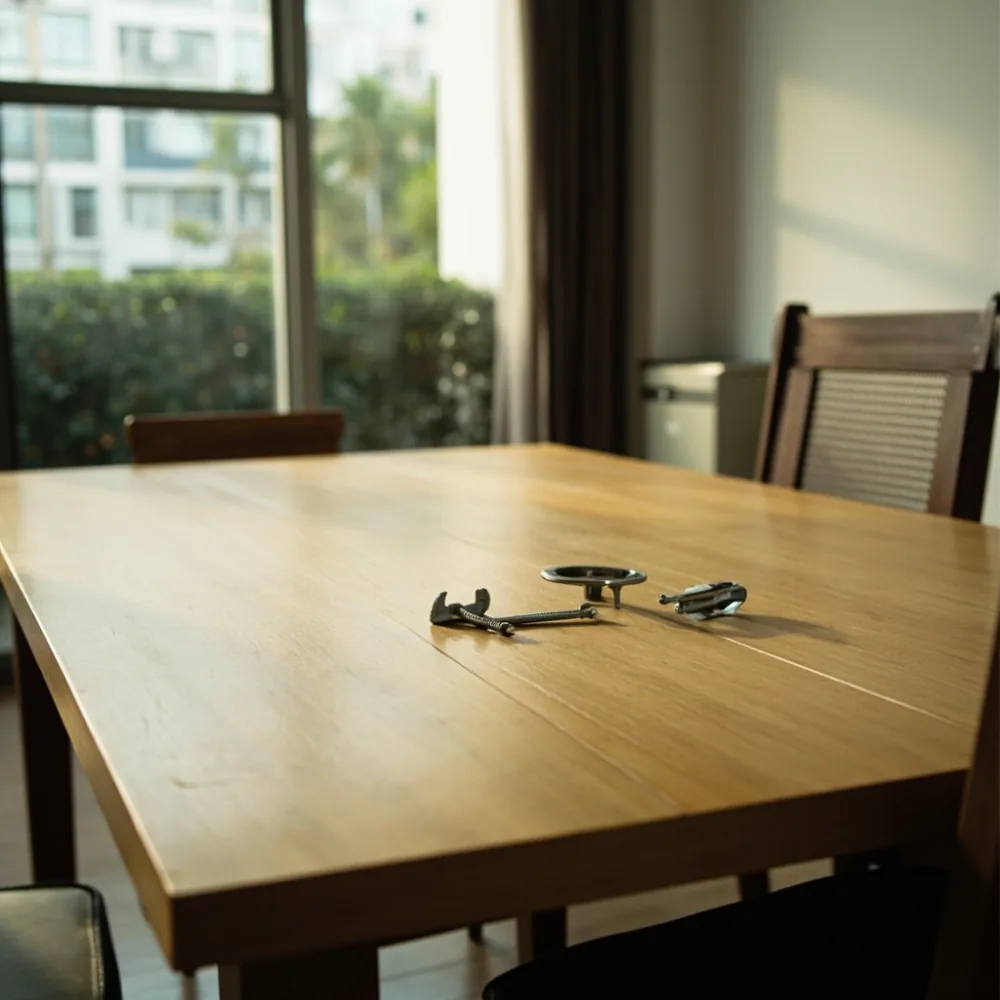
Common causes of missing parts
What to check before delivery
In my experience, a missing part is usually a packing or handover problem, not a manufacturing defect. A loose screw can end up in the wrong carton, a small bracket may never have been inserted, or one side of a table may be left at the workshop. Singapore furniture orders often travel in several stages: warehouse sorting, a van or lorry delivery, and final carrying into the unit. Each handover creates another opportunity for a small component to be separated from the item it belongs to.
It also helps to distinguish between a genuinely missing part and a part that is hidden. Some solid wood furniture arrives with protective covers, felt pads, shelf pins, cam locks, or dowels installed underneath rather than in the visible retail box. Modern flat-pack pieces may use hex keys and screw heads instead of traditional fittings. Before reporting a shortage, I remove the packaging, inspect every compartment, and photograph the item and its hardware.
- Count each component against the assembly diagram, including screws, dowels, cams, handles, and cushions.
- Check the underside, inside drawers, and the interior of carton inserts.
- Compare the delivered configuration with the product photograph and specification.
- Record the condition of the box and note any tape, seal, or puncture before unpacking.
For custom furniture, ask the supplier for the full packing list before production. For a leather sofa, inspect whether the missing item is a cushion, strap, caster, or protective hardware rather than assuming the upholstered body is incomplete. Accurate details help a supplier locate the right replacement without delaying the whole order.
How do I tell the difference between missing, damaged, and hidden furniture parts?
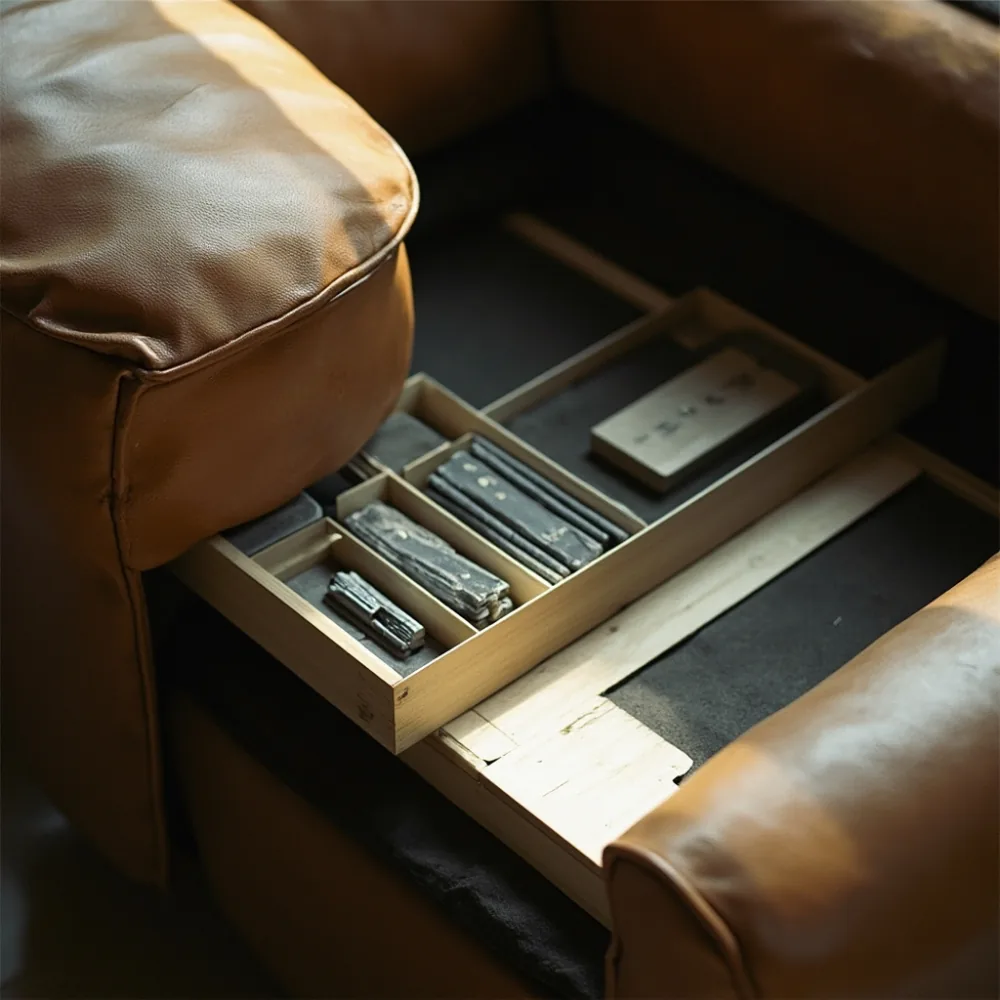
A practical inspection sequence
Examples of commonly overlooked pieces
Missing means the component is not present anywhere in the delivery. Damaged means it was supplied but cannot function safely, such as a bent shelf pin or stripped screw hole. Hidden means the item exists but is fitted in a less obvious location. I check these categories in the same sequence every time because it prevents avoidable replacement requests.
- Missing: the drawer has no handle, the chair has no rear legs, or the cabinet has no adjustable shelf.
- Damaged: the handle is cracked, the dowel is split, or the screw spins without tightening.
- Hidden: wall anchors, spare screws, furniture straps, caster locks, and adjustable feet may be tucked below or behind the piece.
For solid wood furniture, I pay particular attention to concealed joinery. A dining table may include ten screws and six washers, while the assembly leaflet illustrates only the main bolts. A cabinet can use two different cam sizes that look similar in a carton. Photograph every fitting in groups with the relevant edge of the furniture, then send a wide shot showing the complete item.
Do not force a damaged fastener into a stripped hole. It can turn a small issue into a repair affecting the frame. Save the failed component, because the maker may need to inspect it before issuing a replacement.
Should I repair the furniture or ask the seller for a replacement part?
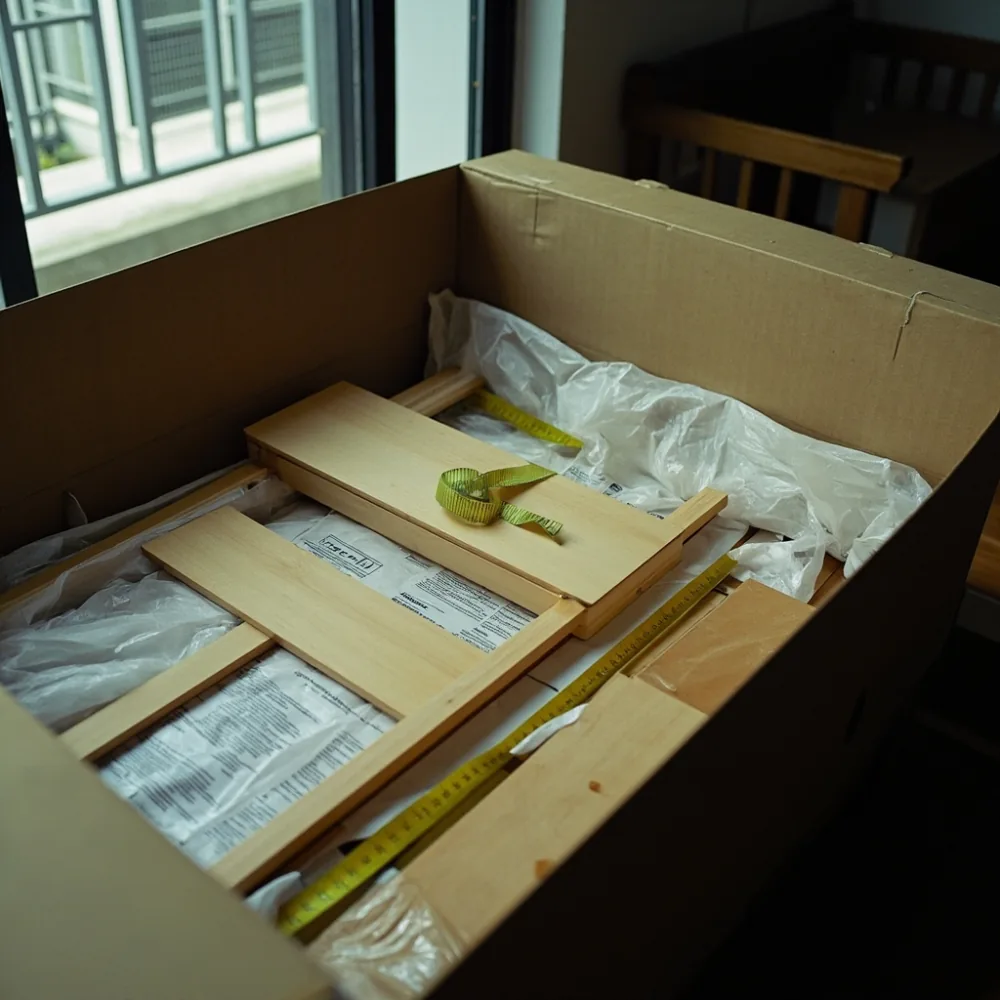
When repair makes sense
When replacement is safer
I choose repair when the missing piece is inexpensive, readily available, and compatible with the design. A common shelf support, wall anchor, or standard caster can often be sourced locally. I use replacement when the original component affects load capacity, safety, appearance, or the structural warranty.
Ask the seller for a replacement rather than improvising with an apparently similar part. Wood tone, thread diameter, cam profile, and hinge spacing can differ even when measurements look identical. Metal fittings found in a hardware shop may also have a different plating and corrosion resistance.
- Measure the part and the mounting hole in millimetres, not only by appearance.
- Record the brand, model, batch, and order number shown on the label or receipt.
- Ask whether the replacement will be supplied separately or collected with the original carton.
- Request a part that matches the current production batch where possible.
Minor cosmetic wear can sometimes be handled locally, but I would not drill new holes into a leased HDB flat or alter a leased condo fixture without permission. If the piece was delivered assembled and the missing component is integral to its frame, replacement is usually cleaner than dismantling it.
What does a missing part cost to replace in Singapore?
Typical replacement prices
How to calculate the total
Most small components should not require a full replacement fee, but labour and delivery can cost more than the part itself. My rule is to compare the component price, any diagnostic or collection charge, and the time needed to restore use of the furniture. A $3 handle that needs a separate van trip can become a $55 fix.
| Example | Typical part price | Possible service or delivery | Likely total |
|---|---|---|---|
| Cabinet handle or knob | SGD 5-25 | No charge or SGD 0-20 | SGD 5-45 |
| Chair leg glide or caster | SGD 8-35 | Collection may add SGD 30-60 | SGD 8-95 |
| Dining table connecting bolt | SGD 12-40 | Matching labour SGD 40-100 | SGD 12-140 |
| Leather sofa cushion | SGD 90-250 | Freight and fitting SGD 60-150 | SGD 90-400 |
| Wall anchor set | SGD 4-12 | Usually none | SGD 4-12 |
These are working Singapore estimates rather than fixed seller charges. A local carpenter may charge an hourly rate of roughly SGD 45-120, while a delivery booking can add SGD 30-80 within a scheduled route. A replacement drawer for a small space furniture unit can cost SGD 70-220 once sizing, slides, and delivery are included.
When requesting help, ask for the part charge and service charge separately. If the original item arrived defective or incomplete, it is reasonable to query whether the supplier should absorb the corresponding labour or redelivery cost.
Can I order replacement parts from the original seller?
Information the maker needs
Expected response time
Yes, provided the seller can identify the item and its production batch. I send the order number, invoice, product dimensions, finish, and clear photographs of the missing location. I also include a photo of every available fitting. That last detail matters because a maker matching an older model to the wrong connector can create another problem.
Expect a simple missing component to be acknowledged within 1-3 business days. A special colour-matched or upholstered replacement may take 2-6 weeks. If the seller must inspect stock or arrange factory pickup, allow 5-10 business days before escalating the request.
MIDHILL, a Foshan solid-wood furniture maker established in 2008, provides a 10-year structural warranty. Structural coverage can be relevant when a failed connector affects the frame, although it should not automatically be treated as cover for accidental loss. Ask the seller to confirm in writing whether the requested component is warranty-supported and whether freight is included.
- Keep all delivery labels, packaging, and assembly instructions until the item is complete.
- Give the maker one clear reference rather than several conflicting order numbers.
- Ask for a dispatch estimate before agreeing to any collection.
- Follow up after 3 business days if there is no acknowledgement.
How long will replacement furniture parts take to arrive?
Local versus international supply
Delivery timeframes by service
The answer depends heavily on whether the component is held locally. Common screws, shelf pins, handles, and glides can arrive within 1-3 business days through a Singapore retailer. A model-specific part may take 1-2 weeks if it comes from a local workshop. Factory replacements involving colour matching, tooling, or custom upholstery can take 3-8 weeks, plus delivery.
| Replacement route | Typical preparation | Delivery estimate | Total practical timeframe |
|---|---|---|---|
| Local hardware purchase | Same day | 1-3 days | 1-3 days |
| Singapore supplier stock | 1-5 days | 1-4 days | 2-9 days |
| Regional maker or factory | 3-14 days | 2-5 days | 5-19 days |
| Custom or upholstered part | 10-35 days | 2-5 days | 12-40 days |
International sea freight can extend the period, but many sellers keep commonly requested spare parts in Singapore. For urgent repairs in HDB or condo homes, I would first check whether a compatible local part can be used safely. If a custom furniture item must remain exact, a factory match may be worth the longer wait.
Ask for a narrow delivery window rather than a vague daily slot. Elevator booking, unit access, and the mover’s route can affect arrival time even when the part is already in Singapore.
Who should pay for delivery, assembly, and a replacement part?
Seller responsibility
Buyer responsibility
When a component was absent at delivery, the seller should normally provide the missing part at no charge. Responsibility for extra labour depends on the circumstances. If the item was delivered assembled and required dismantling to access the fitting, the seller should address that labour. If the buyer selected a part that was not included in the stated product specification, the cost may fall on the buyer.
I would review the order confirmation and written specifications before disputing anything. Compare the missing item against what was promised. For example, a wall-anchoring kit may be listed as customer-supplied, while a leg bolt should usually be included with the chair. Assembly leaflets can also distinguish furniture parts from fixing hardware supplied by the installer.
- Seller: an item listed in the specification but absent from the delivered package, or a factory defect covered by warranty.
- Buyer: accidental loss after acceptance, optional extras, or a non-standard replacement requested after the original batch is unavailable.
- Shared discussion: labour needed because the original product arrived incomplete or was damaged in transit.
Request the outcome in writing. If the parties cannot agree, keep photographs, the delivery record, and a timeline. A clear factual account is more useful than a general complaint about poor quality.
How do I handle a missing part before the furniture warranty starts?
Evidence to keep
How to preserve warranty coverage
Check the furniture as soon as it is delivered, but do not discard packaging until the item is confirmed complete. Warranty terms vary, and some suppliers require evidence of damage on arrival or prompt notification. A timestamped photo of the carton, the missing location, and the serial label can prevent later confusion.
For custom furniture, especially a made-to-measure dining table or storage unit, I record all dimensions when it enters the home. If a fitted component is missing, the maker may need the original placement measurements to produce the correct part. For solid wood furniture, I also capture the finish and any batch marks under the base.
Do not perform an irreversible repair before the seller responds. Drilling, gluing, or filling a mounting hole may make a factory replacement more complicated. Temporary measures should be safe and minimal: for example, keep an unstable chair out of use or secure a light cabinet to the wall while the proper fitting is arranged.
Careful handling matters in Singapore’s humid environment. Keep replacement timber away from floor-level moisture, preserve original labels, and avoid prolonged direct contact with wet cleaning cloths. Metal fasteners should be dry to reduce surface corrosion.
Will missing parts affect delivery into HDB flats and Singapore condos?
Access and scheduling
What delivery teams usually handle
Yes. Missing parts can affect more than assembly because a failed bracket may prevent safe movement. A dining table delivered without its connecting bolt may need to be disassembled before it can pass through a common HDB corridor. A leather sofa missing a caster may be left at the loading area while a replacement is arranged.
Typical Singapore furniture delivery to an HDB or condo includes carrying the item from the ground-floor loading point to the unit, subject to the building rules. It may not include unpacking, assembly, removal of packaging, or carrying the item to a specific room. Staircases, narrow corridors, and lift dimensions can add time, so teams serving areas such as Woodlands, Jurong East, Tampines, or the denser condo districts near Orchard often charge differently according to access.
- Confirm the door, lift, and corridor dimensions before a large order.
- Reserve a lift if the building requires it.
- State whether stairs, parking restrictions, or a second delivery attempt are involved.
- Check whether assembly and packaging removal are included.
For small space furniture, choose pieces that can pass through the lift fully assembled when possible. If a replacement part requires the item to be dismantled again, ask the seller to combine collection and redelivery so the furniture is not moved twice.
How can I avoid missing parts when buying furniture in Singapore?
Questions to ask before ordering
A final pre-delivery checklist
I avoid most surprises by treating the packing list as part of the product, not an afterthought. Before paying, I ask what is included, how many pieces are shipped, and whether small fittings are boxed separately. I also confirm the dimensions and weight of the packaged item, not merely the assembled product.
- Request a photo of the assembled item with every accessory and fixing shown.
- Check the assembly manual against the list of physical components.
- Confirm whether table leaves, chair cushions, shelves, and drawers are included.
- Ask whether replacement spares are stocked in Singapore.
- Choose durable furniture with replaceable standard components when future maintenance matters.
For custom furniture, I approve a dimensioned drawing and finish sample before production. For a leather sofa, I record the exact shade under daylight because showroom lighting can shift its appearance. For solid wood furniture, I check that the maker can explain the joint and connector used for the specific design.
On delivery day, I inspect before the team leaves. A five-minute check can identify one absent bracket while the driver, packaging, and hardware are still present. If something is missing, note it on the delivery receipt where possible and send photographs to the seller the same day.
Frequently asked questions
How long does it usually take to get a missing furniture part in Singapore?
A standard local part may arrive within 1-3 business days, while a seller-held model-specific fitting commonly takes 2-9 days. Factory-made or colour-matched components may require 3-8 weeks. International or custom parts can take longer. Confirm the preparation and delivery periods separately before deciding whether to wait or buy a safe local alternative.
Is it normal for flat-pack furniture to arrive with spare screws?
Some sets include extra screws or fittings, but not every retailer includes spares. The number can vary by model and packaging revision. Compare the delivered hardware with the assembly guide and order specification. Do not assume extra pieces compensate for a missing structural component, such as a table connecting bolt or chair leg fitting.
Should I ask the seller to deliver the replacement part with my next order?
Yes, that can reduce freight and make the exchange easier to track. Ask for a written dispatch date and whether the part is being sent separately. If the furniture must be dismantled to install it, coordinate collection, delivery, and assembly in one visit to avoid two additional service charges.
Can I buy a replacement part from a Singapore hardware shop instead?
You can, but only if it matches the thread, diameter, length, cam profile, load rating, finish, and mounting geometry. A visually similar connector may not be safe or may not suit concealed fittings. For structural pieces, obtain the maker’s approval first. For purely cosmetic fittings, a close match may be acceptable after testing.
What evidence should I keep when reporting a missing part?
Keep the packaging, assembly instructions, labels, and delivery receipt until the issue is resolved. Photograph the complete furniture, the missing location, and all included hardware. Record the date, seller’s response, and promised timeframe. This makes it easier for the supplier to identify the production batch and issue the correct replacement.
Questions about sizing, fabric or delivery?
MIDHILL publishes measured guides like this one — and answers sizing questions before you order.
See the collection