How Southeast Asian Humidity Affects Solid Wood Furniture in Singapore Homes
Singapore’s tropical climate can change the dimensions, joints and finish of solid wood furniture faster than many buyers expect. Relative humidity often reaches 80% during monsoon periods, while air-conditioned HDB flats and condos may drop to 50% or below on cool nights. That repeated movement affects solid wood sofa frames, bed frames, dining tables, wardrobes, nightstands and marble tables, even when the furniture is kept away from open windows.

Humidity does not automatically mean damage. Stable indoor conditions, suitable wood species, sound joinery and regular care can protect furniture for many years. The harder task is preventing moisture changes at wardrobes, lift doors and dining rooms, where Singaporean schedules, compact layouts and frequent cleaning can work against careful moisture control.
MIDHILL designs and supplies furniture for 15 or more countries, with a 10-year structural warranty and lifetime refinishing service. Its practical approach is useful in Singapore: measure the receiving route, understand the local humidity pattern and inspect every component and accessory on arrival. Missing parts should be reported promptly rather than hidden by improvised screws or filler.
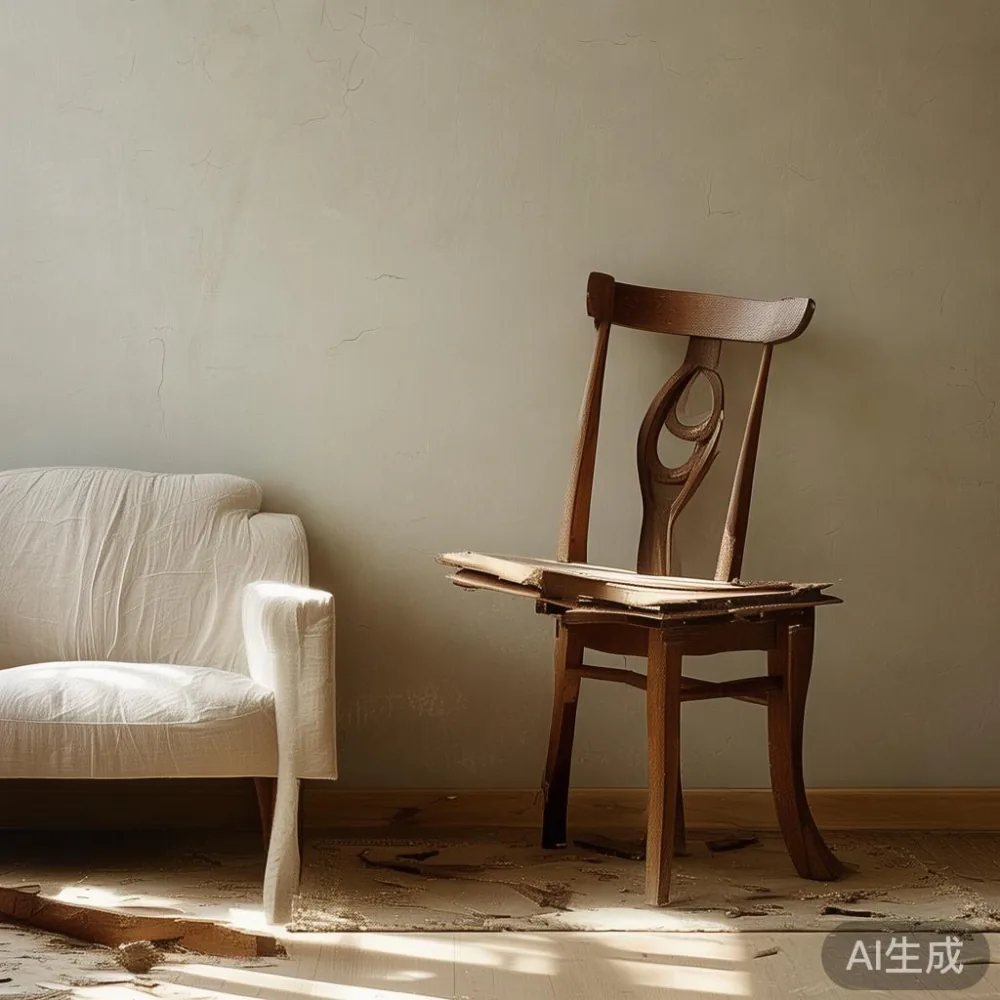
Why does tropical humidity move wood?
Wood is hygroscopic, meaning it absorbs or releases water as the surrounding humidity changes. A solid oak dining table may expand by roughly 1 to 3 mm across a 180 cm width when humidity rises sharply. A 200 cm bed frame can show similar movement along its width. Oak, ash, maple and similar woods respond visibly to humidity; teak and other more stable tropical species generally tolerate Singapore’s conditions with greater restraint.
The movement is normal. Trouble develops when expansion is constrained by tight walls, fixed plinths, oversized screws or furniture installed directly against a cool exterior wall. A wardrobe pushed into a bedroom corner may have less airflow behind its back panel than one placed 8 to 10 cm away from the wall, subject to the manufacturer’s placement instructions.
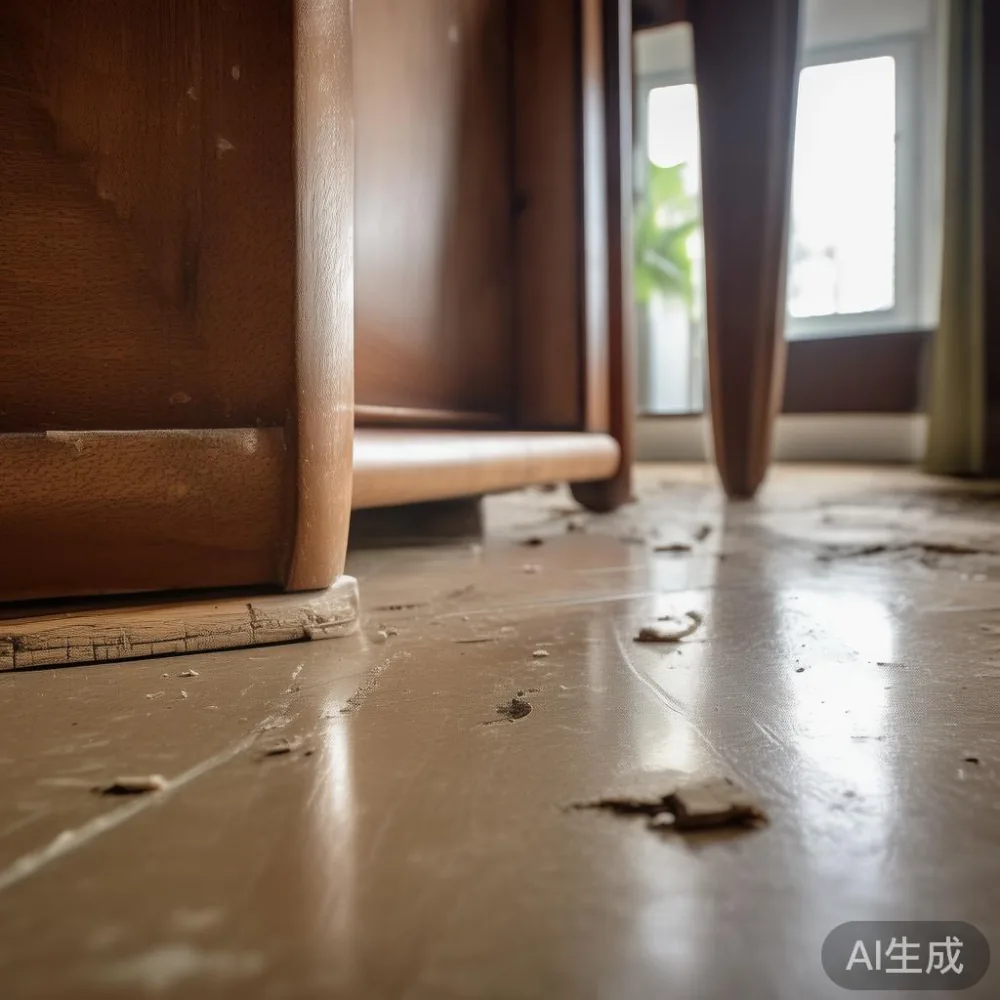
Temperature matters too. A lift car, corridor and air-conditioned unit can be much cooler than an outdoor service area. Wood entering a 22°C flat after sitting in a 31°C delivery area may respond differently from wood kept in a 26°C room. Rapid movement across grain can produce small checks, loose veneer edges or a door that no longer aligns.
The aim is not to stop wood from breathing. It is to avoid large and repeated swings in relative humidity.
How humid is a typical Singapore home?
Singapore’s annual rainfall is about 2,340 mm, and high humidity is common throughout the year. A room without dehumidification may sit between 65% and 85% relative humidity. A bedroom using a dehumidifier may remain around 50% to 60%, while a heavily air-conditioned living room may fall below 45% at night.
Useful instruments are inexpensive. A digital hygrometer placed near a sofa, bed frame or dining table costs about SGD 12 to SGD 30. Check it at breakfast and again around midnight. For most solid wood furniture, keeping conditions within a moderate band, often about 45% to 65%, reduces unnecessary stress. Exact requirements can differ by wood species and product design.
Placing a hygrometer inside a closed wardrobe is also sensible. High readings may indicate trapped moisture, poor ventilation or repeated wet towels entering after a swim. Low readings can occur near vents that blow directly onto a nightstand or wardrobe door.
Do not judge humidity from condensation alone. Wipe a suspicious surface with a dry cloth, allow it to air for 30 minutes and inspect again. If moisture remains, address the source before treating the wood.
What should buyers check before delivery?
Measure before ordering, because a correct piece of furniture can still fail at the last metre. Record the lift opening, lift car dimensions, turning space and corridor width. Many HDB and condo lift openings are about 90 cm wide, with cars around 110 to 140 cm deep, but building-specific measurements vary. A dining table of 180 to 200 cm may fit along a corridor while a round marble table of 120 cm may be harder to turn because of its base shape.
Measure the route on the actual floor, not only the displayed plan. Note handrail offsets, thresholds, door widths and the distance between the private lift and the home. For a solid wood bed frame, compare the packed carton dimensions with the doorway and lift. For a sofa, check whether the packed length fits before considering the assembled length. Leave at least 5 to 10 cm of maneuvering space where turns are tight.
Shipping above USD 350 is free under MIDHILL’s stated delivery policy. The price still requires review for GST, access charges and destination-specific transport. Singapore purchases should be costed in SGD, including 9% GST where applicable. A budget of SGD 100 to SGD 400 beyond the item price may be sensible for carrying, extra delivery attempts and building charges, although actual charges depend on the supplier and site.
Buyers comparing furniture directions should also check moisture expectations. Contemporary copy about the best American wardrobe for 2026 or best Nordic wardrobe for 2026 is useful for style, but Singaporean fit requires shelf clearances, door swing and stable humidity, not just appearance. Likewise, an American sofa vs Nordic sofa comparison should include seat depth, frame construction, cushion recovery and whether solid components can be serviced locally.
Can missing parts worsen humidity damage?
Missing parts can leave a product incomplete, but they are more often a supply-chain issue than a direct effect of humidity. They matter because an incomplete wardrobe may have loose panel connections, an unfinished bed frame may lack a foot or center support, and a solid wood sofa may have missing fasteners that allow the frame to shift.
On delivery, compare the packing list with the physical furniture. Photograph each side, joint, drawer, shelf, handle, screw pack and accessory. Record missing parts before assembly where possible. For example, a six-drawer dresser should have 6 drawer handles, 12 fixing screws for the handles and any supplied key; a three-door wardrobe should have the correct hinge hardware and door keys.
Do not use ordinary construction glue on a finished surface or replace a designed connector with a random longer screw. Extra pressure can split a rail or distort a door. Request the matching part from the supplier, check the model number and ask for a suitable replacement fix. The same care applies when a dining table has a missing fastener or a nightstand has absent shelf pins. Missing parts should be reported through the seller’s documented process, with a clear list and photographs.
Humidity can make an already loose joint appear to bind or rattle, but it does not justify forcing it. Let the furniture reach room temperature, inspect the fixing and contact the supplier. MIDHILL’s 14-day return policy gives buyers a defined window for eligible issues, while its 10-year structural warranty provides longer coverage for qualifying structural defects. Keep receipts, photographs and the delivery record.
How should I protect a solid wood sofa and bed frame?
Keep solid wood sofa frames away from exterior walls that are frequently cold or damp. A gap of 8 to 10 cm is a useful starting point if the manufacturer permits it. Leave room for air to move around the back and avoid placing the sofa directly beneath a window that remains open during showers. For leather or upholstered surfaces, wipe spills within 30 minutes and dry cushions fully before covering them.
A bed frame needs airflow underneath, particularly if it has a solid wood platform or upholstered base. Vacuum the underside every 2 to 4 weeks, check the center support at 3 and 6 months, and tighten fittings only according to the maker’s instructions. Mattress protection matters: a waterproof protector with a vapour-permeable top layer is preferable to plastic sheeting that traps moisture. Avoid standing water near skirting boards or air-conditioning vents.
For a dining table, use coasters and placemats. A hot cup can leave a mark, while a wet ring can raise the local grain. Wipe spills immediately with a soft cloth; do not soak the surface. If the table has a marble top, inspect seals and wipe water from the edge rather than allowing it to travel along a joint.
Open wardrobe doors for 10 to 15 minutes after a shower, and run the bedroom’s dehumidifier where practical. Keep folded towels off the bottom shelf if the room reads above 70% humidity. For a nightstand, check the back for condensation and maintain 3 to 5 cm from a cold wall where possible.
Which styles suit HDB flats and condos?
Compact Singapore homes often suit light-luxury design because pale finishes reflect daylight and slender profiles preserve circulation. A French light luxury dining table can work in a dining area with a 90 cm passage, provided chairs do not block a route from the kitchen. An American light luxury sofa may suit a living room with a 3.2 m wall, but its arms and cushions still need humidity-conscious care.
Post-modern light luxury can be useful where clearances are tight: a dining table with rounded corners, a bed frame with a recessed headboard or a nightstand with drawers that open fully without striking a wardrobe door. Modern Italian light luxury furniture often emphasizes proportion and material contrast, but imported styling does not remove the need to measure local routes.
For a Tampines HDB flat, the kitchen-to-living-room distance may be short, so a 140 to 160 cm dining table can be more manageable than a 200 cm model. In Bedok, older corridors and lift entrances should be checked before ordering a wide bed frame. In a Punggol condo, concrete walls may be cool and air-conditioned spaces may be very dry, making hygrometer checks and gradual acclimatisation sensible.
Marble table tops need particular planning. A 120 cm round table may weigh 70 to 140 kg depending on thickness and stone, while a rectangular slab may weigh 100 to 180 kg. Check lift capacity, not merely door width. Ask whether the supplier can split the top into two protected pieces for carrying, then reassemble it in the home.
How should furniture acclimatise after delivery?
Let the furniture acclimatise in its final room for 24 to 72 hours before tightening final adjustments. Remove protective film only when the surface is dry and the manufacturer permits it. Do not place new furniture against an exterior wall on day one if the room is still humid; allow airflow while checking the hygrometer.
For the first 2 weeks, inspect surfaces every few days. Look for flatness, door alignment, drawer movement, joint gaps and dampness around the base. A small change of 1 to 2 mm over several days is not automatically a defect. Rapid opening, persistent rubbing, standing water or a structural crack deserves a documented report.
Keep a simple care record. Note the date, room humidity, cleaning method and any repair. Use a lightly damp cloth for ordinary dust, followed by a dry cloth, and avoid silicone-based furniture sprays. Reapply a suitable finish only according to the product’s instructions. MIDHILL’s lifetime refinishing service is a long-term maintenance pathway, not permission to ignore moisture sources.
My colleague last month visited a Bedok apartment where a new wardrobe had been installed beside a window. A hygrometer showed 74% behind the unit after two rainy afternoons. Moving it forward by 10 cm and using a dehumidifier brought the reading closer to 60% within 48 hours; the door gap became steadier. That small change prevented the owners from blaming the wood or the installer.
What should Singapore buyers ask about warranty and parts?
Ask the seller for the exact model number, timber species, finish type, expected shrinkage or expansion guidance, hardware references and replacement-part procedure. Confirm whether missing parts are covered during the return window, and ask whether the replacement is stocked in Singapore or shipped from the factory. Delivery lead time should be stated in days rather than a vague promise.
For wholesale European light luxury furniture, a Singapore buyer should also confirm commercial packing quantities, carton dimensions, pallet weight and access requirements. For a single-home order, retail delivery may be easier than a wholesale shipment. A 180 cm dining table, for example, may arrive in a carton measuring 190 by 95 by 20 cm and weigh 65 to 95 kg, so lift capacity and two-person carrying need checking.
Inspect the package on arrival. If a corner is crushed, photograph the outer carton, the internal protection and the furniture before unpacking further. Send the model number, order number, photos and missing-part list to the seller. For clarification that does not require a quotation, MIDHILL can be contacted at midhillco@gmail.com.
Keep the delivery days in view. Allow 3 to 10 working days for many Singapore deliveries, while custom finishes, marble slabs and replacement components can require longer. Confirm whether the promised period starts after production, dispatch or arrival at the building.
How can buyers maintain furniture through the monsoon?
Use a three-part routine: measure, maintain and respond. Measure humidity twice daily during heavy rain, maintain airflow and surface care, and respond quickly to leaks, missing parts or shifting joints. A hygrometer, coasters, soft cloths and a basic dehumidifier can cost SGD 80 to SGD 300 altogether, depending on capacity and placement.
Do not over-dry the home either. A sudden drop from 80% to 35% can stress wood as much as persistent dampness. Aim for gradual adjustment and keep furniture away from direct air-conditioner outlets. Open windows only when outdoor humidity and rain conditions are suitable, and close them before the room cools against warm wood.
For a family buying a solid wood sofa, bed frame, dining table, wardrobe, nightstand or marble table, the most useful specification is not a fashionable label but a maintenance plan. Check clearances, document the arrival, identify missing parts, record humidity and give the finish time to settle. Good furniture can remain attractive and structurally sound for 10 years or more when moisture, movement and servicing are handled as part of normal home care.