Missing Parts, Covered: How to Read a Furniture Warranty
A furniture warranty can look reassuring on a product page and still leave a major gap when a sofa arrives with a missing bracket, a dining table needs a new fixing, or a wardrobe door cannot be aligned. The wording matters because a warranty may cover defects in materials and workmanship without covering every missing part, finish change, or service visit. For shoppers in Singapore, delivery access is another practical issue: a cabinet may fit through the HDB lift and corridor, while a replacement component might need to be carried up separately.
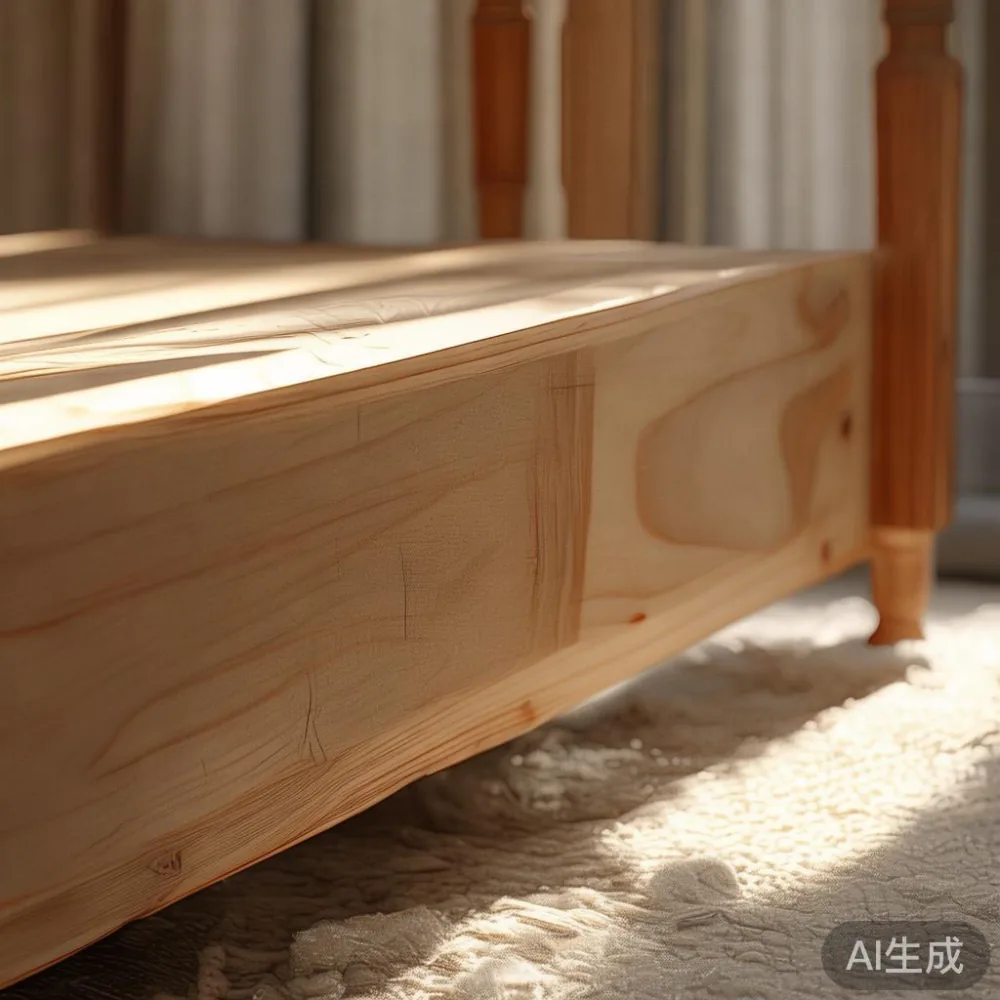
MIDHILL was established in 2008 and exports to more than 15 countries. Its furniture carries a 10-year structural warranty, with lifetime refinishing available under the stated terms. These are meaningful commitments, but customers still need to know exactly what is protected, how a claim is made, and what happens when a part is absent on arrival. The purpose of this guide is to turn a dense warranty into a set of checks you can complete before and after delivery.
What does a furniture warranty usually cover?
Most warranties distinguish between structural failure and minor service issues. A structural warranty may cover a solid wood bed frame whose joints loosen, a dining table whose approved hardwood develops a splitting defect, or a wardrobe carcass that separates under normal use. It may exclude ordinary movement in timber, fading caused by direct sunlight, damage from pets or accidental knocks, and defects caused by assembly or misuse.

Check the definitions before focusing on the number of years. A 10-year structural warranty sounds precise, but “structure” may refer only to the main frame and load-bearing components. It may not cover moving parts, surface finish, cushions, drawer runners, electrical fittings, or replacement hardware. Ask for the full written terms rather than relying on a product-page summary.
Also check whether the warranty applies to the product only or to the original purchaser. Some suppliers transfer coverage with the home, while others require the original invoice. A receipt dated 18 June 2025, the model and SKU, the finish, and the delivery address should all be retained. For a solid wood sofa, photograph the frame and every joint. For a bed frame, record the slats, centre supports, and fasteners. For a dining table, inspect the top, apron, legs, and underside.
A lifetime refinishing promise is different from a structural warranty. Refinishing generally addresses surface wear, colour changes, or finish-related service, subject to the supplier’s conditions. It does not automatically mean every damaged component is replaced without charge. Clarify whether refinishing is available once or repeatedly, whether return transport is included, and which surfaces qualify.
Are missing parts treated as a warranty claim or a delivery issue?
Missing parts should usually be documented as a delivery or assembly issue, especially if the item was incomplete when the courier left. Photograph the package, the full furniture piece, the installation area, and the empty packaging. Count every listed component before assembly. For example, check that a dining table has the expected 6 legs or 8 legs, 4 or 6 bolts, 2 braces, and all washers. A nightstand may arrive with 2 specified drawer pulls, 4 screws, and 1 anti-tip bracket.
Do not force a screw into a different hole, substitute a random piece of timber, or return the entire wardrobe because one shelf support is absent. These actions can complicate the claim. Record the delivery date, contact the supplier promptly, and ask whether they will send the missing parts or send a technician, depending on the policy and the scale of the issue.
“Missing parts” can also mean a component omitted from the carton rather than a part that has broken after use. If the product was assembled and a bracket later fails, the claim falls more naturally under workmanship or structural coverage. Keep the original packaging and fitting instructions if possible. The distinction helps the supplier respond faster and helps you avoid an unnecessary return.
What should I check before paying for a solid wood furniture order?
Begin by asking for the warranty document in a readable format. Look for the company’s legal name, coverage period, territorial limits, claim procedure, exclusions, and replacement or repair terms. A document that is only 3 paragraphs may still be workable if the product listing includes clear specifications, but you should know where those specifications are stored for future reference.
Then check the product dimensions against your Singapore home. A 220 cm dining table needs more than a 220 cm floor space because chairs require clearance. A 240 cm wardrobe may fit lengthwise in a bedroom but be difficult to turn into a condo corridor. A solid wood sofa with a 210 cm width can block a common HDB corridor if the building has a narrower turning route. Ask the supplier for the packed dimensions, not merely the assembled dimensions.
Check the floor and loading conditions too. MIDHILL offers free shipping over US$350, although the final delivery quotation to a Singapore address should be confirmed in SGD, including GST and any access-related surcharge. Record the expected delivery window rather than accepting an undefined date. A typical planning range is 30 to 60 days for made-to-order international pieces, while stock arrangements can differ.
Confirm that returns are accepted within 14 days under the stated policy, then inspect the item before authorizing assembly where possible. Do not let a delivery team sign an “all good” completion record if visible missing parts have not been noted. Use precise notes such as “1 of 2 wardrobe mirror clips absent,” rather than “damaged.”
How do lift and corridor widths affect replacement parts?
A product can fit into a lift on arrival and still create a problem when a replacement part is packaged separately. In Singapore HDB flats and condos, common lift door widths are around 80 to 90 cm, while internal lift dimensions may be approximately 130 cm deep and 110 cm wide, though individual blocks vary. Corridors can be only 100 to 150 cm wide, and turns near the lift lobby can be tighter than the straight corridor.
Ask whether a missing part will arrive as one parcel or several. A replacement wardrobe panel measuring 180 by 45 cm may need to travel diagonally in a lift, while a set of 16 drawer runners can fit inside a smaller carton. A marble table top may require two people and a separate carrying route. If the original piece has already been moved into the bedroom, a technician may be more practical than another large delivery.
Measure the route before the item is delivered: entrance, door width, lift dimensions, lift capacity, corridor turns, threshold height, and the final room. Leave at least 5 cm of working clearance around large panels where possible. In a Tampines, Bedok, or Punggol home, a standard HDB lift may be suitable for the furniture but unsuitable for a long replacement board turned upright.
Also note whether the courier carries items beyond the lift lobby. “Free shipping” can cover freight to the building entrance, while doorstep or room-of-choice delivery may carry a separate fee. Request the exact service in writing, especially for a dining table with a marble top or a wardrobe assembled from multiple panels.
How long does a claim take, and what evidence should I send?
A claim should not be judged by the warranty period alone. A 10-year structural warranty may include a response target, but replacement logistics can still take 2 to 6 weeks for a part made or shipped from outside Singapore. Ask whether an assessment is remote or requires an in-person inspection. For obvious missing parts, clear photographs and the order number may be enough.
Send a short claim pack: order number, date of delivery, product name, finish, photographs of the complete item, close-ups of the missing area, and the component count. Include a photo of the carton and the shipping label if packaging is retained. For damaged parts, add a scale reference such as a ruler and one image showing the entire furniture.
Keep every message. A written reply that says “we will send the parts within 10 working days” creates a useful reference point. If the supplier offers repair, ask whether it is complimentary and whether they cover labour. If the item must be collected, obtain the pickup instructions and a replacement dispatch estimate before the old unit leaves.
Seasonal humidity can cause small changes in solid timber. Movement of a few millimetres may be normal and may not count as a defect. Excessive twisting, a split through a load-bearing joint, or a drawer runner repeatedly detaching is more likely to require assessment. Describe what happened rather than diagnosing it yourself: “the right dining table leg separated from the apron after 3 months” is stronger than “the wood is faulty.”
What if the problem affects a solid wood sofa, bed frame, or wardrobe?
Different furniture types create different evidence requirements. For a solid wood sofa, separate the frame warranty from cushion and upholstery service. Photograph the underside, corner joints, and suspension components. Do not use a structural claim for a fading cushion or a softened foam fill that has reached the end of its expected life.
For a bed frame, record the mattress dimensions and installation method. An incorrect mattress size can damage the frame or rails. Test the assembled frame with the mattress in place, following the instructions on slat spacing and centre support. Tightening every bolt beyond the manufacturer’s setting can also contribute to joint failure.
For a wardrobe, check that it is anchored as instructed, especially in a high-rise home. An unanchored unit can lean when doors are opened. For a nightstand, check the wall restraint and keep heavy items away from the tipping edge. For a marble table, confirm whether the warranty covers the marble itself, cracks, chips, and colour variation, or only the supporting base.
If a dining table arrives with a missing leg brace, do not place heavy objects on it. If a bed frame arrives with one missing slat, do not use it until the complete set is fitted. A temporary workaround is not a substitute for the specified part and may affect the warranty.
Is designer French provincial furniture covered the same way as modern pieces?
Style does not determine warranty quality, but construction and components can. Designer French provincial furniture often includes carved details, shaped fronts, decorative hardware, and more exposed edges. Check whether carved elements, distressed finishes, and metal fittings are included or excluded. A French-style dining table may have a solid wood top but metal chair supports, each with different coverage.
Post-modern light luxury and American light luxury collections may combine solid timber with upholstered panels, metal accents, glass, or marble. Ask which material carries which warranty. The term “solid wood” may describe only the main frame, while a marble table top, upholstered sofa body, or metal pedestal follows a separate component policy.
This matters when comparing under 2000 French furniture or under 2000 Japanese furniture. Price alone does not reveal the paperwork. Check the structural period, service scope, and replacement method. A lower-priced item with a clear 10-year structural warranty may be easier to maintain than a higher-priced item with vague exclusions.
Buyers searching how to choose Japanese sofa should compare seat construction, module dimensions, and warranty terms rather than relying on a country label. A compact Japanese-style sofa for a Singapore condo may be 160 to 180 cm wide, while a larger 3-seat model may reach 220 cm. Confirm that the full unit can enter the lift and that cushions, legs, and connection hardware are covered under the stated terms.
For a guest room, Mid-century modern for guest room styling should not distract from practical checks. A 120 cm bed frame, a 40 cm nightstand, and a slim wardrobe may fit the room, yet the wardrobe may still be too deep for the door swing. Measure first and document the installed condition.
What does a realistic warranty service promise look like?
A useful promise identifies what happens next. Does the supplier repair, replace, refund, or provide a part? Is the original buyer responsible for packing, transport, or labour? Is there a limit on visits? Can a local technician handle simple adjustments? Does the 10-year structural warranty cover replacement components with a different finish batch?
Read customer-service material for modern Modern light luxury furniture as evidence of service clarity, not as a substitute for the contract. Ask how often a replacement finish is considered acceptable. Wood tone changes under Singapore humidity and light, so a supplier may need to explain whether a matched repair is possible or whether they will offer another approved finish.
Look for an accessible support channel. The MIDHILL website reference api.midhill.co may help locate current service information, but the order-specific terms should still be saved with the invoice. If a claim is denied, ask for the exact clause and request a review by a named person. Keep the item, packaging, and photographs while the claim is open.
Do not advertise clarity that has not been confirmed. “Lifetime refinishing” should be quoted with its conditions, and “10-year structural warranty” should be accompanied by a request for the exclusions. If a local HDB resident is comparing products, include the projected delivery and return dates in the decision, not only the showroom impression.
What questions should I ask before placing the order?
Ask: “Does the 10-year structural warranty cover the entire solid wood sofa, or only the main frame?” Ask: “Are drawer runners, shelves, marble tops, and fixing hardware included?” Ask: “How is missing parts reported, and is there a photograph-and-parts dispatch process?” Ask: “What are the packed dimensions, and can the replacement component pass through my lift?”
Then ask: “Is GST included in the quoted SGD total?” Ask: “How many delivery days should I allow, and who carries the item from the lift lobby?” Ask: “What happens if assembly exposes a missing part after the courier leaves?” Ask: “Can I return within 14 days, and will the return pickup charge be deducted from the refund?”
Save the answers in the order folder. Include screenshots of the product specifications and warranty page, since websites can change after purchase. A simple record might contain 6 items: invoice, warranty PDF, product dimensions, delivery photo set, unboxing video, and correspondence with the supplier.
My colleague received a solid wood dining table last month in Singapore. One of the 4 table-leg bolts was missing from the carton. Before assembly, the delivery team photographed the hardware laid beside the table and recorded “1 of 4 M8 bolts missing” on the delivery note. The supplier sent the correct bolt in a 3 kg parcel within 8 working days, with no return of the whole table. That small record prevented the table from being returned and made the missing parts issue easy to resolve.
The core lesson is simple: read the exclusions, measure the route, inspect every component, and record the condition at delivery. Warranty protection becomes much more useful when the evidence is clear and the supplier knows exactly which part is needed. That is how a 10-year commitment can translate into a practical ownership experience in a Singapore home.