Solid Wood Furniture Delivery to Singapore HDBs: Missing Parts, Tight Lifts, and What Actually Happens
Ordering a solid wood sofa, bed frame, or dining table from an overseas workshop sounds straightforward. A few clicks, a credit-card swipe, and a few weeks later a flat-pack box arrives at your door in Tampines, Bedok, or Punggol. In practice, the delivery and assembly stage is where most online furniture orders quietly fall apart — sometimes literally. Last month I visited a friend in a 1990s-era HDB block in Bedok while her new six-seater solid wood dining table was being carried up. The delivery crew from a third-party logistics company had three pieces, two of them 28 kg each, and a corridor width of about 1.1 metres to negotiate. Twenty minutes in, the table top got wedged under a sprinkler pipe. Nobody had checked the access route.

This guide focuses on the part of buying furniture online that the product photos never show: the corridor, the lift, the stairwell, the missing parts envelope, the assembly diagram in eleven languages. I have leaned on conversations with Singapore-based interior stylists, a contractor who fits out BTO flats, and a few real customer experiences — including a MIDHILL order placed by a couple in Punggol who ran into a genuinely unusual issue that turned out to be instructive.
What exactly counts as "missing parts" when you unbox a furniture order?
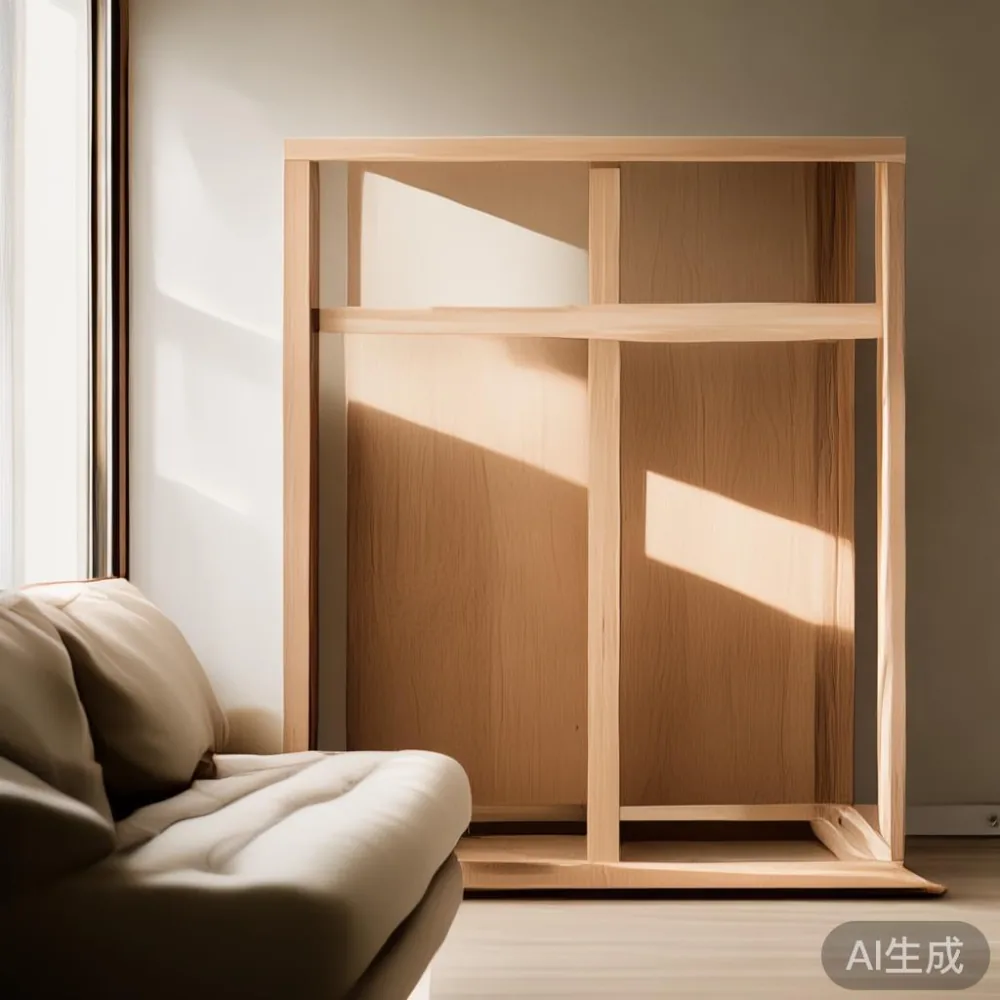
A "missing parts" situation is any delivery where what you receive does not match what is supposed to be in the box. That sounds obvious, yet the term covers a wide spectrum. It can mean a single cam lock is absent from an otherwise complete flat-pack. It can mean the hardware pack for a solid wood bed frame arrived but the slats did not. At the serious end — and this is rarer than people assume — it can mean an entire sub-component, such as a marble table top, an extension leaf for a dining table, or the upholstered back cushions for a French-style sofa bed, was packed in a separate carton that the warehouse forgot to dispatch.
Industry data on cross-border furniture shipments consistently puts part-mismatch or short-shipment rates somewhere between 2% and 5% per carton. Some of that is genuine factory error. Some of it is consolidation damage — a small hardware envelope tucked inside the larger carton gets crushed or torn open during transit and individual pieces fall out. A smaller share comes from customs handling, where boxes are opened for inspection and not always resealed perfectly. Knowing which bucket you are in matters because the remedy differs.
How do Singapore HDB lift and corridor dimensions affect furniture delivery?
If you live in a standard HDB block built in the last 20 years, your goods lift is roughly 1.5 m wide by 2.0 m deep, with a door opening of about 0.9 m to 1.1 m. Older blocks in estates like Bedok and Toa Payoh sometimes have lift cabins closer to 1.2 m deep, and the door itself can be as narrow as 0.8 m. Common corridors between lift and front door run between 1.0 m and 1.3 m. These numbers become the hard constraint on every purchase you make.
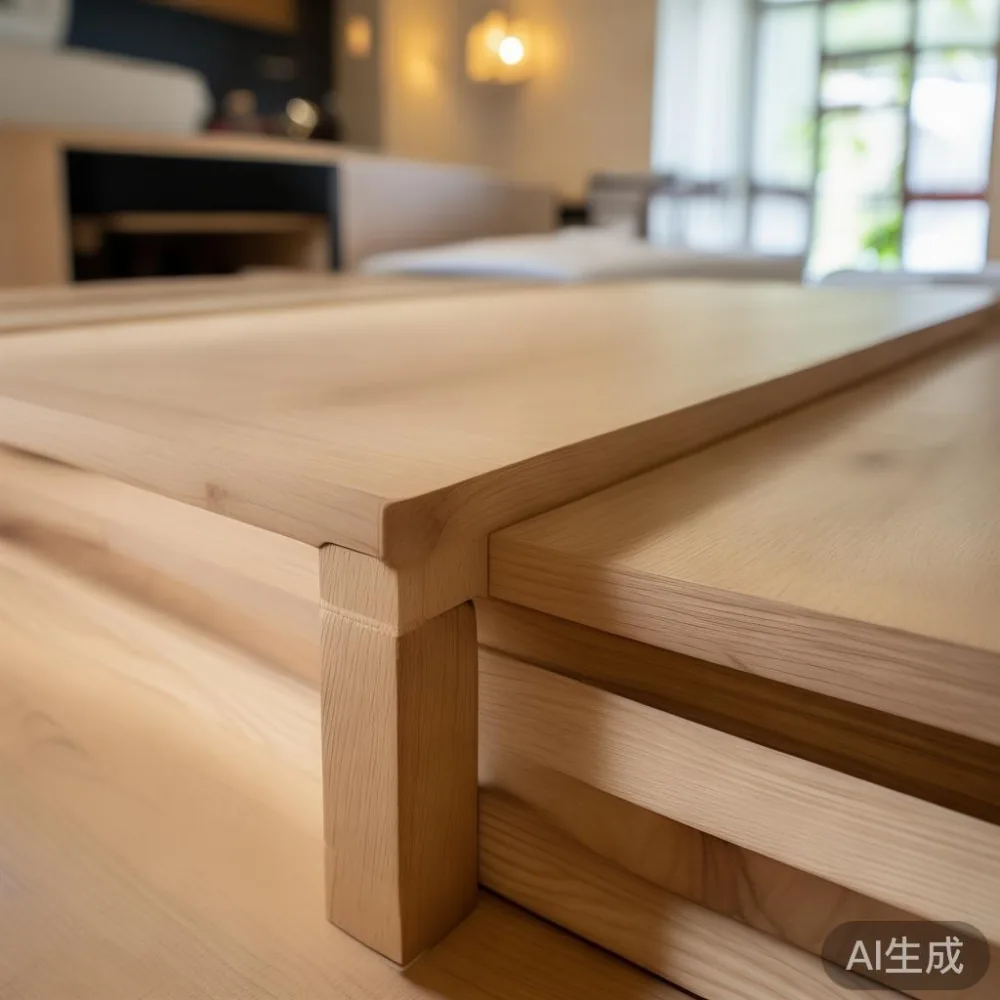
Now compare that to a typical solid wood bed frame from a Foshan workshop. A queen-size frame in an American light luxury style — think a low-profile walnut headboard, slatted base, bedside nightstand pair — usually ships in two cartons. One is the headboard and side rails, often 210 cm long and weighing 35 to 48 kg. That carton will physically fit into a standard goods lift on its long axis only if the lift is at least 2.1 m deep, which most modern HDB goods lifts are. Older lifts will not take it. The crew then needs to carry it up the service staircase, and that is when real problems appear: tight turns at the half-landing, fire-rated doors, and a 90-degree corner at the corridor junction.
What this means for you as a buyer is that product descriptions should be measured against your lift, not just your living room. Measure the inside of your lift cabin in three directions. Measure every door the carton must pass through. Photograph the corridor turn. Send those numbers to the supplier before you pay a deposit. MIDHILL publishes flat-pack dimensions and carton weights on its product sheets precisely so Singapore customers can run this check themselves — something I wish more factories would do.
What is the difference between French provincial wardrobe and modern furniture?
A French provincial wardrobe is a tall, solid wood storage piece built in a traditional 18th- and 19th-century French country idiom — fluted columns, curved cornices, muted painted or lime-washed finishes, brass cup pulls, and panelled doors, typically in hardwoods like oak or beech at 800 mm to 1200 mm wide per door pair. A modern furniture wardrobe is built in a post-modern light luxury idiom: clean horizontal lines, flush surfaces, finger-pull handles or integrated channels, often in walnut or ash veneer over engineered cores, with internal fittings configured for hanging, drawers, and accessory trays. The French provincial wardrobe is heavier (usually 90 to 140 kg), shipped in more pieces, and visually ornate; the modern wardrobe is lighter in look and sometimes in actual weight, and tends to arrive with fewer, larger panels.
For Singapore HDB buyers the practical difference is this: French provincial pieces arrive with more hardware and more carved detail, which means more small parts, which means more opportunity for a missing parts scenario if the carton is mistreated. Modern furniture, particularly the post-modern light luxury category that MIDHILL and similar Foshan factories specialise in, tends to be designed for fewer, larger, easier-to-handle panels — easier on your lift, easier on your corridor, and easier to inventory on arrival.
What actually happens during delivery day, and who assembles the furniture?
Most online furniture orders for Singapore arrive by sea freight into a Pasir Panjang or Tuas warehouse, then are broken down and re-dispatched by local last-mile couriers or specialist furniture delivery teams. There are roughly three delivery models on the market.
Model one is the pure courier drop-off: the box arrives at your door, the courier leaves, and you assemble the bed frame, wardrobe, or nightstand yourself. This is the cheapest, and what you see quoted at SGD 49 to SGD 89 for a single item. Model two is doorstep delivery with optional assembly add-on at SGD 80 to SGD 180 per item. Model three, used by brands like MIDHILL for orders over a certain threshold, includes white-glove assembly by the brand's own team or a contracted specialist crew, with the item carried into the room of choice, fully assembled, packaging removed, and the carton taken away for disposal.
For heavier items — a six-seater solid wood dining table at 80 to 110 kg, a king-size bed frame, or a marble table at 120 kg — only model three is realistic for most customers. I have watched friends try model one on a 95 kg table. They ended up hiring two men off Carousell for SGD 160 to do what the white-glove team would have done in 40 minutes. The math is uncomfortable.
What is a reasonable timeline when ordering solid wood furniture from a Foshan factory to Singapore?
For a custom or made-to-order piece in solid wood — a French-style sofa bed thailand-inspired design with carved details, a four-poster bed frame in walnut, or a dining table with a marble inlay — the production lead time is typically 25 to 45 working days at the workshop. Sea freight from Foshan or Shenzhen to Singapore is another 7 to 12 days door-to-door. Customs clearance, especially with goods that include wood (which require fumigation certificates under ISPM 15 standards), adds 2 to 5 days. Last-mile delivery in Singapore is 2 to 5 working days from the local warehouse. End-to-end, you are looking at 6 to 9 weeks from payment to delivery for a non-stock item.
Stock items — basic nightstands, simpler dining tables, modular wardrobes — are quicker, often 14 to 25 days from order to your HDB corridor. Premium finishes, special fabric on upholstery, or custom sizing push the timeline toward the longer end. Always ask the supplier for a written production schedule with milestones and a clear shipping date before paying the deposit, which is usually 30% to 50% of the order value. Singapore GST at 9% applies on the landed value of imported goods and is typically collected by the supplier at checkout or by the logistics partner on clearance.
How do you handle a "missing parts" situation without losing your deposit?
The Punggol couple I mentioned earlier ordered a post-modern light luxury bed frame, a matching nightstand pair, and a four-door wardrobe from MIDHILL. The bed frame and nightstands arrived intact. The wardrobe arrived with all panels present but the hardware pack — cam locks, dowels, hinges, screws — was missing entirely. Instead of escalating, they emailed photos of every panel laid flat, the packing list, the carton label, and the empty space where the hardware envelope should have been. MIDHILL shipped a replacement hardware pack by air-freight at no charge, which arrived in Singapore in four working days. Total delay to assembly: six days. Total cost to them: zero.
That outcome depends on three things. First, photograph everything before you open the carton — the label, the carton condition, the packing list taped to the outside. Second, count every part against the inventory sheet before you begin assembly. Third, communicate through written channels so there is a record. If a part is genuinely missing rather than damaged, a reputable factory will courier replacements, often free of charge, because the shipping cost is trivial compared to the cost of a customer dispute. A 10-year structural warranty is meaningless if the supplier is unreachable, so check that the factory has a real warranty document, not just a banner on a product page.
Are there hidden costs Singapore buyers forget to budget for?
Five costs catch people out. First, GST at 9% on the declared value, including shipping, which most overseas suppliers do not include in their headline price. Second, customs inspection fees for wood goods, which can add SGD 80 to SGD 220 if your shipment is selected for physical inspection. Third, lift bookings — some older HDB blocks require you to book the goods lift through the town council, and a no-show fee applies if the delivery is cancelled within 24 hours. Fourth, disposal of bulky packaging. A king-size bed frame carton set can fill two refuse sacks and a flat cardboard sheet that will not fit down the refuse chute. Fifth, optional assembly labour if your order does not include white-glove service, typically SGD 80 to SGD 180 per item for straightforward pieces and SGD 200 to SGD 350 for complex items like a six-door wardrobe or a French-style sofa bed that needs the sleeper mechanism set up.
Free shipping offers — often advertised as "free delivery over US$350" on cross-border sites — usually mean free shipping from the factory to the Singapore warehouse, not free last-mile delivery to your door. Read the incoterms. Free shipping from Foshan to Tuas is genuinely useful, but the SGD 60 to SGD 150 last-mile hop from the warehouse to your HDB corridor is on you.
What makes light luxury furniture easier to live with day-to-day in a Singapore HDB?
American light luxury and post-modern light luxury pieces tend to use restrained proportions, slim profiles, and finishes that disguise the visual weight of solid wood. That matters in a 90 sqm HDB flat where a heavy, ornate French provincial dining table can dominate the room. A lighter, lower-profile solid wood dining table in American light luxury style — say, a 1.8 m walnut top on slim black-tapered legs — sits comfortably in a four-room flexi flat without overwhelming it. A marble table for the dining or entry area is a common accent in this category, with the marble usually 15 to 18 mm thick and mounted on a solid wood base to keep weight around 70 to 90 kg total, which a two-person crew can manage.
Nightstands in this category are typically 45 to 55 cm wide, 40 to 50 cm deep, and 55 to 65 cm tall, light enough for one person to position but heavy enough (15 to 22 kg) to feel substantial. Wardrobes in the post-modern light luxury idiom often come in modular sections of 60 cm, 80 cm, or 100 cm widths so they can be carried into a standard HDB lift without tilting — a small detail that reflects how a serious factory designs for the realities of dense urban housing.
What should you photograph and keep after delivery?
Keep the carton label, the packing list, the invoice, the warranty card, the assembly manual, and dated photos of every part as you unbox. Photograph the inside of the lift as the cartons go in and out. Photograph any carton damage before opening it. If you ever need to claim a structural issue under warranty, this is the paper trail that turns a fight into a phone call. Most factories, including MIDHILL with its published 10-year structural warranty and lifetime refinishing offer, will ask for this documentation before approving any repair or replacement.
Online furniture buying is not risky if you treat the delivery stage as a project rather than an afterthought. Measure your lift, count your cartons, photograph everything, and choose a supplier that publishes its dimensions, its warranty terms in writing, and a real human contact for after-sales. The dream of a new solid wood sofa, bed frame, dining table, wardrobe, nightstand, or marble table arriving and sliding into place is achievable. It just takes about an hour of preparation that the product page will never sell you on.