Why Your Solid Wood Furniture Moves in Singapore Humidity — and How to Stop It
If you have ever watched a wardrobe door go out of square by the time the December monsoon clears, or pulled a dining table drawer that suddenly rubbed in August, you have met the same patient that most Singapore homeowners eventually meet: humidity. Solid wood is a hygroscopic material. It drinks and it sweats, and in a city where outdoor relative humidity sits between 70% and 95% for most of the year, every solid wood sofa frame, bed frame, dining table, wardrobe, and nightstand in your home is slowly negotiating with the air. This article is the field guide I wish someone had handed me the morning my walnut bookshelf developed a 4 mm bow across its 180 cm span.
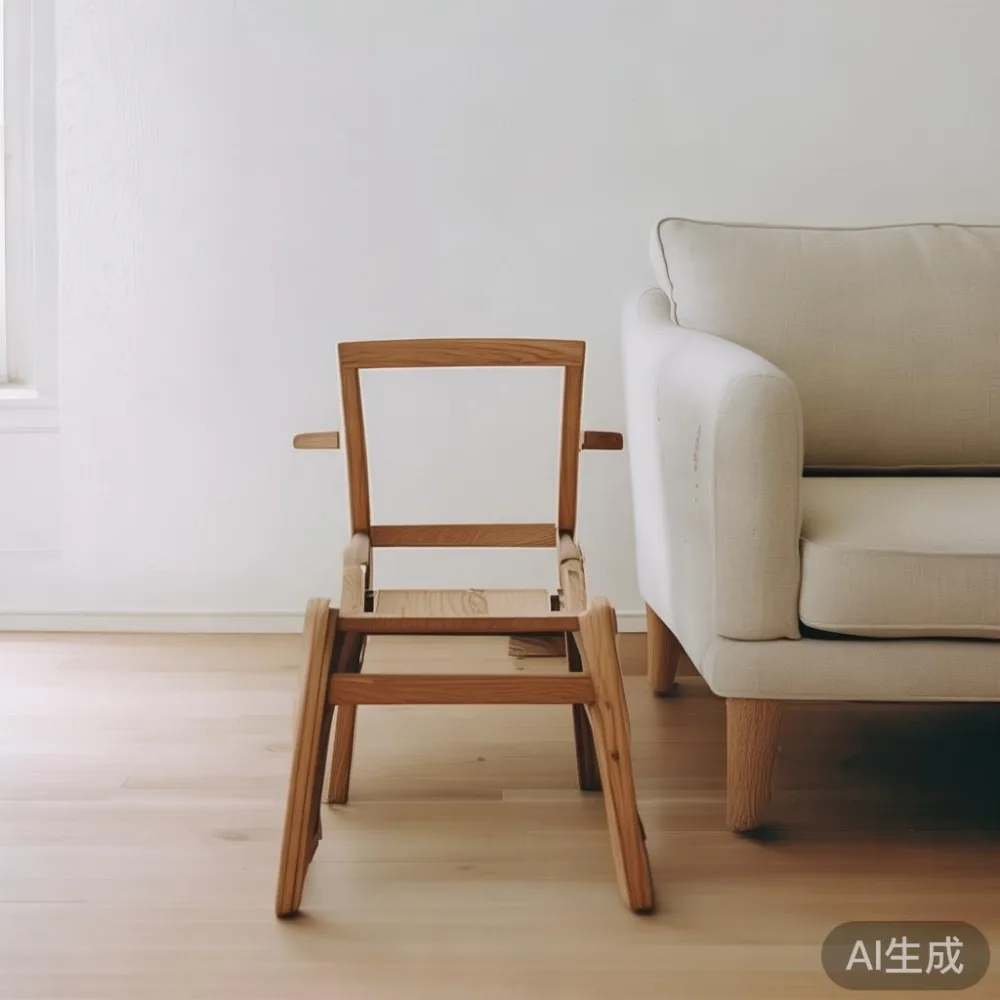
I write this from a workshop floor in Foshan, but the customers who keep me honest live in Tampines, Bedok, and Punggol HDB flats and condominiums. Their corridors are 1.2 m wide, their service lifts are 2.1 m deep, their GST line items on invoices look very real, and their air-con runs at 23°C while the walls sweat at 32°C. That gap is exactly where wood moves. So let me walk you through the physics, the failure modes, and the small, cheap habits that keep a five-figure solid wood piece looking composed from BTO handover to your third renovation.
What humidity actually does to a solid wood dining table or bed frame
Wood is cellular. The cell walls are mostly cellulose, and the cells themselves are mostly empty. When relative humidity rises, the cell walls absorb water vapour and the cells swell; when it drops, they give that water back and shrink. The motion is uneven along the grain. Across the grain — the direction you can actually see — a typical hardwood like white oak moves roughly 2% to 4% of its width between a dry indoor winter (say 40% RH) and a humid indoor summer (say 80% RH). On a 90 cm table top, that is up to 3.6 cm of cumulative movement across two years if conditions swing wildly. On a 200 cm wardrobe side panel, the same maths gives you 8 cm of motion you did not budget for.
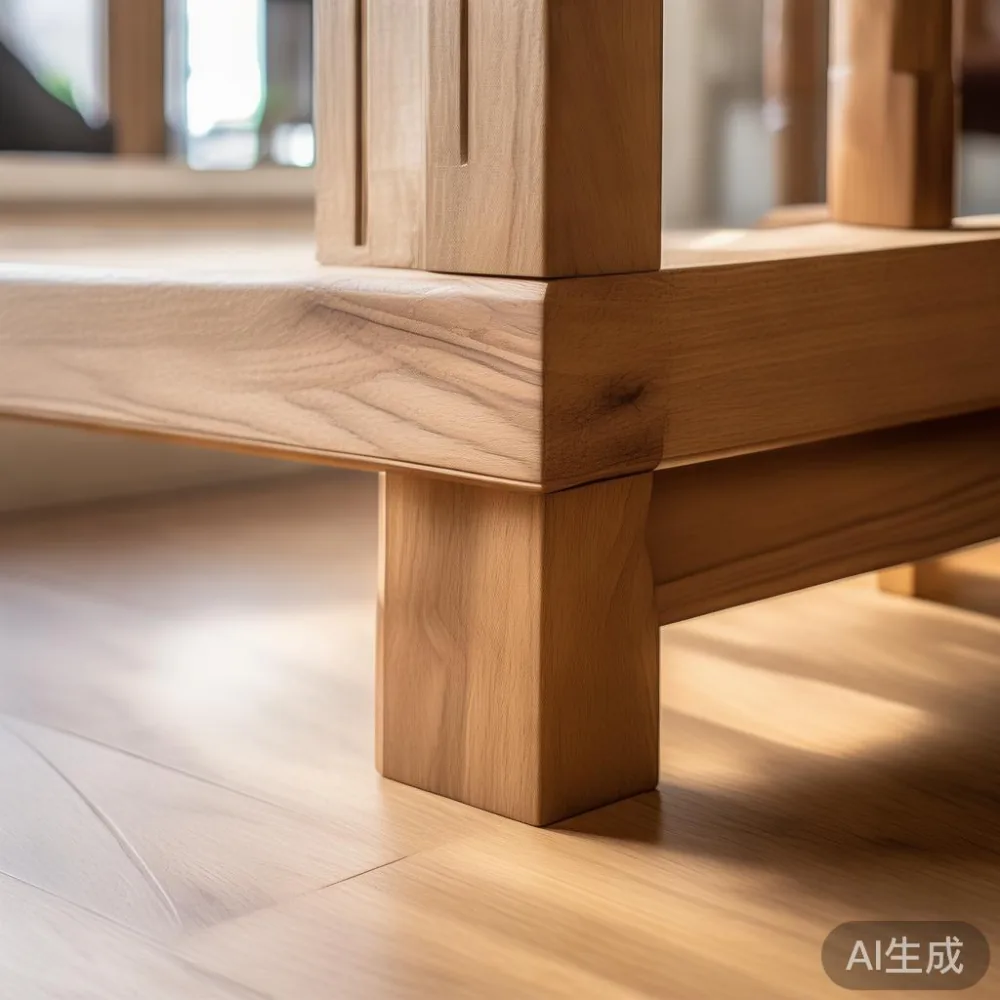
Three things make this worse in Southeast Asia. First, the swing is daily as well as seasonal — a thunderstorm at 4 pm can spike a closed room from 55% to 85% RH in ninety minutes. Second, our flats are mixed material: a concrete slab at 28°C meeting a glass window at 24°C creates a dew point right at the wardrobe back. Third, the gap between the air you breathe (23°C, often 50% RH under air-con) and the wall cavity (32°C, often 80% RH) means the wood is never at equilibrium. It is always creeping toward something.
Why your wardrobe doors and sofa frame never quite line up in a Punggol HDB flat
Last month I visited a four-room flat in Punggol with a customer who had bought a white oak wardrobe from us eighteen months earlier. Two doors on the right side had drifted 5 mm out of plane. I pulled out a pinless moisture meter (a Wagner L612, around SGD 280 at a local tool shop) and got 11.8% on the inside face of the door and 9.2% on the outside face. That 2.6-point spread is the diagnosis: the inside of the wardrobe was sitting in stale, humid air because the closet is always closed, and the outside was in air-conditioned living room air. Two climates inside one piece of furniture, and the door tries to be two pieces at once.
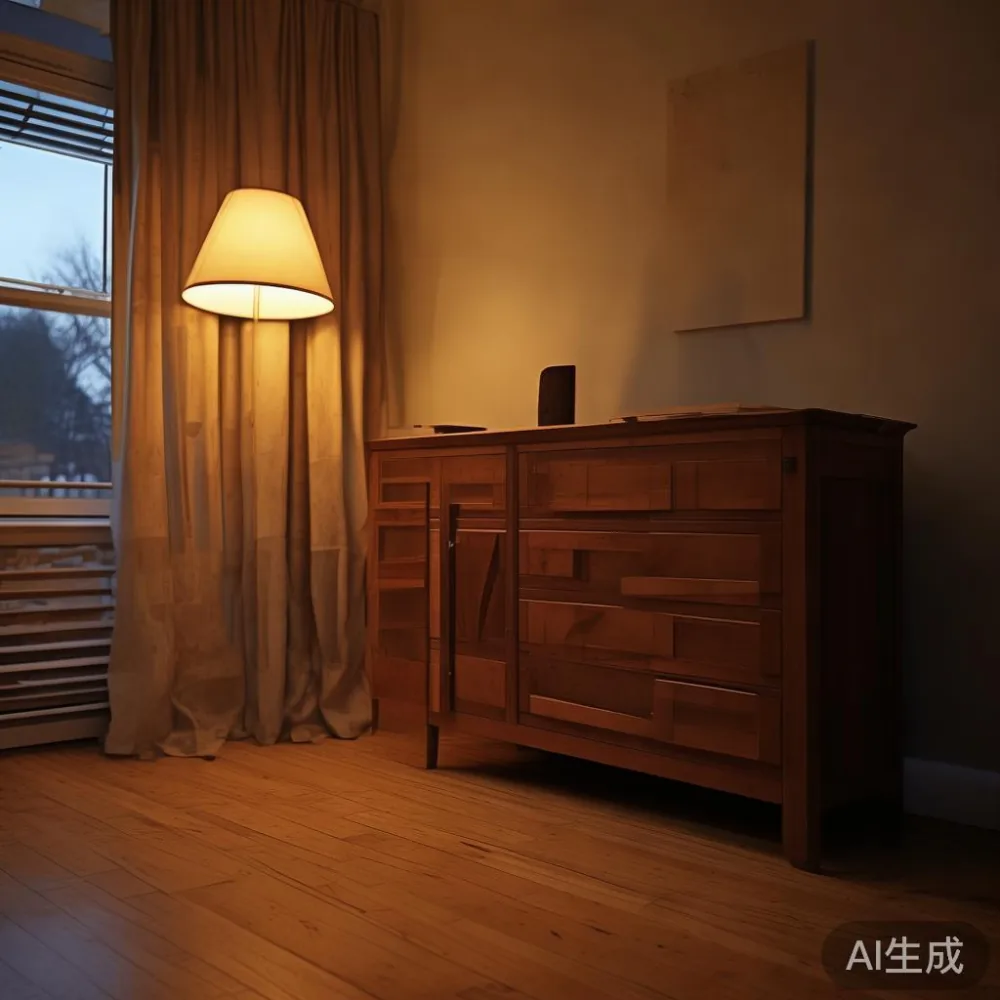
The lift access in her block was tight. The service lift measured 2.1 m deep, 1.5 m wide, and 2.3 m tall, and the wardrobe had to come up assembled because the corridor turn at her unit was 1.1 m — too tight to pivot a fully built 2.4 m tall carcass. So we assembled in the bedroom, where the air was already at 78% RH because the air-con had been off while the family was at work. By 9 pm, with the air-con running on dry mode, the bedroom dropped to 58% RH and the freshly glued joints began to cure in a climate 20 percentage points drier than where they would spend the next ten years. Predictably, two of the floating tenons resisted the new geometry, and the door drifted to relieve the stress. The fix was not glue, and it was not a better hinge. It was acclimatisation, which is the next section.
Acclimatisation: the boring step that prevents missing parts surprises
Acclimatisation means letting the wood reach its equilibrium moisture content (EMC) in the room where it will live before you assemble it. The maths is simple. In Singapore indoors, EMC sits around 14% to 16% most of the year, dipping to about 11% in a heavily air-conditioned room and climbing to 18% in a closed room during a wet spell. If your furniture was kiln-dried to 10% (a common factory target for export) and you assemble it inside a 16% room, every board will swell slightly. That swell will not be uniform, because end grain moves about twice as much as face grain, and quartersawn boards move about half as much as plainsawn boards. The result is the kind of uneven geometry that reads, at first glance, like a manufacturing defect — a missing parts fitting, a sticky drawer, a door that will not latch.
The treatment is unglamorous. Open the packaging in the target room, stand the panels on edge with 50 mm spacers between them, run a dehumidifier or the air-con on dry mode for 48 to 72 hours, and only then assemble. For solid wood dining tables, MIDHILL ships the top as a single panel that has been sealed on both faces and stored in our Foshan warehouse at 18°C and 55% RH for at least fourteen days before container loading. We tell Singapore customers to add another five days on their end. It is the cheapest insurance on the page — about SGD 25 of electricity — against an SGD 800 service call.
Will a marble table survive a Tampines three-bedroom better than solid wood?
Often, yes, and here is the honest comparison. A marble table top, whether Carrara or engineered quartz, is dimensionally stable: its coefficient of thermal expansion in Singapore is so small that you will never measure it with a tape. The base, though, is usually steel or solid wood. Steel is also stable. So a marble table on a powder-coated steel base is the closest you get to a furniture piece that ignores humidity. The trade-off is weight — a 180 cm marble top is 95 kg to 110 kg, which is why most Tampines three-bedroom customers I speak to end up choosing a 150 cm version and adding two leaves that store in a side cabinet. They want the look and the stability, but they live on the 7th floor of a HDB without a cargo lift, and a 110 kg crate is a non-starter.
Solid wood, properly dried and properly acclimatised, is plenty stable in our climate. The risk is not the wood; it is the joinery. A solid wood sofa frame built with mortise and tenon and hide glue is more forgiving than one built with tight dados and PVA, because the hide glue lets go under stress and can be re-clamped. A solid wood bed frame with floating tenons allows the side rails to slide 1 mm to 2 mm seasonally without splitting the headboard. These are the engineering choices that decide whether your bedroom looks composed in November or shabby by Chinese New Year.
Can I oil or wax my solid wood furniture to stop it from moving?
Partially. A hard wax oil such as Osmo Polyx-Oil (a 750 ml tin is about SGD 38 at a Bedok hardware store) will slow the moisture exchange rate by 40% to 60% on the first coat and 60% to 80% on the second, based on the manufacturer’s test data and my own rough spot checks with a moisture meter over six weeks. That buys you margin against a 4 pm thunderstorm, but it does not stop the wood from moving at all. Nothing does, short of encapsulating the piece in epoxy, which is a terrible idea for a piece you have to sit on.
The right rhythm is to oil or wax twice a year, ideally once in March as the dry season (such as it is in Singapore) ends, and once in September before the December monsoon. Wipe on with a lint-free cloth, wait twenty minutes, buff off. Re-coat high-traffic zones — the dining table top, the nightstand surface, the armrests of your solid wood sofa — every four months. This is the same cadence the craftsmen at MIDHILL’s Foshan workshop follow, and it is why our ten-year structural warranty reads the way it does: the warranty covers the joinery, but the finish is yours to maintain.
How do I keep a 2.4 metre wardrobe from bowing when my corridor is only 1.2 metres wide?
This is the question I get on almost every quotation, and the answer involves three numbers. The wardrobe you want is roughly 240 cm tall, 60 cm deep, and either 180 cm or 240 cm wide. Your service lift is 2.1 m deep, your corridor is 1.2 m wide, and your unit door is 0.9 m wide. A fully assembled 240 cm wardrobe will not make the turn, so you must order it flat-packed, which MIDHILL does as standard for Singapore. The flat-pack panels are 35 mm to 40 mm thick, 60 cm deep, and up to 240 cm long. Each weighs between 18 kg and 32 kg, so two people can carry them up the lift without booking a mover.
Once the panels are in the bedroom, acclimatise them as described above, then assemble in the room itself, not on the corridor. Use the included cam locks and confirm the wardrobe is plumb with a 60 cm spirit level (about SGD 18 at any neighbourhood hardware shop) before you drive the back panel screws home. Then anchor the top to the wall with two L-brackets into concrete, even if the piece feels heavy enough to stand on its own. A wardrobe full of clothes weighs a lot more than a wardrobe empty, and an SGD 8 bracket prevents the SGD 2,400 piece from tipping during a tremor or a vacuuming collision.
What does a humid-climate-friendly solid wood sofa actually cost in Singapore?
Let me give you real numbers, because the question matters. A three-seat solid wood sofa frame in white oak, with removable cushions and a kiln-dried, acclimatisation-ready frame, lands in Singapore between SGD 2,800 and SGD 4,200 landed, depending on upholstery (fabric is cheaper, full-aniline leather is dearer). A matching bed frame in queen size is SGD 1,600 to SGD 2,800. A six-seat dining table in walnut is SGD 3,400 to SGD 5,200. A two-door wardrobe is SGD 1,900 to SGD 3,100. A pair of nightstands is SGD 480 to SGD 760. Free shipping kicks in above US$350 (about SGD 480), which almost every order clears, and you can return within 14 days if a panel arrives with a defect.
For a customer layering Italian light luxury for apartment styling on top of solid wood, I usually suggest spending the budget three ways: invest in the bed frame (you sleep on it 8 hours a night for the next decade), economise on the nightstand (a smaller piece absorbs less humidity per surface area), and skip the marble table in favour of a sealed solid wood top with a stone-effect inlay if the dining area faces a west-facing window. The styling reads post-modern light luxury without the SGD 6,000 freight surcharge for a 110 kg slab of travertine.
How to style American bed in apartment without making humidity worse
The American light luxury playbook is tall headboards, low-profile foundations, neutral linens, and one piece of warm wood per room. In a Punggol apartment with 2.8 m ceilings, a 130 cm tall upholstered headboard eats vertical space, so I usually nudge customers toward a 110 cm headboard and a 15 cm clearance underneath the frame. That gap is a working gap: air moves under the frame, the floor dries after a mopping, and you can run a small dehumidifier (a MeacoDry Arete One, about SGD 449) on a hygrometer (about SGD 28) so the bedroom sits at a steady 55% RH. This is also the answer for how to style American bed in apartment without dooming the slats to a slow swell against a closed-room wall.
Pull the bed 8 cm to 10 cm away from the back wall. Hang the headboard on French cleats so it can ride the seasonal movement of the wall studs without cracking the drywall. Choose a bedding weight that breathes — percale, not sateen — and you have ticked every box that matters. The same moves work for a Vintage for dining room set, where the chairs and the trestle table want 20 cm of clearance from the wall so air can sweep behind them during a thunderstorm.
Where American light luxury and the missing parts problem finally meet
Most of the service tickets that land in our inbox from Singapore are filed under one of three tags: missing parts on arrival, sticky drawer after monsoon, and wardrobe door out of square. Of those three, missing parts on arrival is the only one that has nothing to do with humidity, and it is the easiest to fix: we ship the hardware pack in a clearly labelled canvas pouch taped to the inside of the largest panel, the assembly manual pages 2 and 3 list every part with a thumbnail image, and our support team can dispatch a replacement hardware pack from Foshan in five to seven working days, with the missing parts couriered free above a SGD 60 order. Sticky drawers and out-of-square doors are humidity tickets, and they are fixed by acclimatisation, oiling, and a level check, not by a new part.
If you are choosing between modern Modern light luxury furniture and a heavier traditional set for the same Tampines three-bedroom, my honest recommendation is to choose the light luxury line and invest the saving in a 12L daily dehumidifier for the room that holds the wardrobe. The frames are lighter, the joints are more forgiving, and the finish is easier to refresh. For the living room, the best American sofa for 2026 in our line is a 220 cm three-seater in Performance Linen, with a kiln-dried ash frame and a ten-year structural warranty; for the bedroom, a low-profile American bed in queen with a 110 cm headboard pairs well with our walnut nightstand range. And if you want a quick read on how to style American sofa in room, our setup notes ship with every sofa and cover rug size, side table height, and the safe distance from the air-con vent.
Three habits that protect every piece you own
Habit one: buy a hygrometer for every air-conditioned room (about SGD 18 each, two or three rooms is enough). Habit two: run a dehumidifier in any room that holds solid wood and is closed for more than six hours a day. Habit three: oil or wax your high-traffic pieces on the March and September cadence above, and tighten any visible cam-lock screws once a year with the Allen key taped inside the wardrobe door. These three habits cost roughly SGD 50 a year to run and they extend the life of a solid wood dining table, bed frame, and wardrobe set by what I estimate is five to eight years, based on customer reports I have collected since 2018.
None of this is exotic. None of it needs a contractor. It does, however, require you to treat solid wood furniture as a living material instead of a fixed object, the way Singaporeans already treat leather sofas and merbau decking. Once you do, the sticky drawers in August, the wardrobe doors in December, and the early morning squeaks from a drying dining table all stop being mysteries and start being data. And data, in this climate, is the only missing parts list you ever need again.