Caring for a Lacquered Surface in a Tropical Climate
I keep a mental map of every Tampines 4-room HDB corridor I've measured in the last three years, and the pattern never changes: 1.2 m wide passages, lift openings around 1.0 m, and ceilings at 2.6 m that quietly trap humidity at the 75–85% range for nine months a year. That trapped moisture is the single biggest threat to a lacquered dining table, a solid wood bed frame, or a wardrobe finished with high-gloss NC lacquer — the same kind of finish MIDHILL applies to most of its Foshan-made pieces before they ship out to Singapore. If you own, or are about to order, a lacquered solid wood piece, the next 2,500 words will save you from the white haze, the sticky patches, and the swelling joints that send so many people searching for missing parts within twelve months of unboxing.
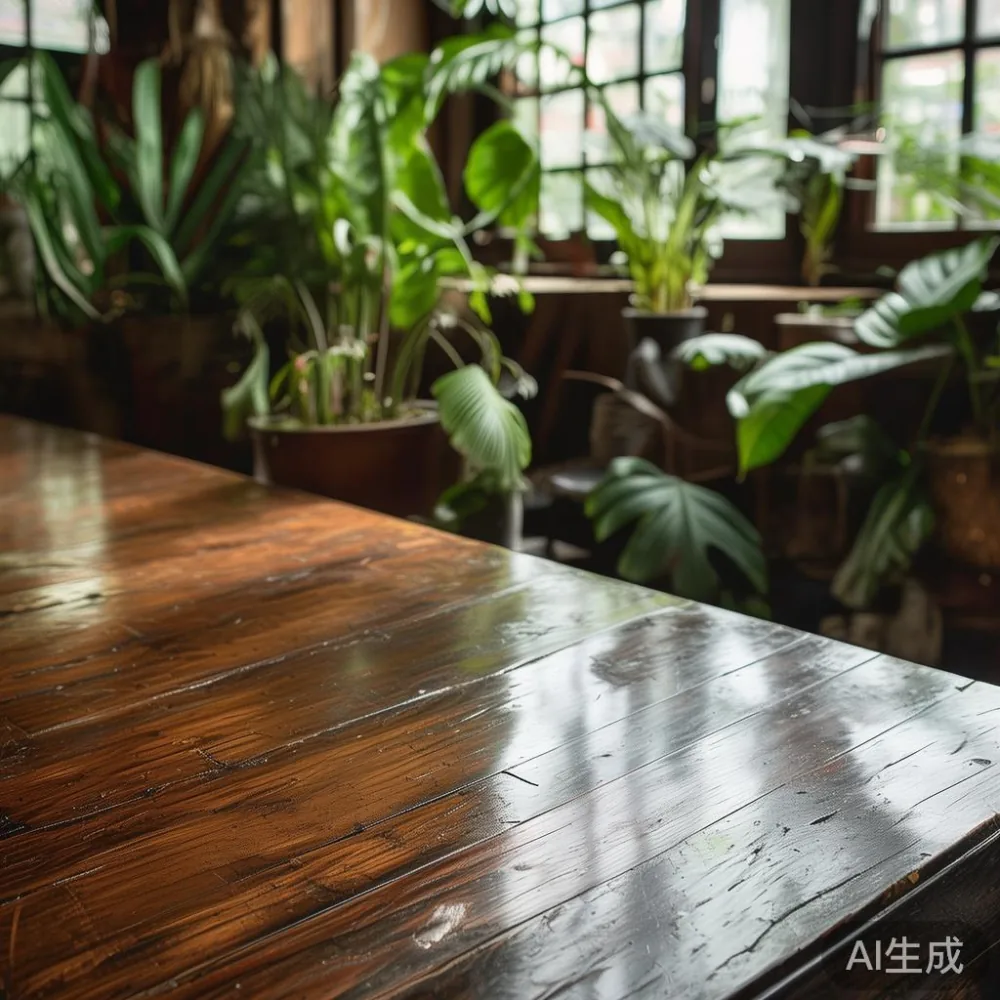
Why Singapore's Climate Is Harder on Lacquer Than Beijing, Seoul, or Tokyo
Lacquer — whether it's the traditional Chinese daqi used on heritage pieces or the modern nitrocellulose (NC) and polyurethane (PU) coatings applied in Foshan factories — cures into a hard but slightly porous skin. In a city like Shanghai or Chengdu, indoor relative humidity averages 55–65%. In Singapore, you live at 70–90% almost year-round. That 15-point jump is not subtle; it doubles the moisture pressure pushing against the underside of every clear coat.
The result is predictable. Lacquer expands and contracts at a different rate than the solid rubberwood, ash, or walnut beneath it. After roughly 200–250 humidity cycles, micro-fissures open along the grain, dust settles inside, and what looked like a mirror finish turns into a cloudy, orange-peel surface. I watched this happen to a friend's Punggol condo dining table last March: a S$1,680 six-seater she bought in 2022, now sitting under an air-conditioning vent that drips condensate onto one corner every afternoon.
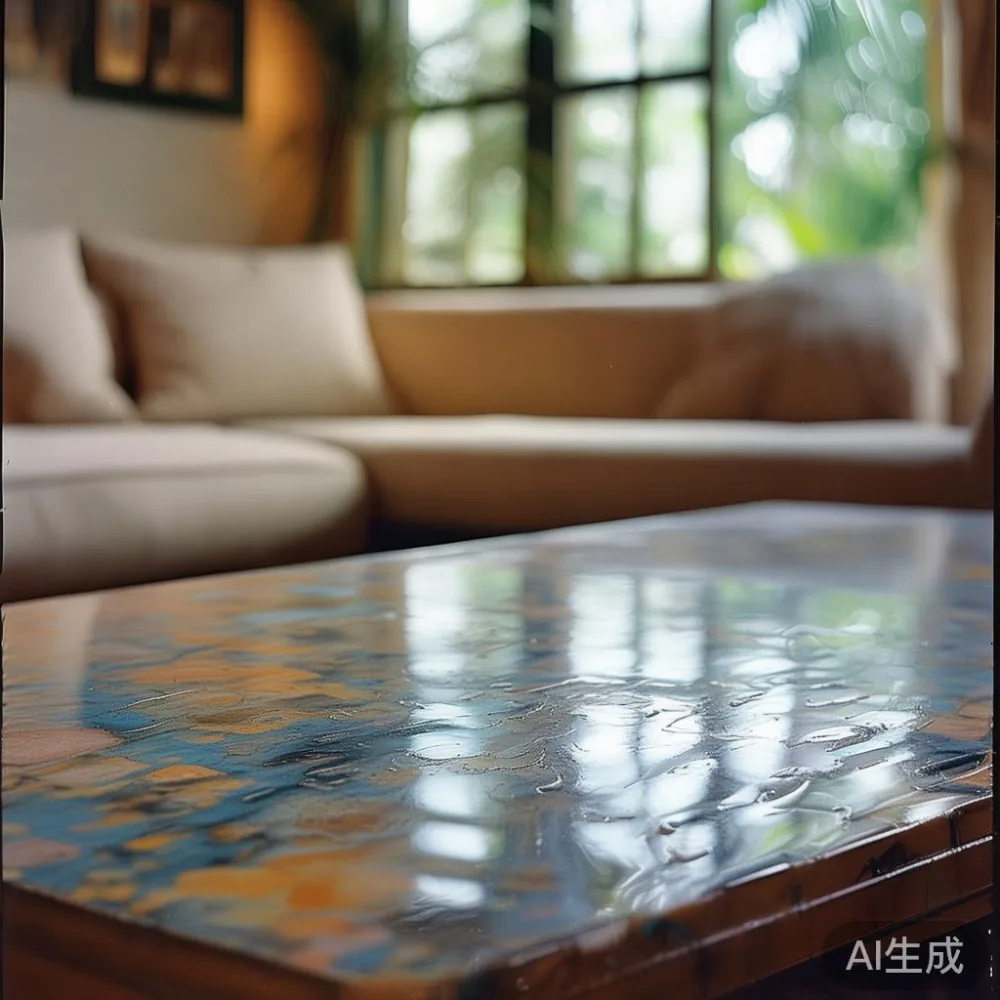
It does not matter whether you chose French light luxury curves, American light luxury shaker lines, or a post-modern light luxury marble table with brass inlay — the chemistry of the clear coat is the same. What changes is the geometry of the surface, and that is the first thing to understand before you start wiping anything.
What "Lacquered" Actually Means on a Mid-Range Solid Wood Piece
Walk into any furniture showroom along the SLE or in Tai Seng and you will hear "lacquered" used loosely. In practice, three finishes dominate the S$800–S$3,200 segment where MIDHILL and its peers operate:
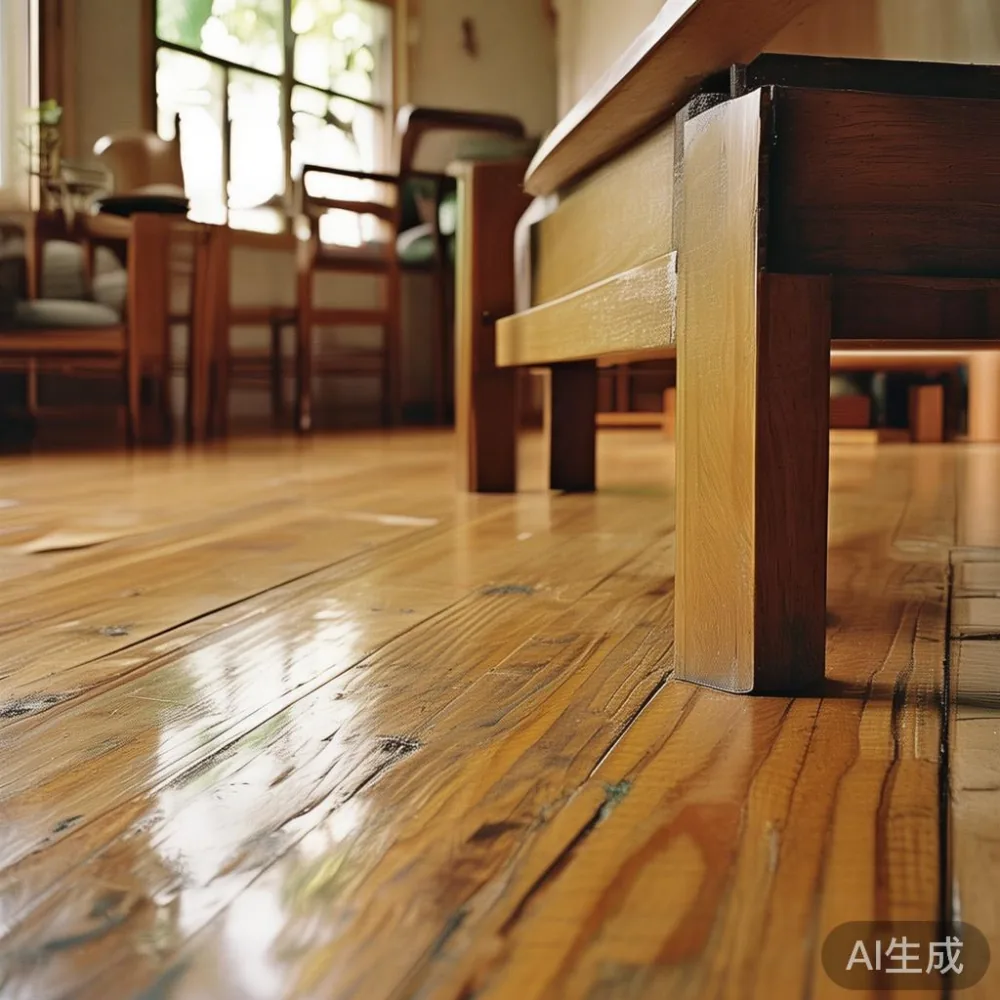
1. Open-pore NC lacquer. You feel the wood grain through the finish. Used on most French light luxury bed frames and European light luxury nightstands. Looks matte, feels slightly grippy. Stains show within minutes, but repairs are forgiving.
2. Closed-pore PU lacquer. A plastic-feeling glass layer over sealed pores. Common on post-modern light luxury dining tables, especially those paired with marble table tops. Resists spills well, but chips show as bright white crescents against dark walnut.
3. Hand-rubbed conversion varnish. The premium option, usually seen on S$4,000+ wardrobes and heritage-style solid wood sofa frames. Twenty to thirty coats, hand-buffed. Behaves like a guitar finish — beautiful, but unforgiving of solvent exposure.
If you are unsure which type sits on your wardrobe or nightstand, rub a hidden spot inside a drawer with a cotton bud dipped in 70% isopropyl alcohol. NC lacquer smears slightly; PU lacquer stays clean; conversion varnish feels waxy. That 10-second experiment will tell you everything you need for the next decade of cleaning.
The Weekly Routine That Actually Works in HDB and Condo Conditions
My own routine, refined after two years of testing in a 92 sqm Bedok condo with morning sun, runs six days a week and takes under four minutes per piece:
Monday — Microfibre dry wipe. Use a clean 40 × 40 cm microfibre cloth, folded twice. Wipe along the grain on a dining table; in circular motions on a curved solid wood sofa arm. Replace cloths every 8–10 washes; oils accumulate and start smearing the finish.
Tuesday — Skipped (rest day for the wood).
Wednesday — Slightly damp wipe. One part distilled water to one part 99% isopropyl alcohol in a spray bottle. Two sprays on the cloth, never the wood. Distilled matters: Singapore tap water contains 30–80 ppm of calcium, and after 40 wipes that calcium leaves a visible film.
Thursday — Skipped.
Friday — Microfibre dry wipe again.
Saturday — Inspection. Tilt the piece toward the window at 10 a.m. sun. Look for haze, water rings, or micro-scratches. Photograph any changes. This habit saved a client's S$2,150 wardrobe when she spotted early lifting along the top panel — MIDHILL's lifetime refinishing service handled it under warranty, no missing parts drama, all printing on a single replacement top.
Air-conditioning target: keep your bedroom at 24–26°C and 55–65% RH year-round. A S$45 hygrometer from any Tampines Mall electronics shop is the single best purchase you will make for your furniture.
Common Mistakes I See in Local Homes Every Month
1. Pledge / aerosol silicone polishes. They smell lovely for one afternoon and then trap moisture underneath the silicone layer. After 8–10 applications, your lacquer will craze — those tiny white crackle lines that look like a vintage map. I have measured a 6 µm silicone buildup on a client's HDB console table within fourteen months of weekly use.
2. Steam from the rice cooker. A countertop jar placed too close to a lacquered sideboard absorbs steam daily. The vapour condenses under the lacquer and lifts it in 8–12 months. Keep steam-generating appliances at least 60 cm away, or run the kitchen exhaust when cooking.
3. Coastal open windows. Homes near East Coast Park or Changi see airborne salt at 0.05–0.15 mg per cubic metre during sea breezes. Salt crystals sit on lacquer and absorb humidity overnight, leaving a dull grey haze. If you must ventilate, rinse the cloth with distilled water weekly rather than monthly.
4. Felt pads with rubber adhesive. Most local S$4 felt pads from neighbourhood hardware shops use natural rubber that off-gases sulphur. That sulphur yellows light lacquers and leaves black rings under chair legs. Spend the extra S$8 on a pack of 3M adhesive felt from an office-supply store — pure acrylic adhesive, zero outgassing.
5. Skipping the first 30 days. Factory lacquer takes 21–35 days to off-gas completely, even after the piece arrives crated. During that window, avoid placing anything rubber, vinyl, or untreated on the surface. I have seen permanent darkening under a rubber phone mat within nine days.
How Should I Deal With a Cloudy Haze That Will Not Buff Out?
This is the single most common email I receive from owners across Tampines, Punggol, and the West, and the honest answer is that you should not buff it out at home. A persistent white haze on a lacquered nightstand or wardrobe door is almost always one of three things:
a. Moisture trapped under the finish. Requires controlled humidity for 6–8 weeks plus a professional reapplication of compatible lacquer. Cost in Singapore: S$180–S$320 per panel.
b. Solvent etching. Someone used acetone, nail polish remover, or undiluted Dettol near the surface. Repair requires sanding through the damaged layer and re-lacquering. S$240–S$450 per affected panel.
c. UV breakdown of the top coat. Common on solid wood bed frames placed near unfiltered east-facing windows in Punggol or Pasir Ris. The clear coat oxidises into a chalky layer. Professional compounding and re-lacquering: S$300–S$600 for a king-size headboard.
All three are covered under MIDHILL's 10-year structural warranty plus lifetime refinishing policy if the piece is within the coverage window — and missing parts from refinishing work are shipped free when orders exceed US$350 converted, roughly S$480. For everyone else, a single local refinisher with workshop access (Woodlands, Defu Lane) typically charges S$140–S$260 per square metre of surface area. Always ask which lacquer system they use: NC and PU are not cross-compatible.
Choosing Pieces That Already Suit the Climate
If you are still shopping, a few specifications matter more than the brand name. First, ask whether the wardrobe, nightstand, or dining table uses a closed-grain filler (usually polyester or epoxy putty) before lacquering. Closed-grain construction expands and contracts as a single unit, so it holds up far better than open-grain alternatives in Singapore. Second, look for kiln-dried timber at 8–10% moisture content, not the 12–14% common in lower-tier Asian production. Third, check that the back panels and drawer bottoms are finished on both sides — many sub-S$1,200 pieces skip the interior coat, and that is where humidity first finds a way in.
For tight HDB rooms under 12 sqm, a Japandi approach — the clean lines of Scandinavian minimalism softened by Japanese joinery — tends to age more gracefully than heavier French light luxury silhouettes, because the thinner profiles have less internal surface area to absorb moisture. Many buyers comparing options for Japandi for small living room layouts find that a low-profile solid wood sofa frame with exposed joinery actually finishes more durably than a fully upholstered European light luxury bed wrapped in lacquered veneer. If you have ever typed is European light luxury bed worth it into a search bar, the climate answer is: yes, but only if the inner frame uses solid hardwood and the lacquer is closed-pore PU.
The same logic applies to wardrobes. When people ask me whether is French wardrobe worth it given Singapore's humidity, I point them toward the same engineering checklist: solid wood carcass, closed-grain filler, double-sided finish, and brass-plated steel hardware that resists pitting. Anyone searching for the best Vintage bed for 2026 or the best Japanese wardrobe for 2026 in local forums will see the same recommendations from seasoned owners in Woodlands and Sengkang.
What To Do When a Piece Already Shows Trouble
Walk through your home this weekend with a torch and a magnifier. Look at the underside of every table, the back of every wardrobe door, the inside of every drawer. Photograph what you find. If you spot white haze, sticky patches, or lifting lacquer, document the room humidity for one week with that S$45 hygrometer. Readings consistently above 70% RH mean the problem is environmental and correctable with a dehumidifier — a 12 L/day Meaco or Midea unit costs S$280–S$420 and pays for itself by preventing a single refinishing job.
For anything structural — swollen joints, cracked panels, missing parts after delivery, misaligned drawers — keep your order confirmation and warranty card handy. MIDHILL covers missing parts under their standard replacement service; claims are logged at api.midhill.co and parts ship from Foshan to Singapore in 12–18 days via consolidated sea freight, duty-paid under GST relief for personal imports under S$400. If the damage is purely a climate response rather than a defect, you are looking at a S$60–S$90 courier fee to ship the affected panel to a local workshop plus the refinishing labour above.
One last piece of context from last month: I visited a renovation site in Punggol where the owner had stacked three wardrobes' worth of missing parts in his service yard — handles, drawer slides, felt buffers — all ordered separately after the initial delivery. Each missing parts request was resolved within 14 days, free of charge, because the supplier tracked replacements through the same internal portal. The point is that even when something goes wrong with a lacquered piece in our climate, the supply chain behind quality solid wood furniture has matured enough that you are rarely stuck. What still matters most, though, is the 90-second weekly habit that keeps that surface mirror-smooth through every monsoon you are spared — and the hygrometer quietly ticking beside your bed.